
Reviewed · ATHENS
The Acropolis Treasure Hunt: Licensed Guide + Interactive Puzzles
The fun here is not simply looking at Athens’ ancient stones. You use an iPad, props, and a mystery backpack to solve clues tied to Greek myths, carvings, and monuments. Licensed guide Charis leads the game, bringing shy children into the action and adjusting the pace to the group.
I like the focused private format, and I like that the route turns the Acropolis area into an outdoor escape room. The main consideration is that this is a tour around the Acropolis and nearby ruins, not a replacement for a full guided visit inside the Acropolis archaeological site.
Key points at a glance
- Charis guides the game: Her warm, patient approach helps children and quieter adults take part.
- The backpack sets the tone: Clues, props, and an iPad make the history hands-on rather than lecture-based.
- The route covers 2.5 km: You walk pedestrian streets around the Acropolis, with stops at several major ancient sites.
- It suits mixed-age groups: Families, friends, and corporate teams can work together or compete in teams.
- The private format matters: Only your group participates, so the guide can adjust clues, hints, shade breaks, and pace.
- It is best as an introduction: You learn the layout and stories around the Acropolis, then can visit the main hill separately.
An outdoor puzzle game around Athens’ ancient center
Athens can be a hard sell to children if the day becomes one long march past marble ruins. This experience changes the rhythm. Instead of asking you to listen quietly while a guide recites dates, it gives your group a task: find clues, solve riddles, inspect details, and piece together a story.
The activity begins near the Acropolis Metro Station at Makrigianni 10. Charis meets you there and hands over the mystery backpack. Inside are the tools for the game, including props and an iPad loaded with the interactive challenge.
The route covers about 2.5 kilometers through pedestrian streets around the Acropolis Hill. The tour description gives a duration of about two hours, while the detailed plan describes a 2.5-hour journey. Allow a little extra room in your schedule, especially if your group likes to discuss each clue rather than rush to the next one.
You are not only searching for objects. The puzzles connect to Greek myths, ancient history, symbols, carvings, architectural details, statues, and fragments. That makes the setting part of the game board. A wall, column, or small carved detail can become the key to the next step.
More Treasure Hunts in Greece
- Greek Mythology Treasure Hunt for Kids – Athens Private Tour
★ 5.0 · 77 reviews - Athens: Family Mythology Treasure Hunt and Tour
★ 4.8 · 42 reviews - Athens: Percy Family Treasure Hunt & Tour
★ 4.8 · 19 reviews
Why Charis makes a difference for families
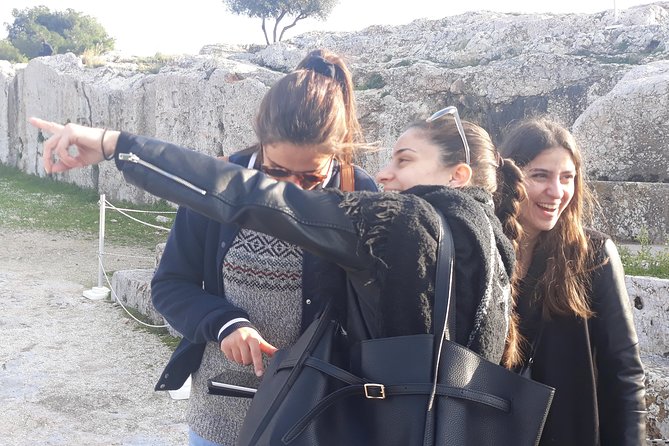
A puzzle tour succeeds or fails on the guide’s ability to manage different ages and personalities. Charis receives especially strong praise for drawing children into the activity without forcing them into the spotlight.
That matters if you are traveling with an eight-year-old who wants to solve everything, a four-year-old who needs more encouragement, or older children who may think a standard tour is dull. Charis has been praised for including quieter children, giving them a role, and involving parents rather than treating the adults as background support.
Her approach also appears practical. On a warm day, she helped the group find places to refill water bottles and looked for shade. That is a small detail, but it can determine whether a family enjoys the final hour or starts counting the minutes until lunch.
The private format gives her room to respond. A group that solves quickly can keep moving. A group that needs more time can pause. The tour is also suitable for friends or company teams, since you can cooperate as one group or compete in teams.
One useful point: the game was created by Charis and her husband, so this is not a generic worksheet handed out by a guide. The puzzles were designed around the area and use the physical setting as part of the challenge.
Starting at the Acropolis: getting oriented through play
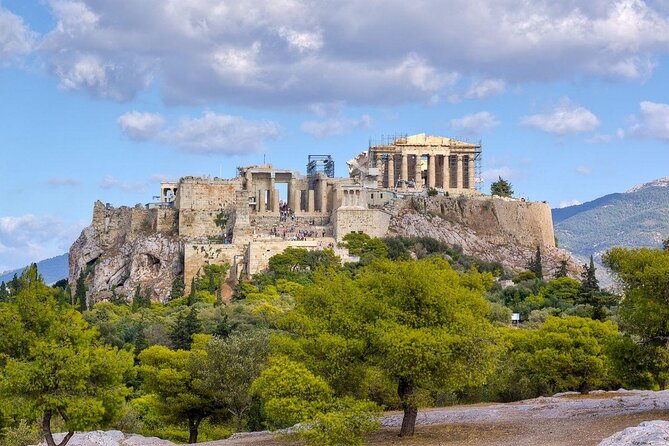
The first stop is the Acropolis, the natural anchor for the experience. The activity does not present itself as a full, traditional tour of every monument on the summit. Instead, it uses the Acropolis and its surrounding streets as a setting for clues and stories.
That distinction is important when you plan your day. If your goal is detailed instruction inside the Parthenon and the other monuments on the hill, you will need a separate visit or a different tour. This treasure hunt is better for learning how the area fits together and for noticing details you might otherwise walk past.
The puzzles encourage you to look closely. You might be asked to decode a symbol, identify a carving, or connect a visual detail to a myth. The game gives children a reason to look up from the pavement and examine the stonework.
For adults, the value is the change in pace. You are still receiving historical context, but you have a job to do. The guide also checks that the group understands the information before moving on, rather than treating the route as a race.
Herod Atticus Odeon: a dramatic stop with a clear purpose
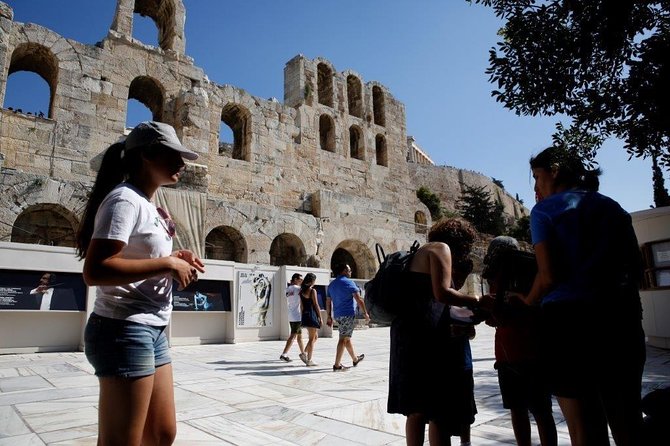
The route continues to the Herod Atticus Odeon, the large ancient theater on the southern slope of the Acropolis. Its steep seating and curved form make it easy to understand why this place still catches the eye, even when you are seeing it from outside.
Here, the game can help you connect architecture with use. Instead of only hearing that the building was a theater, you are prompted to examine its form and work out how details fit the story. The setting is especially effective for children because it feels more like a real place than an isolated artifact in a display case.
The stop also shows the strength of a walking game around major sights. You are not spending all your time in a queue or moving from one indoor room to another. You are using the streets, viewpoints, and ruins around the Acropolis as active parts of the experience.
Keep in mind that the supplied details do not promise an interior visit to the Odeon. Treat it as a stop on the outdoor route, with the guide using what you can see to support the clues.
More Treasure Hunts in Athens:
- Athens Family Mythology Treasure Hunt and Tour w Food Stop
★ 5.0 · 15 reviews - Athens: Private Urban Treasure Hunt and Tour
★ 4.4 · 10 reviews - Athens: Street Art Treasure Hunt with Food Stop
★ 4.2 · 9 reviews - Acropolis Museum: Family Tour &Treasure Hunt w/Ticket Option
★ 5.0 · 8 reviews
Prison of Socrates: a quieter story away from the main crowds
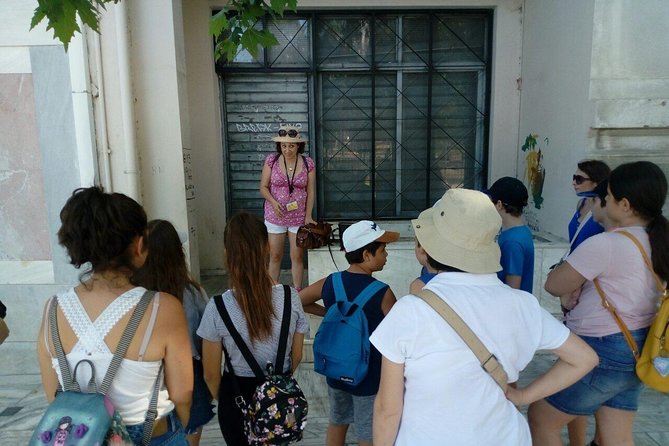
The Prison of Socrates brings a different mood. Compared with the headline monuments, this stop is less about grand scale and more about a story attached to a specific place.
That variety helps the tour. Children get more than a sequence of famous buildings, while adults see how Athens’ ancient stories are spread across the area. A clue connected to Socrates can also make philosophy feel less remote. The group is not simply memorizing a name. You are following a trail and working out what the place has to do with the story.
The stop may appeal most to people who enjoy puzzles that require thought rather than quick observation. One couple found some of the challenges genuinely stretching, which is a useful warning if your youngest children expect every answer to be obvious. The guide can offer help, but part of the pleasure is wrestling with a clue for a while.
Ancient Agora: connecting daily life with the famous monuments
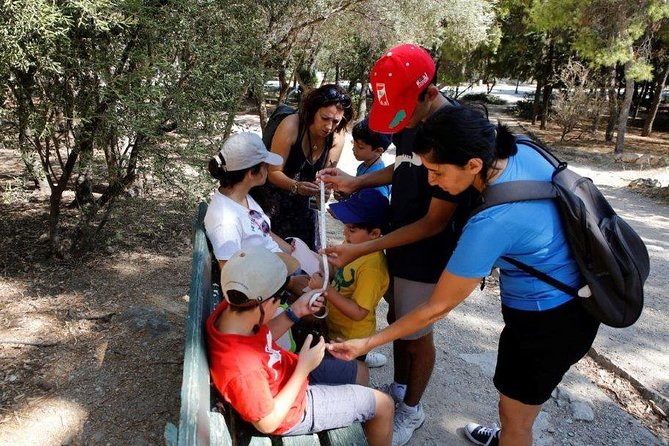
The Ancient Agora gives the route a wider frame. The Acropolis is the city’s most recognizable site, but the Agora helps you think about ordinary public life: meeting, trading, debating, and moving through the city.
That makes it a valuable stop for families. Children often understand a place better when they can imagine what people did there. The treasure hunt gives them a reason to search the ruins for details while Charis supplies the historical links.
The stop also prevents the tour from becoming a narrow Acropolis story. You are moving through several parts of ancient Athens and seeing how they relate. For adults, that broader route can make the rest of your sightseeing easier. Afterward, you have a better sense of where the main sites sit around the hill.
The walking distance is manageable for most people, but it is still a 2.5-kilometer route. Comfortable shoes, water, and sun protection are sensible, particularly in warm weather. The guide has helped groups find water refill points and shade, but conditions will still affect how much energy you have for the puzzles.
Roman Agora: finishing with another layer of Athens
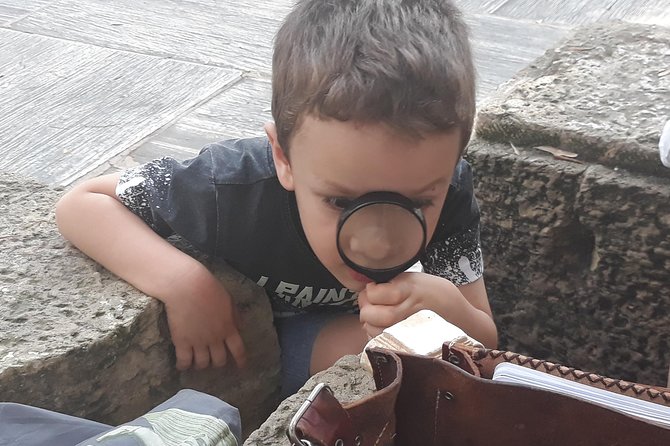
The Roman Agora adds a later chapter to the walk. By including it after the Acropolis and Ancient Agora, the route shows that Athens is not one single historical moment. Different periods left their marks on the same city.
That sequence gives the final clues a useful setting. You have already learned to look for symbols, patterns, and architectural details. By the end, you should be more alert to small features that a normal walk might miss.
The finish returns to the meeting point. That is helpful if you are planning lunch or another activity afterward, though the exact finish time may vary with the group. Since the tour involves solving rather than simply following a guide, leave some flexibility in your schedule.
The iPad, clues, and props: how the game works
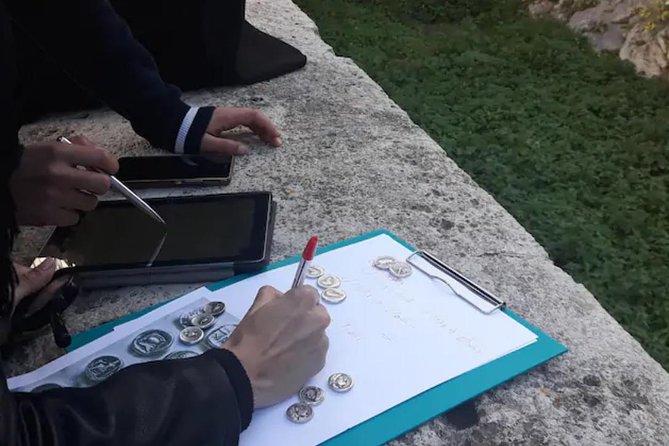
The technology is simple but well chosen. The iPad supplies the game, while the physical props make the activity feel less like a screen-based quiz. You move between the two, using information on the device and clues in the real world.
The best part is that the technology does not replace the guide. Charis explains the historical setting, watches how the group is doing, and helps when a clue becomes too difficult. You get the benefits of an interactive game without being left alone to interpret ancient sites through a device.
The central story involves finding a missing professor. That gives the route a clear thread and helps the puzzles feel connected. You are not solving unrelated riddles at random. Each answer moves the group toward the next part of the story.
Hints are available, though the timing may not suit everyone. One family felt that helpful advice sometimes arrived too quickly. If your group wants to struggle with a clue for a little longer, say so. In a private tour, you have a better chance of getting the level of help you prefer.
What $60.34 means for the value
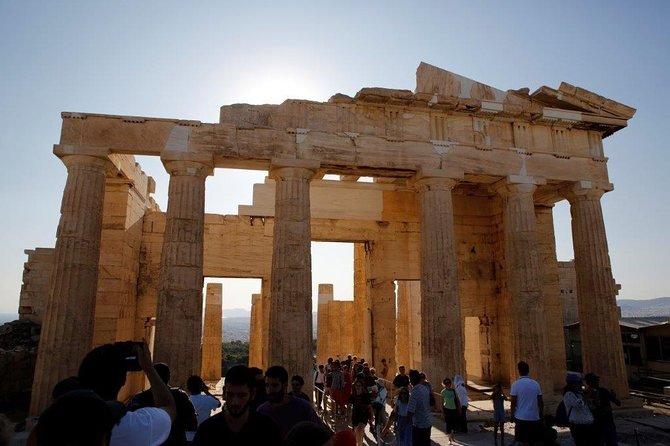
At $60.34 per person, this costs more than a basic self-guided walk, but it includes a private licensed guide, the game materials, and focused attention for your group.
For a family, the value is not only the historical information. You are paying for a format that can keep children involved during a long morning of sightseeing. If it prevents the familiar Are we done yet? refrain, that has real value.
The price also makes more sense for a small private group than for one or two people comparing it with a standard group walk. Charis can adapt the experience to your family, friends, or team. Group discounts are available, which may help larger parties.
You should compare it with your goal. If you want exhaustive information about classical architecture, a specialist walking tour may be a better fit. If you want an active introduction to the Acropolis area that gets everyone participating, the price is easier to justify.
The activity is booked well ahead on average, about 80 days in advance. That suggests you should plan ahead for a particular date, especially if your Athens schedule is tight. Free cancellation is available up to 24 hours before the start time. Poor weather can also lead to a new date or a full refund.
Who should book this Acropolis experience?
I would choose this for families with children, mixed-age groups, and adults who enjoy solving problems. It also fits a first morning in Athens because the route introduces several important places and helps you get your bearings around the Acropolis.
It is a good choice for:
- Families who want history without a long lecture
- Children who enjoy clues, technology, and competition
- Friends looking for something more active than a standard walk
- Corporate groups working on collaboration
- Adults who like escape-room puzzles but want an outdoor setting
- Groups that value a private guide and flexible attention
I would think twice if your group dislikes games, wants a very formal academic tour, or has limited walking ability. The activity is designed as a walking treasure hunt, and the tour description says most people can participate, but it does not provide a detailed accessibility assessment.
The experience is offered in English. It is near public transportation, and the listed start time is 10:00 a.m. Meet at Makrigianni 10, near the Acropolis Metro Station, and expect to finish back at that meeting point.
Should you book the Acropolis Treasure Hunt?
Book it if you want your group to participate rather than simply follow. The combination of Charis, the private format, the mystery backpack, and the route through five important Athens locations gives you a lively introduction to the Acropolis area.
Do not book it as your only Acropolis visit if you want a full explanation of the monuments on the summit. Think of this as an active orientation and a memorable history game. Pair it with a separate visit to the Acropolis itself, and you get both the big monuments and the stories, puzzles, and small details around them.
FAQ
How long does the Acropolis Treasure Hunt last?
The tour is listed as approximately two hours, while the detailed description presents a 2.5-hour journey. Plan for roughly two to 2.5 hours.
What is the price?
The listed price is $60.34 per person. Group discounts are available.
Where does the tour start?
The meeting point is Makrigianni 10, Athina 117 42, Greece, near the Acropolis Metro Station.
What time does the tour begin?
The listed start time is 10:00 a.m.
Where does the experience finish?
The activity ends back at the meeting point.
Is the tour private?
Yes. Only your group participates in the activity.
What language is offered?
The experience is offered in English.
What sites does the route visit?
The route includes the Acropolis, the Herod Atticus Odeon, the Prison of Socrates, the Ancient Agora of Athens, and the Roman Agora.
What does the mystery backpack contain?
The backpack includes clues and props. You also receive an iPad loaded with the game.
Can I cancel for a refund?
You can cancel at least 24 hours before the start time for a full refund. Changes or cancellations made less than 24 hours before the start are not accepted for a refund. If poor weather causes the activity to be canceled, you are offered another date or a full refund.
Just added around Athens
- Athens Hills: Mythology Treasure Hunt★ 5.0 · 3 reviews
- Athens Escape City Game “The Journey Through Time”★ 5.0 · 12 reviews
- Athens: Treasure Hunt Walking Tour ‘The Lost Library’★ 4.5 · 3 reviews
- Athens: Street Art Treasure Hunt with Food Stop★ 4.2 · 9 reviews
- Athens: Private Urban Treasure Hunt and Tour★ 4.4 · 10 reviews
- Ancient Agora: E-Ticket w/Treasure Hunt Tour on your phone★ 4.8 · 6 reviews
- Acropolis Museum: Family Tour &Treasure Hunt w/Ticket Option★ 5.0 · 8 reviews
- Athens Family Mythology Treasure Hunt and Tour w Food Stop★ 5.0 · 15 reviews
Treasure Hunts, compared.


St. Augustine: Treasure Hunt Cruise with Onboard Show
Read our review →

Fun, Flexible Treasure Hunt Around Manchester with Cryptic Clues & Hidden Gems
Read our review →
Fun, Flexible Treasure Hunt Around York with Cryptic Clues & Hidden Gems
Read our review →
Fun, Flexible Treasure Hunt Around Bath with Cryptic Clues & Hidden Gems
Read our review →York Treasure Hunt Adventure: The Mystery of The Gunpowder Snitch
Read our review →Browse the lists this tour appears in