

Reviewed · ATHENS
Greek Mythology Treasure Hunt for Kids – Athens Private Tour
Athens becomes a giant game board on this private mythology treasure hunt. Instead of asking children to admire ruins in silence, the guide turns each stop into a challenge involving stories, riddles, points, maps, and a final code. The route links the Temple of Olympian Zeus, Plaka, the Panathenaic Stadium, the National Garden, and Syntagma Square.
I like the private format, since the guide can slow down for a four-year-old or add harder questions for older children. I also like the careful mix of sightseeing and play, especially the use of shaded spots for activities. The main caution is age fit: younger and mythology-loving children seem to get the most from the games, while some older children may find the activities too simple.
Key points at a glance

- A private four-hour family walk: Only your group takes part, so the guide can adjust the pace and activities.
- Myths become a treasure hunt: Children use riddles, challenges, map reading, points, and codes rather than just listening to stories.
- Five useful Athens stops: The route connects the Temple of Olympian Zeus, Plaka, Panathenaic Stadium, National Garden, and Syntagma Square.
- No attraction admissions are included: You see the sites from outside, so this is not a substitute for an Acropolis or ancient Agora visit.
- Strong guide-led experience: Bianca, Antonia, Niki, Effie, and Alexandra are named in the feedback as engaging guides who worked well with children.
- Best for families who value participation: Children who like Greek gods, puzzles, competition, and storytelling should get the most from it.
Why this Athens treasure hunt works for families
The clever idea here is simple: children learn Athens by doing something. They may follow a clue to the next location, answer a mythology question, read a map, compete with the adults, or collect numbers for a code. That gives them a reason to keep walking when the summer heat and ancient stones begin to blur together.
The guide is a children’s specialist from the Be a Greek team. Activities are selected according to the children’s ages, and the private setup gives the guide room to change the pace. That matters when one child wants every detail about Athena and another is more interested in opening Pandora’s box.
This is not a standard city tour with a few child-friendly comments added. The mythology hunt is the main event. Adults still receive explanations about Greek culture and the city, but the guide directs most of the attention toward keeping children involved.
The strongest reports name Bianca, Antonia, Niki, Effie, and Alexandra. Their approaches differ, but the useful pattern is clear: the guide’s energy and ability to read a family can make or break the day. Antonia is described as pitching the material well for children aged 8 and 10, while Bianca successfully involved children aged 3, 7, and 10. Another family found that a 13-year-old enjoyed it alongside a four-year-old.
That range is encouraging, though it does not erase the age concern. One family with children aged 8, 10, and 12 felt the activities were too young, even after asking for adjustments. The company says guides adapt the stories and questions, but the core games remain part of the format. If your children are older and want detailed archaeology, this may feel light.
More Family and Kids Games in Greece
- Athens: Family Mythology Treasure Hunt and Tour
★ 4.8 · 42 reviews - Athens: Percy Family Treasure Hunt & Tour
★ 4.8 · 19 reviews - Athens Family Mythology Treasure Hunt and Tour w Food Stop
★ 5.0 · 15 reviews
Temple of Olympian Zeus: starting among the giants
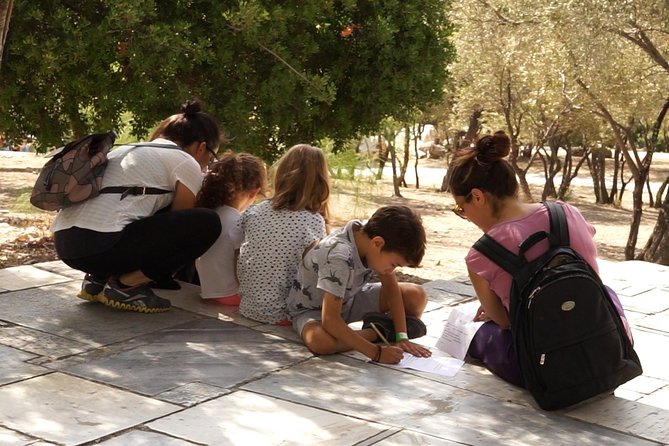
The first stop is the Temple of Olympian Zeus, one of the biggest temples built in ancient Greece. Even from outside, the remaining columns give children a clear sense of scale. A story about Zeus and the gods has a natural setting here, and the treasure hunt begins with the temple as its first major clue.
You spend about 30 minutes at this stop. The admission ticket is not included, and the supplied details do not indicate that the tour enters the site. Plan on viewing it from the route rather than treating this as a site visit.
That distinction is important. The temple works well as a visual introduction, but you should not book this activity expecting guided access to archaeological interiors. The real value is the connection between the monument, the myth, and the first challenge.
Plaka: myths in the old neighborhood
From the temple area, the route continues into Plaka, the picturesque neighborhood below the Acropolis. This is one of the more atmospheric parts of the walk, with narrow streets, older buildings, shops, and plenty of visual change from the open temple site.
The mythology continues here through another activity. Plaka is a good place for a child-focused tour because it feels less like a formal museum and more like a place to explore. The guide can keep children moving while slipping in stories about gods, heroes, and the way ancient Greeks explained the world around them.
The stop lasts about 30 minutes and has no admission charge. You may also find this a useful orientation point for later independent exploring. The route does not replace a full walking tour of Plaka, but it gives your family a reason to notice it instead of simply passing through on the way to the Acropolis.
Panathenaic Stadium: marble, races, and a strong visual stop

The Panathenaic Stadium, also called the Kallimarmaron, is built entirely of marble. It is one of the easiest Athens sights for children to understand at a glance: a huge stadium, rows of seats, and a setting designed for competition.
The treasure hunt uses the stadium as another mythology and activity stop, with roughly 30 minutes here. Like the temple, its entrance fee is not included, so do not assume your ticket covers entry. The provided tour details describe passing key sites rather than entering every attraction.
This is also where the game element can help. A child who is bored by dates may respond to the idea of races, contests, heroes, and gods. Families with competitive children may enjoy the points and challenges, while adults can take in the stadium and its unusual marble construction.
Keep your expectations clear: this is a stop along a private walking route, not a dedicated stadium tour. If you want to inspect every section inside, you will need to arrange that separately.
More Treasure Hunts in Greece
- The Acropolis Treasure Hunt: Licensed Guide + Interactive Puzzles
★ 5.0 · 60 reviews - Athens: Private Urban Treasure Hunt and Tour
★ 4.4 · 10 reviews - Athens: Street Art Treasure Hunt with Food Stop
★ 4.2 · 9 reviews - Acropolis Museum: Family Tour &Treasure Hunt w/Ticket Option
★ 5.0 · 8 reviews
National Garden: myths as ancient explanations

The National Garden gives the group a break from major monuments and streets. The activity here focuses on myths that ancient Greeks created to explain events that science explains today. That opens the door to useful questions: why did people tell these stories, what did the gods control, and how did myths help make sense of nature?
The garden is also a practical place for a family pause. One family specifically appreciated that the guide chose shaded spots for the activities. That is not a small detail in Athens, especially during a hot part of the day. Ask for a comfortable pace if your children tire easily, since the hunt is designed to keep the group moving between locations.
The National Garden stop is free and lasts about 30 minutes. It is less about seeing a single famous monument and more about giving the stories room to breathe. Children can listen, solve a clue, and reset before the final part of the route.
Syntagma Square: ending with hope and a final clue
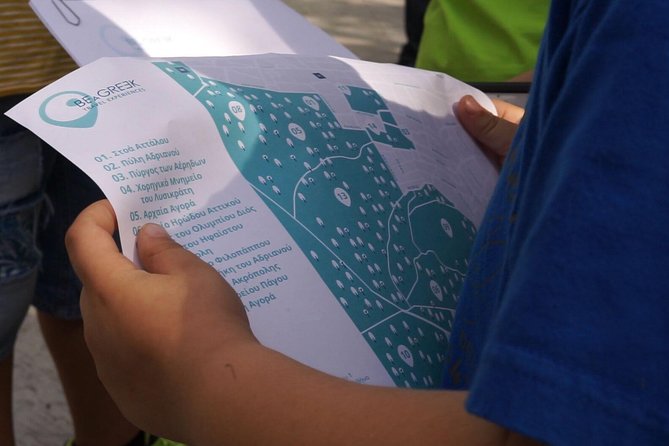
The tour ends at Plateia Syntagmatos, or Syntagma Square. Here the theme turns to hope, with the children learning how people have understood and held onto it. The final activity gives the route a clear finish rather than simply ending after the last monument.
The square is a useful endpoint because it is central and close to public transportation. You can continue exploring Athens from here, find a place to eat, or return to your hotel. The tour begins near the Acropoli area at AcropoliAthens, 117 42, and finishes at Syntagma Square, so the route moves across central Athens rather than looping back to the start.
The supplied itinerary lists five main stops, each planned for about 30 minutes. The walking between them is part of the hunt, and some families found that children covered a good deal of ground without focusing on the distance. If you have a toddler, bringing a carrier is sensible. One family used one for portions of the route with a three-year-old.
What children actually do during the hunt
The activity materials are central to the format. You are not simply handed a worksheet and left to manage it. The guide presents the stories, gives challenges, and uses the children’s answers to keep the hunt moving.
The games can include:
- Riddles linked to the next location
- Map reading led by the children
- Mythology questions and story challenges
- Competitions between children and adults
- Collecting points or numbers to solve a code
- A final clue connected with Pandora’s box
The exact mix depends on the ages in your group. This flexibility is useful for a family with a shy child, a keen mythology fan, and a younger sibling who needs shorter tasks. Bianca, for example, was praised for drawing initially quiet children into the activity. That kind of patient attention is more valuable here than a long lecture.
The method also helps adults. While children work on a challenge, you can ask the guide about Greek customs, local places, or the meaning behind a myth. Alexandra was noted for offering useful suggestions about places to eat and visit after the tour, though you should see that as a bonus rather than a guaranteed feature.
The guide makes the biggest difference
A private children’s tour depends heavily on the person leading it. The material can be excellent, but a stiff guide will lose a child quickly. The strongest accounts describe guides who tell stories with energy, listen carefully, and adjust to the family in front of them.
Antonia is praised for bringing the ancient world alive and keeping a child engaged throughout the route. Effie is described as animated and good with a family that wanted both adult interest and child-friendly fun. Niki received praise for her mythology stories and patient manner, although the age-fit complaint connected to her tour shows that a friendly guide cannot always solve a mismatch between expectations and format.
If you can request a guide, Bianca, Antonia, Effie, Niki, and Alexandra are names worth asking about. The company may not be able to guarantee a particular person, but sharing your children’s ages and interests before booking is still a smart move.
Age range: best for curious younger children
The tour has worked for children as young as three and for groups that include teenagers. That does not mean every age gets the same value.
I would look first at interest, then at age. A mythology-loving eight-year-old may have a terrific time, especially if the child enjoys riddles and competition. A ten-year-old who likes games can also get a lot from it. A teenager who enjoys Greek gods, puzzles, or helping younger siblings may take part happily, but a teenager expecting serious archaeological detail may want something more advanced.
The one clear warning comes from the family with children aged 8, 10, and 12 who felt the activities had not changed enough for older children. The company says the guide adjusts the delivery and questions, but the activities themselves follow a set concept. Ask specific questions before booking if your children are closer to the older end of that range.
Mixed-age families may find the private format especially useful. The guide can give a harder question to an older child while keeping the younger one involved with a simpler task. Several families also found that children who were tired, shy, or initially reluctant became more involved as the hunt continued.
Price, time, and what you actually receive
The listed price is $174.98 per person. The provider’s response to one concern refers to a price of €78 per person, so currency and current pricing should be checked carefully before you commit. Group discounts are available, but the details are not supplied.
At this price, you are paying for a private four-hour activity, a children’s specialist, prepared materials, a coffee or traditional refreshment for each person, and a route built around family participation. Taxes and fees are included. That can be fair value for a family that wants a tailor-made morning or afternoon rather than a large shared tour.
The value drops if you expect entrance to the Temple of Olympian Zeus, Panathenaic Stadium, or other sites. Those admission fees are not included, and the experience is not designed as a full archaeological tour. You may need a separate Acropolis and ancient Agora visit, especially if seeing the ruins inside matters to you.
I would also compare the price with your family’s likely attention span. Four hours is a substantial outing. The hunt helps children stay focused, but Athens can be hot and the route involves walking. A private guide can adjust the pace, yet you should still choose a time when your children are rested.
A coffee or traditional refreshment is included, which gives the group a built-in pause. Personal purchases, such as souvenirs, are extra.
Practical details before you book
Confirmation arrives when you book, and the tour is offered in English. It is near public transportation, service animals are allowed, and most people can participate. The activity is private, so only your group joins the guide.
The meeting point is in the Acropoli area, and the endpoint is Syntagma Square. Those locations make it easy to add the tour to a day of central Athens sightseeing, but you should allow time to reach the start point.
Free cancellation is available up to 24 hours before the local start time. Cancellations or changes inside that window are not accepted for a refund.
Should you book the Greek Mythology Treasure Hunt?
Book it if your children enjoy stories, riddles, competitions, and learning through movement. It is especially useful early in an Athens visit because it gives your family a feel for central Athens while introducing the gods and myths behind several major sights.
I would also choose it for a family that wants a private guide and needs flexibility. Children aged roughly 5 to 10, mythology fans, and mixed-age groups with an involved adult audience seem the strongest match. Ask about activities for older children before booking, since the core games may feel young to a 12-year-old or teenager.
Do not book it as your only Athens sightseeing tour. You will not receive a full Acropolis, ancient Agora, or museum visit, and entrance tickets are separate. Think of it as a playful city walk that helps children connect with Athens. Add a more detailed archaeological visit if your family wants ruins and artifacts explained at length.
FAQ
How long does the Greek Mythology Treasure Hunt last?
The tour lasts approximately four hours.
Is this a private tour?
Yes. Only your group takes part in the activity.
What places does the tour visit?
The route includes the Temple of Olympian Zeus, Plaka, Panathenaic Stadium, National Garden, and Syntagma Square.
Are entrance fees included?
No. Entrance fees to points of interest are not included.
Is the tour offered in English?
Yes. The activity is offered in English.
What is included in the price?
Activity materials, one coffee or traditional refreshment per person, and all taxes and fees are included.
Can I cancel for a full refund?
Yes, if you cancel at least 24 hours before the experience start time. Cancellations made less than 24 hours before the start are not refunded.
More Family and Kids Games in Athens
- Hamburg: Scavenger Hunt Self-Guided Tour for Children
★ 4.5 · 319 reviews - Berlin: Self-Guided Family and School Class Scavenger Hunt
★ 4.6 · 128 reviews - Dresden: Old Town Scavenger Hunt for Children
★ 4.6 · 117 reviews - Leipzig: Scavenger Hunt Self-Guided Tour for Children
★ 4.4 · 105 reviews
More Treasure Hunts in Athens
- Ancient Agora: E-Ticket w/Treasure Hunt Tour on your phone
★ 4.8 · 6 reviews - Athens Hills: Mythology Treasure Hunt
★ 5.0 · 3 reviews - Athens: Treasure Hunt Walking Tour ‘The Lost Library’
★ 4.5 · 3 reviews - Hamburg: Treasure Hunt Game through HafenCity
★ 4.7 · 364 reviews
Just added around Athens
- Athens Hills: Mythology Treasure Hunt★ 5.0 · 3 reviews
- Athens Escape City Game “The Journey Through Time”★ 5.0 · 12 reviews
- Athens: Treasure Hunt Walking Tour ‘The Lost Library’★ 4.5 · 3 reviews
- Athens: Street Art Treasure Hunt with Food Stop★ 4.2 · 9 reviews
- Athens: Private Urban Treasure Hunt and Tour★ 4.4 · 10 reviews
- Ancient Agora: E-Ticket w/Treasure Hunt Tour on your phone★ 4.8 · 6 reviews
- Acropolis Museum: Family Tour &Treasure Hunt w/Ticket Option★ 5.0 · 8 reviews
- Athens Family Mythology Treasure Hunt and Tour w Food Stop★ 5.0 · 15 reviews
Treasure Hunts, compared.


St. Augustine: Treasure Hunt Cruise with Onboard Show
Read our review →

Fun, Flexible Treasure Hunt Around Manchester with Cryptic Clues & Hidden Gems
Read our review →
Fun, Flexible Treasure Hunt Around York with Cryptic Clues & Hidden Gems
Read our review →
Fun, Flexible Treasure Hunt Around Bath with Cryptic Clues & Hidden Gems
Read our review →York Treasure Hunt Adventure: The Mystery of The Gunpowder Snitch
Read our review →Browse the lists this tour appears in