
Reviewed · STRATFORD UPON AVON
Stratford Treasure Hunt The Mystery of Shakespeare’s Lucky Quill
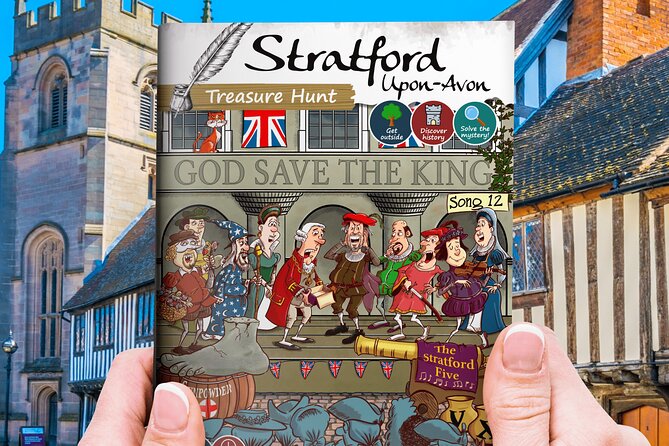
The fun here is not simply spotting Shakespeare’s famous buildings. You get a story-led treasure hunt that sends you through Stratford’s historic center to recover the playwright’s Lucky Quill, identify suspects, and expose a villain. The 18 clues turn a familiar sightseeing walk into a shared puzzle.
I like the freedom to start when it suits you, and I like how the 40-page booklet mixes puzzles with useful local history. You can work as a couple, family, or private group, then pause for coffee, food, or a drink along the way. The main drawback is that you are on your own, so a missed clue can cause a bit of head-scratching, especially at busy stops or in a pub.
Key points at a glance

- 18 cryptic clues over 3.25 kilometers: The route covers Stratford’s central sights without requiring a full day of walking.
- A self-guided Shakespeare mystery: There is no live guide, so your group controls the pace and the starting time.
- Five useful sightseeing stops: The route links Shakespeare’s Schoolroom, the RSC, his birthplace, Holy Trinity Church, and the canal.
- A 40-page English booklet: You receive the unfolding story, clues, maps, and local history in one portable guide.
- Good for mixed ages and abilities: The walk took one older couple about three hours, even with arthritic knees, though comfort depends on your own mobility.
- A strong group activity: You can compete with friends or solve the case together, with a final reveal designed to provide a satisfying finish.
A Shakespeare mystery instead of a standard walking tour
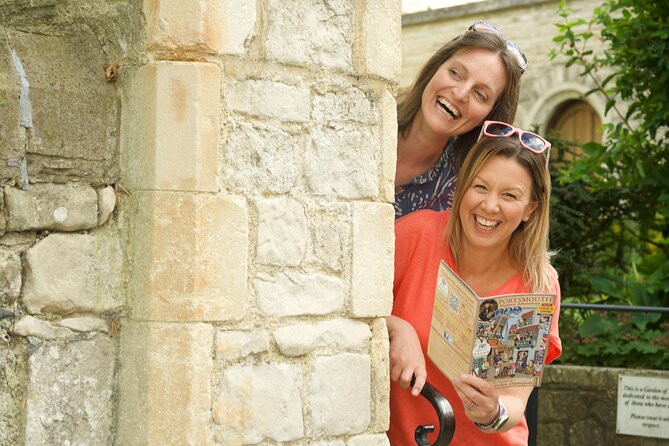
Stratford-upon-Avon can be easy to read as a checklist: birthplace, church, theater, river, then lunch. This activity gives you a reason to look more closely. You are not just walking from one attraction to the next. You are searching for clues, reading details around you, and using local stories to eliminate suspects.
The plot centers on Shakespeare’s Lucky Quill and a daring robbery. As the case develops, the booklet leads you through the town and gradually adds new pieces to the story. The final solution reveals the villain in a visual wow moment, so the ending is more than an answer printed on the last page.
I especially like the balance between play and place. The clues are the main engine, but the booklet also gives you stories about Shakespeare, Stratford, its taverns, and some of the town’s less respectable characters. That makes the activity useful for first-time visitors who want a structure for seeing Stratford, as well as repeat visitors who think they already know the center.
The activity is private to your group. That matters if you do not want to join a large walking tour or keep up with a guide. It also means you need to read the instructions carefully, carry a pen, and accept that the quality of the afternoon depends on how well your group works together.
More Treasure Hunts in the UK
- Fun, Flexible Treasure Hunt Around Manchester with Cryptic Clues & Hidden Gems
★ 5.0 · 253 reviews - Fun, Flexible Treasure Hunt Around York with Cryptic Clues & Hidden Gems
★ 5.0 · 248 reviews - Fun, Flexible Treasure Hunt Around Bath with Cryptic Clues & Hidden Gems
★ 5.0 · 208 reviews
Starting at Lily’s Cafe on Rother Street
Your starting point is Lily’s Cafe, at 19 Rother Street, Stratford-upon-Avon, CV37 6LU. The activity ends back at this meeting point, making the route easier to plan around meals, shopping, or another Stratford booking.
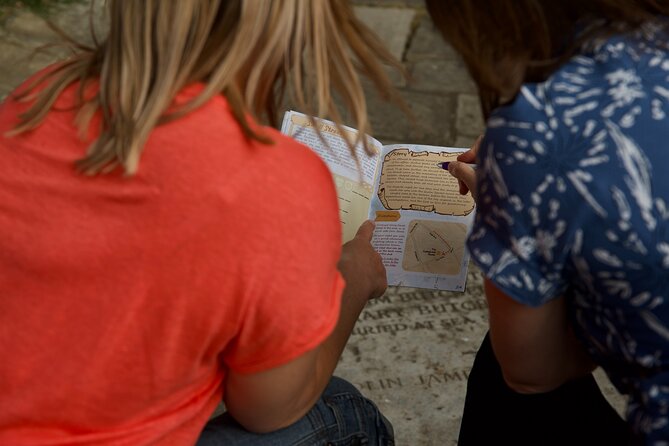
Your mobile ticket gets you to the activity, but the essential working material is the Mystery Guide™ booklet. It is 40 pages long and written in English, with the mystery story, 18 clues, historical notes, and maps. Bring a pen. One useful practical tip is to turn only one page at a time, since looking too far ahead can spoil the puzzle.
You choose the start time rather than meeting a guide at a fixed hour. That is a real advantage if you arrive by train, have a theater booking later, or want to wait for better weather. The tradeoff is simple: there is no guide to explain a clue, keep the group moving, or fill in gaps if you get stuck.
Plan on about three hours for the complete route. The walking distance is roughly 3.25 kilometers, which is manageable for many people. It is not a race, and you can stop for coffee, lunch, or a drink. One couple completed it in exactly three hours without stopping because rain was on the way. Another group took a couple of hours for the clues but spent longer overall visiting attractions and pausing along the route.
Stop 1: Shakespeare’s Schoolroom and Guildhall
The first major stop takes you to Shakespeare’s Schoolroom and Guildhall, one of the most atmospheric places on the route. This is where the activity begins to connect the fictional mystery with Stratford’s real past.
Expect to examine details, solve the opening clues, and learn about the town’s links with Shakespeare’s early life. The setting gives the story a strong start because you are working in a place connected with education, civic life, and the Tudor town that shaped the young Shakespeare.
The clue format is intended to be solvable rather than obscure, but you should expect to read carefully. The group can divide tasks naturally: one person studies the map, another checks the wording, and another keeps track of suspects. That teamwork is part of the fun.
If you are visiting Stratford for the first time, this stop helps you get your bearings. If you have been before, the puzzle encourages you to notice architectural details you may have walked past.
Stop 2: The Royal Shakespeare Theatre

The route then brings you to the Royal Shakespeare Theatre, Stratford’s most famous modern performance venue. Its presence gives the hunt a useful link between Shakespeare’s original world and his continuing place in the town today.
You are not promised a theater tour or a performance ticket, so think of this as an exterior sightseeing stop within the walking route. The booklet uses the town around the theater as part of the puzzle, giving you a reason to pause and observe rather than simply take a quick photograph.
This can be a particularly good way to use time before an evening performance. One group completed the mystery before attending a show at the RSC, using the activity as a structured morning or afternoon. If you have theater tickets, leave extra time rather than assuming every clue will take the same length of time.
The area can be busy, and that may make a clue less convenient to inspect. The route is self-paced, so you can step aside, reread the instructions, and return to the spot if needed.
Same streets, a different set of clues:
- York Treasure Hunt Adventure: The Mystery of The Gunpowder Snitch
★ 5.0 · 203 reviews - Fun, Flexible Treasure Hunt Around Oxford with Cryptic Clues & Hidden Gems
★ 5.0 · 202 reviews - Shepton Mallet Prison Escape Room – The Cell
★ 5.0 · 187 reviews - Interactive Jack the Ripper Night Walk: London’s Murder Mystery
★ 5.0 · 171 reviews
Stop 3: Shakespeare’s Birthplace
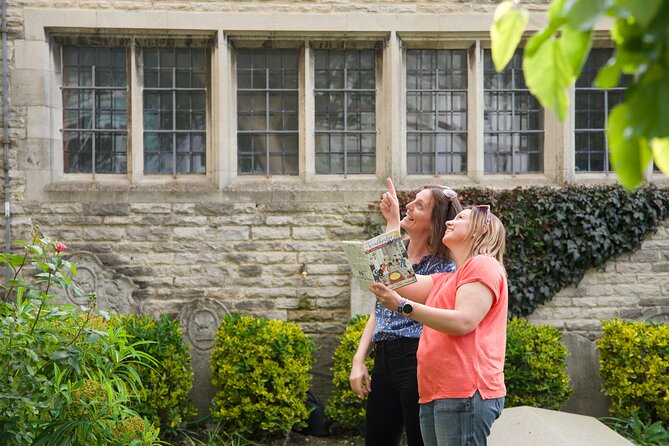
Shakespeare’s Birthplace is the route’s most obvious Shakespeare landmark, but the hunt gives you a reason to look beyond the standard photo stop. Here, the booklet ties the investigation more closely to Shakespeare himself and adds historical information to the fictional search for the quill.
The activity does not include admission to the house or a guided visit inside. If you want to tour the attraction, treat that as a separate plan and allow more than the stated three hours. The mystery can still work as a sightseeing framework if you choose not to enter, and you can arrange a visit during a pause if timing allows.
This is one of the route’s strengths for repeat visitors. You may have seen the building before, but the clue asks you to focus on specific details and surroundings. The hunt turns the familiar into something active.
For families, this is also a natural point to keep younger participants interested. Instead of hearing a long talk about Shakespeare, children can search, compare answers, and help decide which suspect should be removed from the case.
Stop 4: Holy Trinity Church
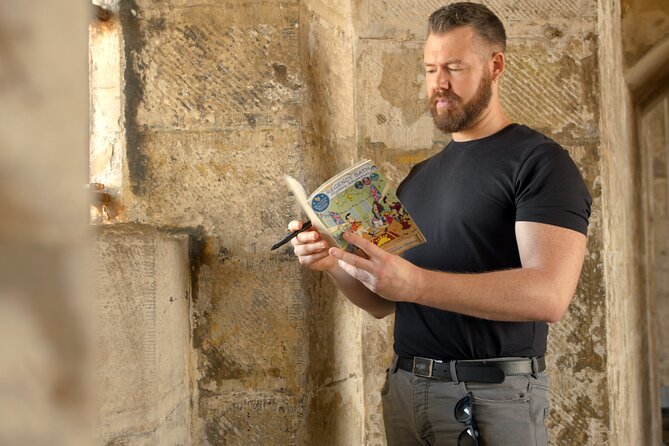
Holy Trinity Church adds a quieter and more reflective stop to the route. Shakespeare was baptized and buried here, so the church has an important place in Stratford’s story.
The clue work gives the stop a clear purpose, but the setting may also encourage you to slow down. This is not just another puzzle station. It is a place where Shakespeare’s connection to Stratford feels more personal and lasting.
As with any church visit, be respectful of services, worshippers, and any restrictions on photography or access. The provided information does not promise admission arrangements, so do not build your schedule around a particular interior visit.
I like this part of the route because it prevents the hunt from becoming a simple pub-and-shop circuit. You get a change of mood, a major historical landmark, and another chance to connect the fictional story with real Stratford.
Stop 5: Stratford-upon-Avon Canal
The final listed stop is the Stratford-upon-Avon Canal, which gives the walk a change of scenery after the concentrated streets of the center. Water, towpath views, and a more open setting can make this section feel like a welcome break.
The canal also helps spread the route across different sides of Stratford. You are not repeating the same shopping streets or circling the same landmarks. The changing surroundings keep the hunt from feeling like a series of indoor notices and plaques.
Weather matters here. The activity works in light rain, and one couple enjoyed it despite on-and-off rain, but comfortable shoes and a waterproof layer are sensible choices. The route is only about 3.25 kilometers, yet wet conditions, crowded paths, or frequent stops can make the walk feel longer.
By this point, your group should have enough information to connect the clues, remove suspects, and identify the villain. The final reveal is designed to happen before your eyes, giving the hunt a proper finish rather than an anticlimactic answer hidden in the booklet.
How difficult are the clues?
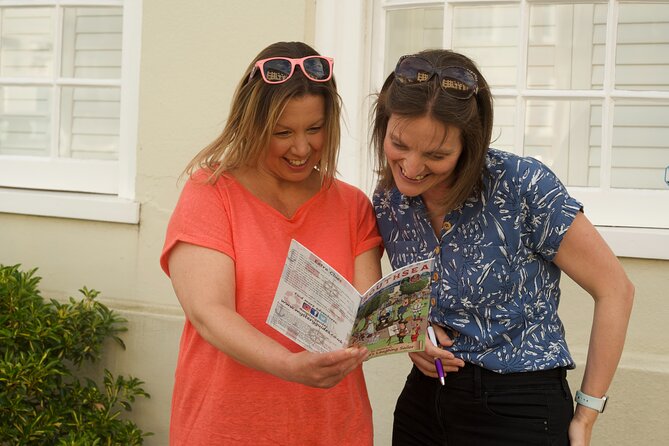
The clues are cryptic, but they are not presented as an expert-only puzzle contest. The right level depends on your group. Some people will solve them quickly, while others will need to reread the wording or examine the surroundings more carefully.
I would expect the first clue or two to teach you how the guide works. Do not assume every word points to a literal place name. One group lost time over a reference to Tudor Gate because they went to the place with that name, only to find that the clue was pointing elsewhere. Once you understand the style, the rest should feel more manageable.
There can be occasional practical snags. A clue may be hard to spot because of crowds, weather, or a poster placed behind a table in a pub. One participant had trouble locating clue 9 and used an online picture for help. That kind of problem does not ruin the activity, but it is worth knowing that the route is not a perfectly controlled escape room.
If your group gets stuck, keep calm and check the wording, map, and surroundings before wandering too far. Take a photograph of anything useful if your group wants to compare details later. The aim is to solve the case, not prove who can suffer longest beside a noticeboard.
Stopping for food, coffee, or a drink
The guide does not include alcoholic beverages, meals, or a live host. That is not a problem if you see the activity as a flexible framework for your day.
You can stop for coffee, lunch, or a drink along the way. Several groups built those breaks into the outing, and one couple enjoyed a seasonal hot drink followed by a cold one. Another group used the route to combine shopping and eating with the clues.
The pub element adds atmosphere, but it can also be the least comfortable part of the hunt. A clue located in a busy pub may require you to look around while other people are using the tables. If you dislike drawing attention to yourself, plan to be polite, ask staff if needed, and avoid treating the venue like a scavenger-hunt set where everything is yours to move.
Because the booklet includes a map and a route, you do not need to rush from stop to stop. You can use the activity as the backbone of a half-day in Stratford.
Who will enjoy this most?
I would choose this for a couple, family, or group of friends who want to explore without joining a conventional tour. It suits people who enjoy wordplay, small discoveries, and a little friendly argument over the correct answer.
It is also a strong gift. The booklet gives the outing a clear purpose, and the combination of clues, walking, history, coffee, and food makes it feel like more than a single attraction ticket. The excellent rating of 4.9 from 115 ratings, with 100 percent of respondents recommending it, supports its appeal, though the experience still depends on your group enjoying puzzle solving.
Older participants can manage the route if they are comfortable walking 3.25 kilometers and standing at clue locations. A couple in their late sixties and early seventies completed it despite arthritic knees. That is encouraging, but it is not a guarantee of easy access for every person. The activity asks for a moderate level of physical fitness, and there is no guide to adjust the route.
People who want a detailed lecture, guaranteed access to every attraction, or a tightly timed itinerary should choose a traditional guided tour instead. Here, the town and the booklet do the teaching, while you do the organizing.
Value, timing, and practical planning
No price is provided here, so I cannot judge the exact cost. I can judge what you receive for the fee: a private activity, a 40-page booklet, maps, 18 clues, local history, and roughly three hours of entertainment in central Stratford.
That is good value if you use the hunt to structure a half-day and combine it with your own meals or attraction visits. It is less useful if you want every minute led by someone else. The lack of a guide keeps the outing flexible, but it also means the booklet is the product you are relying on.
Allow extra time if you plan to enter Shakespeare’s Birthplace, stop for lunch, browse shops, or attend a performance. If you want a fast, uninterrupted puzzle walk, three hours is a sensible estimate. If you want a relaxed day, treat three hours as the clue-solving time rather than the entire outing.
Free cancellation is available when you cancel at least 24 hours before the local start time. Changes or cancellations within 24 hours are not refunded, so check your plans before that deadline.
Should you book Shakespeare’s Lucky Quill?
I would book it if you want a playful way to see Stratford’s major sights and are happy to manage your own route. The strongest reasons are the flexible start, private format, useful booklet, and the way the mystery makes you pay attention to places you might otherwise pass.
Bring a pen, wear comfortable shoes, and expect at least one clue to make you pause. If you are visiting for the first time, the hunt gives your day shape. If you know Stratford well, it may still show you details you have missed.
Skip it if your ideal visit is a formal history talk, a fully guided walk, or a tightly controlled schedule. For everyone else, Shakespeare’s Lucky Quill is a clever three-hour activity with enough history to inform, enough puzzle work to engage, and enough flexibility to fit neatly into a Stratford day.
FAQ
How long does the Stratford Treasure Hunt take?
The activity takes approximately three hours. The walking distance is about 3.25 kilometers, though your total time may be longer if you stop for coffee, lunch, drinks, shopping, or attractions.
Where does the activity start?
It starts at Lily’s Cafe, 19 Rother Street, Stratford-upon-Avon, CV37 6LU, UK.
Where does the activity finish?
The activity finishes back at the starting meeting point.
Is a guide included?
No. This is a self-guided private activity for your group. You use the Mystery Guide™ booklet to follow the story, map, and clues.
What is included?
You receive a 40-page activity booklet in English. It contains the mystery story, 18 cryptic clues, historical information, and maps.
What sights are included on the route?
The route includes Shakespeare’s Schoolroom and Guildhall, the Royal Shakespeare Theatre, Shakespeare’s Birthplace, Holy Trinity Church, and the Stratford-upon-Avon Canal.
Can I stop for food or drinks?
Yes. The activity is self-paced, so you can pause for coffee, lunch, or a drink. Alcoholic beverages are not included.
What happens if I need to cancel?
You can receive a full refund if you cancel at least 24 hours before the experience start time. Cancellations or changes made within 24 hours are not accepted for a refund.
Just added around the UK
- Immersive London Treasure Hunt Adventure – Outdoor Escape Room★ 5.0 · 11 reviews
- York Treasure Hunt Adventure: The Mystery of The Gunpowder Snitch★ 5.0 · 203 reviews
- London Charles Dickens Puzzle Questo and Self-Guided Tour★ 5.0 · 6 reviews
- London’s Crown Secret: Self-Guided Royal Puzzle Quest★ 4.5 · 8 reviews
- London (Covent Garden) Scavenger Hunt and Sights Self-Guided Tour★ 5.0 · 7 reviews
- London Scavenger Hunt and Highlights Self-Guided Tour★ 4.0 · 4 reviews
- London: Murder Mystery Cruise With 3-Course Dinner★ 4.5 · 18 reviews
- Scholars & Secrets of Cambridge: Self-Guided Puzzle Adventure★ 3.5 · 19 reviews
Treasure Hunts, compared.


St. Augustine: Treasure Hunt Cruise with Onboard Show
Read our review →

Fun, Flexible Treasure Hunt Around Manchester with Cryptic Clues & Hidden Gems
Read our review →
Fun, Flexible Treasure Hunt Around York with Cryptic Clues & Hidden Gems
Read our review →
Fun, Flexible Treasure Hunt Around Bath with Cryptic Clues & Hidden Gems
Read our review →York Treasure Hunt Adventure: The Mystery of The Gunpowder Snitch
Read our review →Browse the lists this tour appears in