
Reviewed · LONDON
Interactive Jack the Ripper Night Walk: London’s Murder Mystery
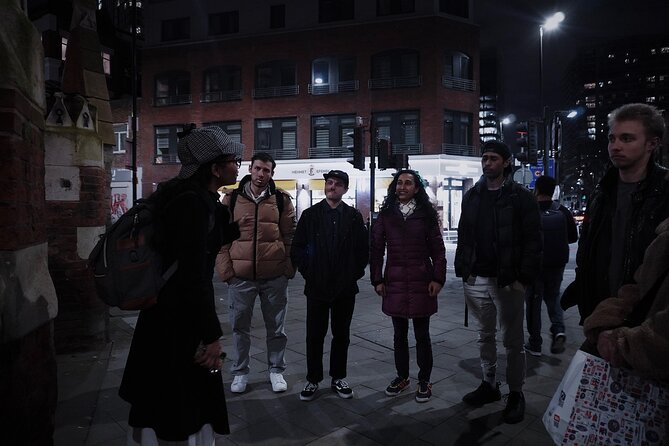
Jack the Ripper’s identity remains unsolved, but the streets connected to the case are real, compact, and atmospheric after dark. This walk takes you from Brick Lane to Mitre Square, using alleys, pubs, churches, and old streets to explain the crimes and the hard lives of Victorian East London.
I like two things in particular: the route gives the case a strong sense of place, and the better guides turn it into a real investigation rather than a simple crime tale. Tyson is praised for remembering names and keeping people involved, while Sadie is noted for telling the women’s stories with energy and care. The main drawback is practical: the walk ends away from its starting point, and one person found it hard to hear the guide at times.
Key points to know before you book
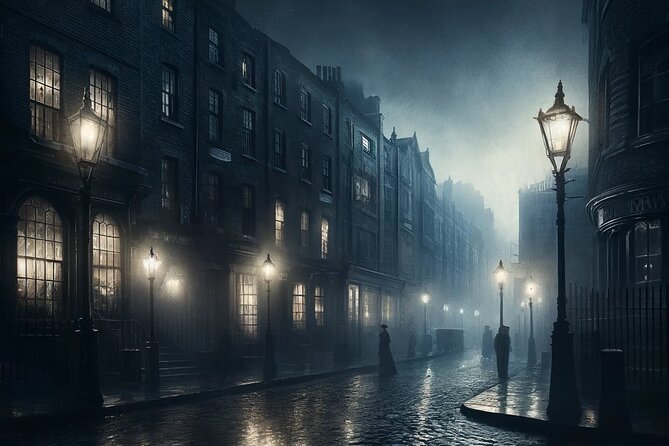
- Seven stops lead you through Whitechapel and Spitalfields, ending at the murder site in Mitre Square.
- The 2.5-hour route is a one-way walk, so plan your journey home from the endpoint rather than the church where you begin.
- The case is treated as a mystery, with clues such as the Goulston Street message and the bloodied apron fragment open to debate.
- The women’s lives receive needed attention, especially at stops linked with Annie Chapman, Martha Tabram, and Catherine Eddowes.
- Guides make a major difference, with Tyson, Lisa, Sadie, and Jess all receiving specific praise for different strengths.
- The $22.99 price is fair for a long, guide-led London walk, especially if you value local context more than a quick photo stop.
Starting at St Mary’s Whitechapel Church
The walk begins at St Marys Whitechapel Church Memorial, on Unnamed Road in London E1 1FE. From there, you enter an East London story shaped by poverty, overcrowding, crime, and fear.
That setting matters. Jack the Ripper stories can easily become a string of gruesome facts. This route has more value when it explains the conditions around the murders, including the vulnerability of women living and working in the area. The best moments are not simply about naming a suspect. They show you why these streets mattered and why the crimes caused such panic.
The activity is offered in English, with a mobile ticket. It lasts about two and a half hours, so you should be comfortable walking and standing for long stretches. The group can include up to 25 people. That is not a tiny private walk, but it is small enough for a guide to keep the group together and take questions.
You can also upgrade to a private tour. That option makes the most sense if you want more time for questions, prefer a personal pace, or are visiting with a group that wants the guide’s full attention.
More Murder Mystery Games in London:
- Colombia’s Finest Outdoor Murder Mystery London
★ 5.0 · 122 reviews - Jack the Ripper: Night Murder Mystery Walking Tour in London
★ 5.0 · 79 reviews - London: Murder Mystery Cruise With 3-Course Dinner
★ 4.5 · 18 reviews
Brick Lane and the East End that shaped the case
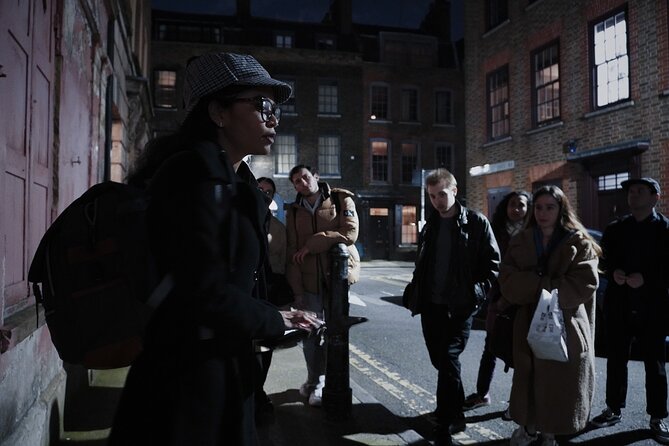
Brick Lane is now known for street art and curry houses, but the walk asks you to picture a very different place. In the late 19th century, this part of London was associated with severe poverty and crowded living conditions.
The stop lasts about 17 minutes, which is enough time for the guide to set the social scene without turning the opening into a long lecture. I like this approach because it gives the crimes a human setting. You are not just chasing a famous killer through London. You are learning about the people who had few safe choices and little protection.
This is also a good point to judge the guide’s style. A strong guide will connect the broad problems of the neighborhood with the individual case. The specific guide names associated with this experience include Tyson, Lisa, Sadie, and Jess. Tyson is especially praised for answering questions and drawing people into the discussion, while Jess is described as funny, patient, and clear.
Brick Lane can be busy in modern times, but the tour takes place after dark and focuses on the older streets around Whitechapel and Spitalfields. You should expect atmosphere, not a preserved Victorian street scene at every turn.
Princelet Street and Annie Chapman’s story
Princelet Street offers one of the more evocative parts of the route. Its cobbled surface and older appearance can help you picture East London in the 1880s, though the walk is not a film set and the present-day surroundings remain visible.
Here, the focus turns toward Annie Chapman and the connection between the streets and the Ripper’s movements. The stop is valuable because it moves the story away from a faceless list of victims. You begin to consider a particular woman, her place in the neighborhood, and the circumstances that made her vulnerable.
The guide’s tone matters greatly at this stop. Sadie is praised for giving the women’s stories an empowering treatment, which is an important quality in a tour about violent crimes against women. The subject is grim, but the storytelling does not need to be cold or sensational.
You get about 17 minutes here. That sounds brief, yet the whole route uses several stops to build the case. If you want a long historical lecture at each location, this may feel brisk. If you prefer a moving narrative with regular changes of scene, the pace should work well.
Puma Court and the danger of narrow alleys
Puma Court is described as one of the eeriest alleys in Spitalfields. The appeal is simple: it is narrow, quiet, and suited to a story about people disappearing into the darkness of Victorian London.
The stop is less about proving a particular fact than understanding the fear created by the setting. A confined passage gives you a clearer sense of how isolated someone could feel, especially at night. The guide uses the location to discuss the victims’ vulnerability rather than relying only on grisly detail.
This is the kind of stop that can feel atmospheric without requiring special access or an entrance ticket. You are using the public street itself as part of the lesson. That helps keep the price reasonable, since the experience depends on guiding and interpretation rather than paid attractions.
Still, atmosphere is personal. Some people will find the alley memorable. Others may feel that the modern city makes it difficult to picture the past. The guide’s storytelling carries much of the weight here, so a lively, well-prepared leader can make a real difference.
More Escape Games in London:
- Private Escape Room with a Zombie in London
★ 5.0 · 128 reviews - London: Food Treasure Hunt and Walking Tour
★ 5.0 · 92 reviews - One-Hour Private Capital Caper Escape Room Gaming in London
★ 4.0 · 58 reviews - One-hour Private Star Struck Escape Room Gaming in London
★ 4.0 · 43 reviews
The Ten Bells and the final hours of the victims
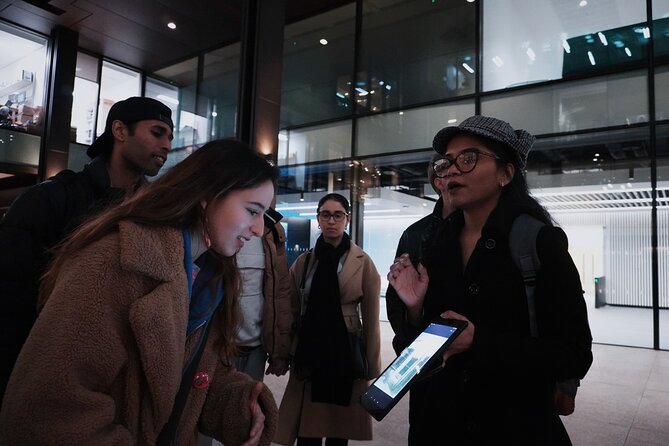
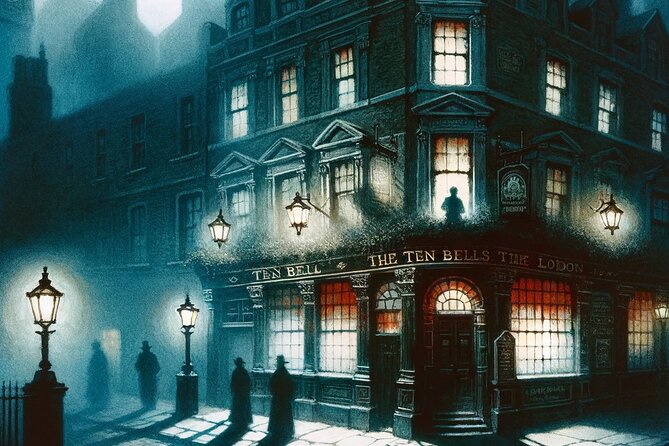
The Ten Bells is one of the most recognizable locations on the route. The historic pub is linked with several women who were reportedly seen there before their deaths, and the guide recounts the events surrounding their final hours from outside.
You do not need an admission ticket for this stop, and the group gathers outside. That is useful to know if you expect a pub visit. This part of the walk is about the location and the story, not an included drink or indoor experience.
The Ten Bells can be an effective pause in the route because it connects a familiar social place with the darker side of the case. The guide can explain how pubs, lodging houses, streets, and work shaped daily life in the area. It also reminds you that the victims were part of a living community, not just names in a criminal file.
Expect the discussion to remain focused on the murders and the people involved. If you want a broader pub crawl or time inside the building, this tour is not designed for that.
Gunthorpe Street and the disputed Martha Tabram case
Gunthorpe Street is linked to Martha Tabram, who was murdered in 1888. She is not officially counted among the canonical Ripper victims, but many people believe she may have been the killer’s first victim.
That uncertainty is one of the better features of the tour. The guide does not need to pretend that every part of the case is settled. Instead, you get a chance to consider why Tabram is included, what links her death to the later crimes, and why historians disagree.
This stop also shows how the experience handles the word mystery. You are not handed a final answer at the end. You are given evidence, competing ideas, and the limits of what can be known. The question is less about naming a suspect with confidence and more about understanding how the case developed.
The 17-minute format keeps the discussion moving. You will not get every theory in full, but you should get enough context to see why Martha Tabram remains part of the wider story.
Goulston Street and the clue that refuses to settle
At Goulston Street, the walk examines two famous pieces of evidence connected with the double murder: a bloodied apron fragment and a chalk message. These details caused fierce argument among police, historians, and later writers.
This is where the tour’s investigative side comes forward. You can weigh what the clue might mean, why it was considered important, and why it never produced a clear solution. The guide may also use old photographs and reports to support the explanation. One participant specifically valued having a useful collection of historic images and documents available for download.
That added material is a practical benefit. A walking tour moves quickly, and you cannot absorb every name or date while standing on a street corner. Being able to look back at old images and reports gives you a way to revisit the case later.
The stop also demonstrates the limits of the evidence. The message and apron fragment are intriguing, but they do not solve the case. If you prefer firm answers, the unresolved nature of the material may frustrate you. If you enjoy weighing clues, it is one of the strongest parts of the route.
St Botolph’s Aldgate and the contrast between shelter and danger
St Botolph’s Aldgate stood at the edge of Whitechapel and offered shelter to women during the Victorian era. The stop creates a striking contrast: a place associated with safety, only a short distance from streets linked with violence.
This is an important change of tone. The tour is not only about murder scenes. It also considers the institutions and people that offered some help to women living in difficult circumstances. That wider view makes the walk more thoughtful and less like a hunt for spooky photographs.
The church also helps you understand the geography of the area. The route is not spread across all of London. It moves through a fairly concentrated part of East London, where the distance between a refuge, a pub, a narrow passage, and a murder site could be surprisingly short.
After roughly six stops, you will have heard a mixture of social history, victim stories, police clues, and local geography. The repeated 17-minute rhythm gives the walk structure, though it also means the guide must keep explanations focused.
Finishing at Mitre Square
The route ends at Mitre Square, London EC3A 5DE, where Catherine Eddowes was murdered. The violence of the crime shocked London and remains one of the bleakest moments in the case.
Ending here gives the walk a clear dramatic shape. You begin with the neighborhood and its social conditions, then follow locations tied to people and evidence before arriving at one of the most serious crime scenes. It is a strong final stop, but it is also emotionally heavier than the earlier locations.
The endpoint is not the same as the starting point. This is the most important logistical detail to remember. You need to plan your return journey from Mitre Square, not from St Mary’s Whitechapel Church. The tour does not bring you back to the departure location.
That one-way design is not a flaw in itself. It lets the story progress through the area without doubling back. But it can catch you off guard if you assume the group will finish where it began.
How the guides shape the experience
The guide is the biggest variable on a walking tour like this. The route and subject are strong, but the experience depends on clear delivery, good pacing, and a respectful attitude toward the victims.
Tyson is associated with an engaging style, strong command of the subject, and an ability to remember names and use them to keep the group involved. Lisa is described as helpful across the tour, including practical questions. Sadie brings a spirited and empowering way of telling the women’s stories. Jess combines humor, patience, and clear explanations.
You should also be prepared for normal street-tour limitations. One person found the guide difficult to hear at times, especially when the group was moving through the city. Staying near the guide can help. The maximum group size is 25, so positioning yourself close to the front may make a difference.
The tour is in English only. If you are comfortable following a detailed spoken explanation in English, you should be able to get much more from the stops than you would from walking the route alone.
Is $22.99 good value for 2.5 hours?
At $22.99 per person, this is a reasonable price for a two-and-a-half-hour guided walk in central London. You are paying for a route through seven locations, the guide’s research, the storytelling, and access to context that is easy to miss on your own.
The value is strongest if you want more than a famous-name mystery. You get discussion of poverty, women’s lives, disputed evidence, old reports, and the changing streets of Whitechapel. The price is less compelling if you plan to take only a few photographs and are not interested in the historical detail.
Group discounts may lower the cost for larger parties. A private upgrade costs more, though it could be worthwhile if personal questions and a flexible conversation matter to you. Since the standard group can reach 25 people, a private format is also the clearer choice for anyone who dislikes larger walking groups.
You receive confirmation at booking, and free cancellation is available up to 24 hours before the start time for a full refund. Cancellations or changes within 24 hours are not refunded or accepted, so keep that deadline in mind.
Who should book this night walk?
I would choose this experience if you enjoy unsolved cases, urban history, and walking tours that connect famous events with ordinary streets. It suits adults and older children who can handle a serious subject and a long evening walk.
It is also a good choice for repeat visitors to London. You are not being taken to a major museum or a famous viewpoint. Instead, you get a close look at Whitechapel and Spitalfields, with the streets themselves acting as the main setting.
I would think twice if you dislike disturbing crime stories, need a quiet indoor activity, or want a round-trip route. The subject includes murder and violence, and the final stop is emotionally difficult. You should also stay close enough to hear the guide clearly.
Should you book the Jack the Ripper night walk?
Book it if you want a focused, atmospheric way to explore Whitechapel after dark, and if you are happy to judge clues rather than receive a final answer. The strongest reasons are the one-way route through real locations, the attention given to the women involved, and guides such as Tyson, Sadie, Lisa, and Jess who bring different strengths to the storytelling.
The $22.99 price is fair, the group limit is manageable, and the route offers more substance than a quick ghost story. Just plan your journey home from Mitre Square, stay near the guide, and remember that Jack the Ripper’s identity remains unknown. That unresolved question is not a missing feature. It is the point of the mystery.
FAQ
How long does the Jack the Ripper night walk last?
The walk lasts approximately 2 hours and 30 minutes.
Where does the tour begin?
It begins at St Marys Whitechapel Church Memorial, Unnamed Road, London E1 1FE, UK.
Where does the tour end?
The final stop is Mitre Square, London EC3A 5DE, where Catherine Eddowes was murdered.
Does the tour return to the starting point?
No. The walk ends at Mitre Square, so you need to plan your return journey from there.
How many people can join the standard tour?
The activity has a maximum of 25 participants.
Is the tour offered in English?
Yes. The tour is offered in English.
Can I cancel for a full refund?
Yes. You can cancel at least 24 hours before the start time for a full refund. Cancellations or changes made less than 24 hours before the experience are not refunded or accepted.
Just added around London
- Immersive London Treasure Hunt Adventure – Outdoor Escape Room★ 5.0 · 11 reviews
- London Charles Dickens Puzzle Questo and Self-Guided Tour★ 5.0 · 6 reviews
- London’s Crown Secret: Self-Guided Royal Puzzle Quest★ 4.5 · 8 reviews
- London Scavenger Hunt and Highlights Self-Guided Tour★ 4.0 · 4 reviews
- London (Covent Garden) Scavenger Hunt and Sights Self-Guided Tour★ 5.0 · 7 reviews
- London: Murder Mystery Cruise With 3-Course Dinner★ 4.5 · 18 reviews
- Wizarding London: Interactive Game & Magical Walking Tour★ 4.0 · 26 reviews
- Private Bespoke Scavenger Hunts★ 5.0 · 26 reviews
Murder Mystery Games, compared.

Branson Murder Mystery- Branson’s Original #1 Murder Mystery
Read our review →

WhoDunnit Hoedown – Branson’s Best Murder Mystery Dinner Show
Read our review →

Ancient Greek Theatre Murder Mystery Experience
Read our review →Ancient Greek Theatre Murder Mystery Experience
Read our review →
Colombia’s Finest Outdoor Murder Mystery London
Read our review →
Murder Mystery Trolley: Who Killed The Circus Queen?
Read our review →Browse the lists this tour appears in