
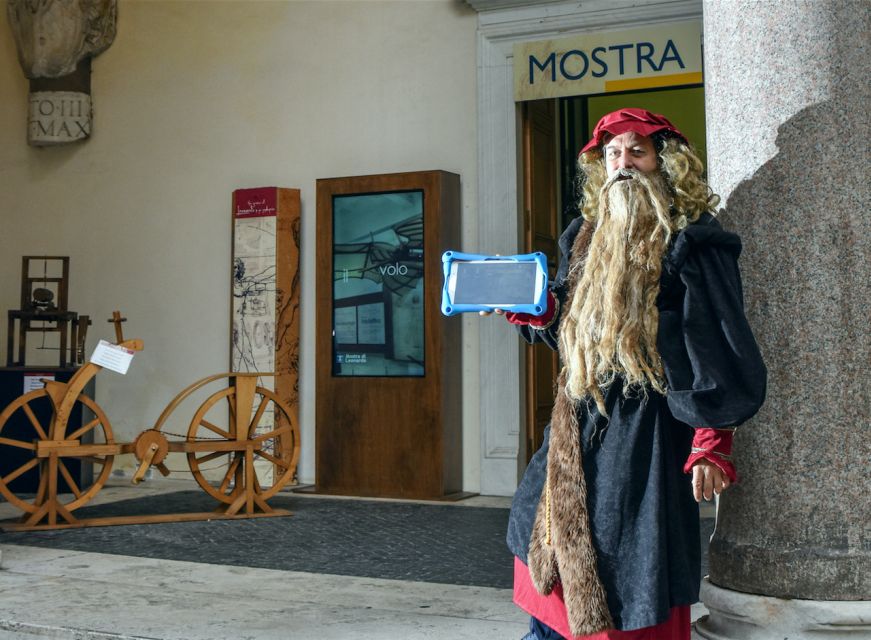
Reviewed · MOSTRA LEONARDO DA VINCI
Mostra Leonardo Da Vinci: Rome Treasure Hunt Game
Rome becomes a game board here. You begin at the Mostra Leonardo da Vinci near Campo dei Fiori, take a tablet, and head into the historic center to solve clues, answer questions, and find details you might otherwise walk past. The route can include Piazza Navona, the Pantheon, the Spanish Steps, Campo dei Fiori, the Roman Forum, or the Colosseum, depending on the choices you make.
I like the freedom to choose your route, since you are not locked into one march through the city. I also like the way the activity gives children a reason to look up, read, take photos, and pay attention to Rome instead of simply trailing behind adults.
The catch is simple: three hours is not enough for every major sight, especially if you stop often or try to complete every challenge. The tablet instructions may also take a little time to understand, and the English can be tricky for younger children.
Key points at a glance
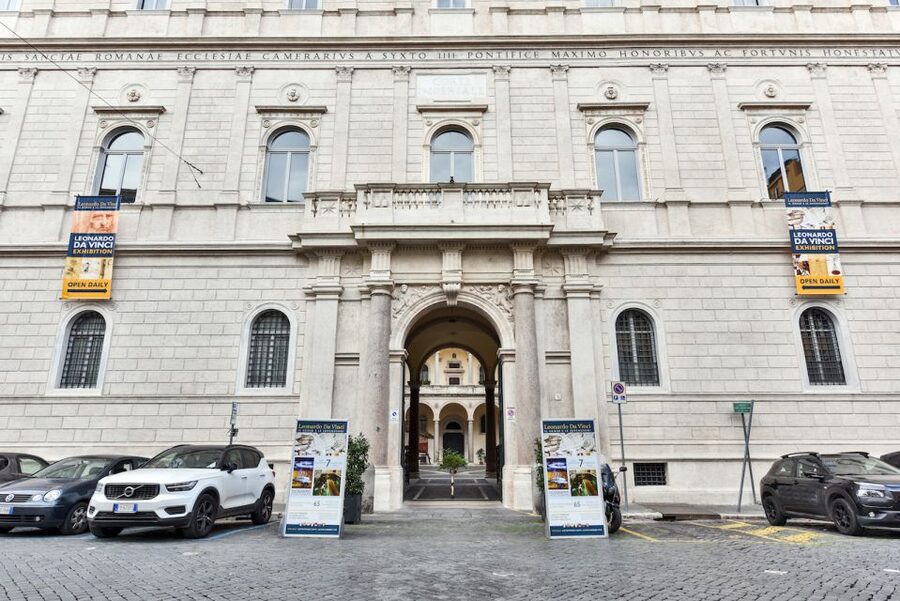
- Start and finish at the Leonardo museum: Your ticket includes entry to the Mostra Leonardo da Vinci and the final puzzle.
- Choose your own Rome route: Use the interactive map to decide which city stops interest you most.
- Earn clues with points: Correct answers and completed tasks help reveal the information needed for the final riddle.
- A strong family activity: Children aged around 10 and 13 have enjoyed the game, and teenagers have plenty to do.
- Plan for serious walking: You can skip challenges, but completing many of them means crossing a good part of central Rome.
- Private and wheelchair accessible: The experience is for your own group, takes place rain or shine, and is offered in six languages.
Starting at the Mostra Leonardo da Vinci
Your starting point is the ticket counter at Piazza della Cancelleria 1, close to Campo dei Fiori and Piazza Navona. Show your voucher, receive the treasure hunt equipment, and get instructions from the museum staff.
The package includes museum admission, one tablet per family, and an interactive city map. The tablet is more than a map. It gives directions, presents questions, records answers, prompts photo tasks, and awards points as you move around Rome.
The activity begins and ends at the museum, which makes the location useful for planning. You do not need to meet a guide at a distant piazza or find your way back to a hotel pickup point. You can also visit the Leonardo exhibition before or after the outdoor section, depending on how your group prefers to use the time.
Bring a passport or identity card. The activity is available with Italian, English, German, French, Spanish, or Russian support. The supplied information does not name individual guides, but a host or greeter is available at the museum to help you get started.
More Treasure Hunts in Italy
- Florence Self-Guided Treasure Hunt & Medici Mystery Walking Tour
★ 5.0 · 69 reviews - Best of Florence Treasure Hunt Tour for Kids & Families
★ 5.0 · 44 reviews - Naples: The Path of the Immortals Treasure Hunt Walking Tour
★ 4.1 · 42 reviews
How the tablet treasure hunt works
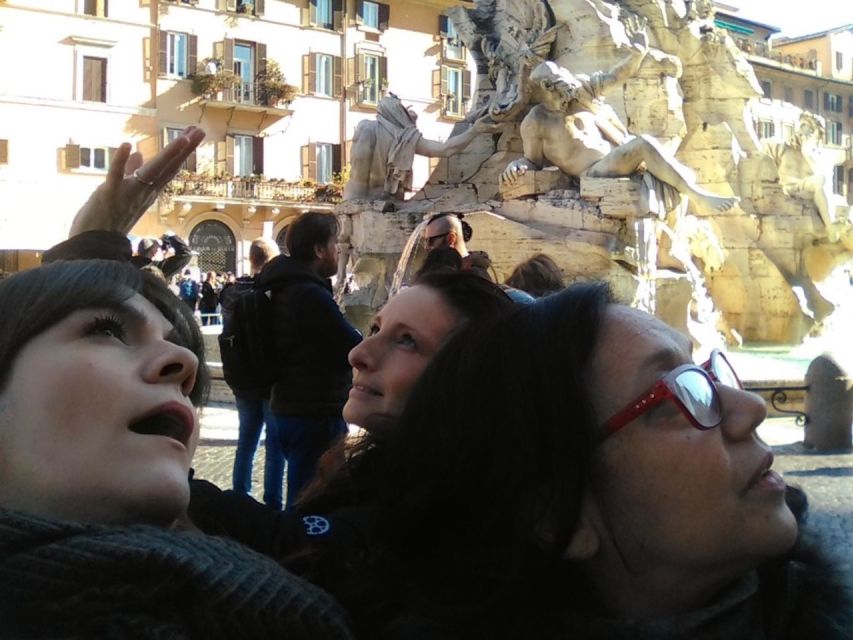
Once outside, you use the tablet to select points of interest and follow the map. The format gives you a useful choice: you can make the game the main event, or use it as a lively way to see Rome between more traditional sightseeing stops.
At each location, the tablet presents a task or question. Some challenges ask you to notice a detail in a monument or public square. Others use Rome’s past as the subject of a puzzle. You earn points as you complete the stages, and those points provide more clues for the final riddle back at the museum.
That scoring system gives children a clear reason to keep going. Instead of hearing an adult say look at this old building, they have a question to answer or a clue to chase. The game also encourages you to stop and inspect places that might otherwise receive only a quick photograph.
One task involves photographing your own living sculptures beside original sculptures. It is a playful way to connect your group with the city’s public art, and the photos can become a record of the afternoon. Take a moment at the beginning to learn how to save each photo and enter information correctly. The tablet case can partly cover the camera view if it shifts, so check the screen before you set off.
The map may not feel instantly clear. Make sure you understand how to see your current position, how to move from one point to the next, and how to confirm a completed task. A short briefing at the museum can save you several minutes later.
Choosing between Rome’s biggest sights
The game does not force one fixed route. You might choose Piazza Navona and the Pantheon, head toward the Spanish Steps, work around Campo dei Fiori, or aim for the Colosseum and Roman Forum. You can also try to reach many of them, but time and walking distances matter.
Piazza Navona and the Pantheon
This area makes sense for a family-friendly route because the two sights are close enough to combine with other central stops. Piazza Navona gives the game a grand open setting, with fountains, sculptures, and plenty to photograph. The Pantheon offers a different kind of challenge, asking you to shift from outdoor street scenes to one of Rome’s most memorable ancient buildings.
You do not need to buy entry to attractions as part of this experience. The tour includes the game and the Leonardo museum, but admission to other sights is not included. Keep that distinction in mind if your group wants to enter the Pantheon, Colosseum, or another paid attraction.
Same streets, a different set of clues:
- Open Air Escape Game in Villa Borghese !
★ 4.5 · 145 reviews - Angels & Demons Rome Scavenger Hunt: The Illuminati Escape Game
★ 4.5 · 103 reviews - Open Air Escape Game – TRASTEVERE REVOLUTION
★ 4.5 · 89 reviews - Rome: 2.5-Hour Family Vatican Highlight Scavenger Hunt
★ 4.6 · 51 reviews
Campo dei Fiori
Campo dei Fiori is both the starting-area landmark and a useful place to wander as part of the game. One family happened to find an Italian market while following the route, which is a good reminder that the activity can lead you into everyday Rome as well as famous monuments.
That flexibility is one of the best parts of the format. You are not merely moving between a list of famous buildings. You are using a clue-based route that can reveal a square, market, sculpture, or street detail you had not planned to see.
Spanish Steps
The Spanish Steps add another popular stop, though reaching them from the museum area means more walking. The game can make that walk easier for children to accept because the distance becomes part of a mission rather than a long transfer between sights.
If your family has already seen the main monuments, you can use the tablet to select less familiar points instead. If this is your first afternoon in Rome, concentrate on a smaller cluster rather than trying to collect every point.
Colosseum and Roman Forum
The Colosseum and Forum are possible choices, but they require sensible time planning. The treasure hunt can guide you toward these landmarks, yet it does not replace a timed Colosseum visit or include admission inside the monuments.
I would treat these as outside viewing points unless you have separately arranged entry. Trying to complete the game, walk to the ancient center, and tour the interiors in three hours would make the schedule tight. The activity works best when you let the clues shape a manageable route.
Why the activity works well for children and teens
The strongest reason to book this experience is simple: it turns sightseeing into an active task. Children can hold the tablet, choose the next point, answer questions, and take part in the photo challenges. They are not expected to stand quietly while an adult explains every monument.
Families with younger children have found the tasks absorbing, while children aged 10 and 13 have enjoyed the game as a way to explore the city. Teenagers also have a practical role, since they can help with the map, photos, and answers rather than feeling that the afternoon is aimed only at small children.
Younger children may need help with the wording. Some of the English instructions are complicated for eight to ten-year-olds, so an adult should be ready to explain the questions. The museum staff can help with the setup, but your group will still need to operate the tablet as you move around.
Adults do not have to sit on the sidelines. The clues can be surprisingly enjoyable to solve, especially when several people disagree about the answer or the best route. It works as a shared activity, not just a children’s distraction.
The Leonardo da Vinci museum finale
The game returns you to the Mostra Leonardo da Vinci, where the final part takes place inside the exhibition. The clues collected outdoors help you solve the closing riddle, and finishing it earns a special prize.
The museum itself is a major part of the experience, not just a starting desk. The displays focus on Leonardo’s inventions and ideas, giving you a chance to see how his curious mind connects with the puzzle theme. Children who enjoy machines, designs, and hands-on discovery may find this section more engaging than a conventional art museum.
The return to the museum also gives the activity a clear ending. You are not left at the last city stop with a tablet to return somewhere else. Museum staff can help with the final stage, and the photos taken on the tablet may be emailed to you afterward.
Allow enough time for this section. If your children become absorbed in the exhibits, you may prefer to spend less time completing outdoor questions and more time inside. One family chose to return to the museum because the children wanted more time with the inventions, and that is a sensible choice.
Timing, walking, and weather
The advertised duration is 3.5 hours, with about three hours devoted to the self-guided city hunt. That sounds generous until you account for walking, photo tasks, reading, map checks, and stops at major landmarks.
You do not need to complete every challenge. If the group is tired, skip a distant point and return to the museum. The scoring system may offer more clues for more points, but the staff will still provide the children’s prize regardless of how well they score.
This is not a seated museum activity with a short outdoor stroll. If you want to answer many questions, expect substantial walking through central Rome. Wear comfortable shoes and keep the group’s energy in mind, especially during a hot afternoon.
The activity runs rain or shine. Since much of it takes place outdoors, bad weather can make the tablet, photographs, and map harder to manage. Check the forecast, carry suitable weather gear, and remember that there is no hotel pickup or drop-off.
The experience is wheelchair accessible, but the route is self-selected. Since you choose the points, you can adjust the plan to suit your group. The available information does not give a detailed route-by-route accessibility assessment, so ask the museum staff for practical advice before leaving.
Is $53 per person good value?
At $53 per person, the price is higher than a simple walk through Rome, but it includes more than directions. You receive museum entry, a tablet for each family, the interactive map, the outdoor game, and the Leonardo-focused finale.
For a family, the value depends on how much you use the equipment and how interested your children are in solving clues. If your group would otherwise need considerable persuasion to walk between monuments, the game can make that sightseeing time more productive and enjoyable.
The price does not cover food, drinks, hotel transportation, or admission to other attractions. You should budget separately if you want to enter the Colosseum, Pantheon, or another site along the route.
I would consider the cost reasonable for families who want a structured activity without joining a large group. It is less compelling for two adults who prefer a traditional guide or already know central Rome well. Even then, the flexible route and museum visit can add something different to a repeat visit.
Who should book this Rome treasure hunt?
I would recommend it most strongly for families with school-age children and teenagers. It also suits adults who like puzzles, self-guided exploration, and the freedom to change plans as they go.
It is a good choice for a first acquaintance with Rome because the game helps you cover several central areas without requiring you to plan every turn. It also works after you have seen the major sights, since you can use the clues to make familiar streets feel less routine.
You may want a different activity if you need a full historical explanation at every stop. The tablet provides questions, clues, and information, but this is not a standard walking tour with a live guide speaking throughout the afternoon.
Keep your expectations realistic. You will not thoroughly visit every major monument in Rome in three hours. You will get a playful framework for seeing several places, spotting details, taking photographs, and returning to a Leonardo exhibition with a final puzzle to solve.
Practical verdict
Book this treasure hunt if you want your family to walk through Rome with a purpose. The best features are the flexible route, the child-friendly challenges, the photo tasks, and the Leonardo museum at both ends of the experience.
Skip it if your priority is a formal guided tour, long interior visits, or a tightly planned tour of the Colosseum and Forum. For most families, though, the game offers a smart way to turn a potentially tiring city walk into a shared challenge. Start early in your three-and-a-half-hour window, learn the tablet before leaving, choose a compact route, and save time for the museum finale.
FAQ
Where does the Leonardo da Vinci treasure hunt start?
It starts at the ticket counter of the Mostra Leonardo da Vinci at Piazza della Cancelleria 1, near Campo dei Fiori and Piazza Navona.
How long does the activity last?
The total duration is 3.5 hours. The self-guided city portion lasts about three hours, followed by the return to the Leonardo da Vinci exhibition.
What is included in the price?
The price includes entry to the Mostra Leonardo da Vinci, one tablet per family, and an interactive city map for the treasure hunt.
Are tickets to the Colosseum, Pantheon, or other attractions included?
No. Entry to other attractions is not included. Food, drinks, and hotel pickup and drop-off are also excluded.
Can I choose which parts of Rome to visit?
Yes. The game lets you choose points that interest you. Possible areas include the Colosseum, Spanish Steps, Piazza Navona, Campo dei Fiori, the Pantheon, and the Roman Forum.
Is the activity suitable for children?
Yes. The game is designed to engage children and teenagers with questions, clues, photographs, and points. Younger children may need help with some English wording.
What happens if it rains?
The activity takes place rain or shine. Since much of the treasure hunt is outdoors, bring suitable clothing and be prepared for walking in changing weather.
Just added around Italy
- Rimini Scavenger Hunt and Highlights Self Guided Audio Tour★ 4.5 · 9 reviews
- Bari Scavenger Hunt and Highlights Self Guided Audio Tour★ 4.0 · 8 reviews
- Bolzano Scavenger Hunt and Highlights Self Guided Audio Tour★ 4.5 · 12 reviews
- Sato Code Escape Room across Varese★ 5.0 · 8 reviews
- Milan: Treasure Hunt & Walking Tour★ 4.1 · 8 reviews
- Sato Code Escape Room across Como★ 5.0 · 9 reviews
- underground escape room★ 5.0 · 9 reviews
- Sato Code Escape Room across Milan★ 5.0 · 9 reviews
Treasure Hunts, compared.


St. Augustine: Treasure Hunt Cruise with Onboard Show
Read our review →

Fun, Flexible Treasure Hunt Around Manchester with Cryptic Clues & Hidden Gems
Read our review →
Fun, Flexible Treasure Hunt Around York with Cryptic Clues & Hidden Gems
Read our review →
Fun, Flexible Treasure Hunt Around Bath with Cryptic Clues & Hidden Gems
Read our review →York Treasure Hunt Adventure: The Mystery of The Gunpowder Snitch
Read our review →Browse the lists this tour appears in