
Reviewed · TURIN
Ghosts of Turin: Hidden Spell Exploration Game
Turin’s dark side comes into focus through a phone-based mystery game that leads you from an old Roman gateway to a bridge over the Po. You solve clues at each stop, follow directions to the next one, and pick up stories about executions, fires, ghosts, and esoteric Turin along the way.
I like the freedom to start anytime and pause whenever you want. I also like the offline play, since you do not need to keep hunting for a data signal while standing in a busy square. The roughly 90-minute route gives you a compact introduction to central Turin without tying you to a guide.
The weak point is the technology. One player reported being unable to activate the game and could not reach the English support number, so install and test the app before you head out. The current score of 3.5 out of 5 from eight ratings suggests you should treat this as a fun independent activity, not a polished substitute for a human-led tour.
Key points to know before you play
- Start at Turin’s Black Heart: Piazza Statuto sets the mood with Roman remains, executions, a deadly fire, and the memorial fountain for workers lost in the Frejus Rail Tunnel.
- Follow an 11-stop central route: The game passes the Consolata, Rondò della Forca, Palatine Gate, Piazza Castello, Piazza San Carlo, and the Po.
- Use your phone as both map and game master: The Questo app supplies directions, clues, and challenges without a physical guide.
- Play on your own timetable: The activity is available every day, around the clock, and you can stop and resume later.
- Pay little for a private activity: At $8.11 per person, the price is low, especially for a couple or small group sharing the experience.
- Prepare for a technical risk: A reported activation failure was not solved through chat or the listed English phone number, so check access before setting off.
Starting with Turin’s Black Heart at Piazza Statuto
The game begins at Piazza Statuto, a broad city square with an unusually grim reputation. Long before this activity, the area was linked to a Roman necropolis and later used as a French execution site. A serious fire in 1983 added another dark chapter.
At the center, the fountain honors workers who died while digging the Frejus Rail Tunnel. These details explain why Piazza Statuto is called Turin’s Black Heart. It is a strong opening because the square gives you a real place to inspect, not just a story to hear.
Your first task is to look around and find the answer to a clue. Once you solve it, the app sends you onward. This makes the square part sightseeing stop and part puzzle board. Take a little time before starting to look closely at the monument and its surroundings. The game depends on observation, so rushing can make the first challenge harder than it needs to be.
Piazza Statuto is also the practical meeting point. The address is Piazza Statuto, Turin, and the activity runs from midnight to 11:30 p.m. every day during the stated operating period. In other words, you can begin early, late, or at a time that fits around another Turin plan.
More City Exploration Games in Italy:
- Florence Inferno: Dante’s Haunted Exploration Game and Tour
★ 4.5 · 33 reviews - Bologna Murder Mystery: Self-Guided City Quest
★ 4.0 · 13 reviews - Florence Haunted Secrets: Echoes of the Dead Exploration Game
★ 4.0 · 9 reviews
The Consolata and Turin’s religious mysteries
The next stop is the Santuario della Consolata, also called the Church of the Virgin of the Consolation. This central sanctuary is a minor basilica at the meeting of Via Consolata and Via Carlo Ignazio Giulio. Locals commonly shorten its name to La Consla.
Here the game again asks you to inspect the site and find the answer needed to continue. That format works well for independent explorers because the app does not simply point at a building and tell you to move on. It gives you a reason to study the place.
The Consolata brings a different mood from Piazza Statuto. The opening stop is linked to death and disaster, while this church introduces Turin’s religious side. You get a better sense of the city by moving between these different kinds of places instead of visiting only the grand royal squares.
The experience does not include entry to the sanctuary, a guided explanation inside, or a physical guide. Plan on seeing the exterior and solving the outdoor challenge unless the app directs you otherwise.
Rondò della Forca and the city’s darker reputation
Rondò della Forca is one of the key stops for anyone interested in Turin’s esoteric reputation. The name refers to a specific junction near the meeting of Valdocco, Principe Eugenio, and Regina Margherita courses with Via Cigna. It is also not far from Piazza Statuto, another major point in Turin’s darker mythology.
The setting helps explain the game’s theme. This is not a standard tour devoted only to palaces and dates. The route seeks out places tied to executions, mystery, superstition, and unsettling stories. If you enjoy a city with a little old-world gloom, this section should be more appealing than a standard list of monuments.
The practical challenge is that a junction can be less visually obvious than a famous palace. Keep the app open, read each direction carefully, and check that you are at the intended point before searching for the clue. The directions are meant to prevent you from getting lost, but the route still rewards attention.
Roman Turin at the Palatine Gate
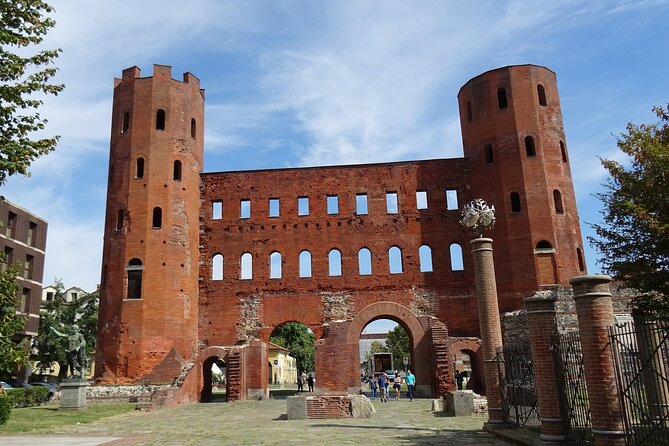
The Palatine Gate brings you from modern Turin into the city’s Roman past. It is one of the best-preserved Roman gateways in the world and the main archaeological evidence of Turin’s Roman phase. Nearby remains of an ancient theater form part of the Archaeological Park opened in 2006.
This stop gives the game some solid historical weight. The spooky theme is entertaining, but the route also touches important archaeology. You can look at the gate as a puzzle location while remembering that it once marked an entrance to the Roman city.
The challenge is again based on observation. The app tells you what to find and then sends you to the next location. Since the Palatine Gate is an important archaeological site, you may want to allow a few extra minutes here if you are interested in Roman Turin. The advertised duration is about 90 minutes, so a longer visit at every stop will extend the outing.
More Escape Games in Italy:
- Open Air Escape Game in Villa Borghese !
★ 4.5 · 145 reviews - Mostra Leonardo Da Vinci: Rome Treasure Hunt Game
★ 4.7 · 140 reviews - Angels & Demons Rome Scavenger Hunt: The Illuminati Escape Game
★ 4.5 · 103 reviews - Open Air Escape Game – TRASTEVERE REVOLUTION
★ 4.5 · 89 reviews
From Palazzo Madama to Piazza Castello
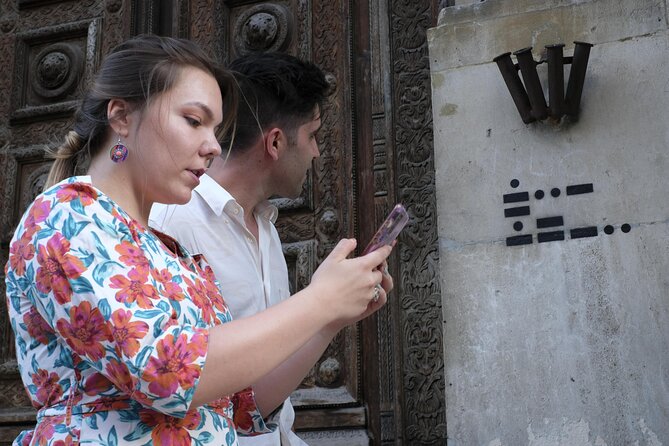
Palazzo Madama is a useful stop because its name carries a story of its own. The building began in the 13th century and took its present name from widows of the dukes of Savoy who lived there in the 17th century. It later housed the Sardinian Senate from 1848 to 1860 and the Italian Senate from 1861 to 1864. Today it contains the Museum of Ancient Arts.
That is a lot of political and royal history for one square. The game keeps the visit active by asking you to search for a clue instead of giving you a long lecture. You can enjoy the building at your own pace and decide how much time to spend looking beyond the answer.
The route then moves into Piazza Castello, one of Turin’s main squares. Museums, theaters, and cafés line the square, so this is one of the easiest places to pause. If you need coffee, a snack, or a short break, this is a sensible point to stop before continuing.
The pause-and-resume feature matters here. You are not required to keep walking while a guide waits for the group. You can stop for a drink, return to the game later, and continue from your phone.
The mysterious door at Palazzo Trucchi di Levaldigi

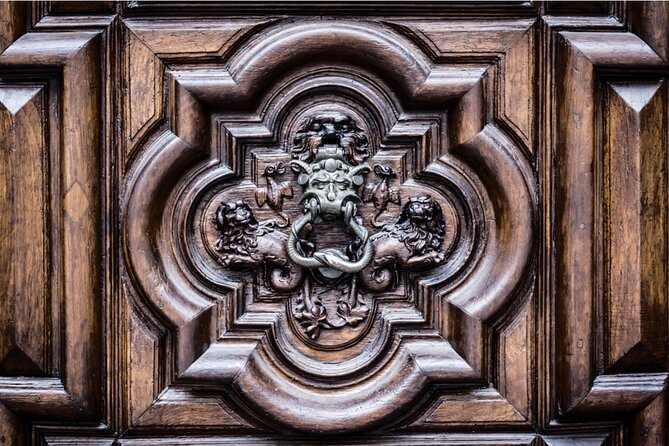
Palazzo Trucchi di Levaldigi is known for its large wooden door, commissioned in the 17th century by the Earl of Trucchi di Levaldigi. The door provides a focused visual detail for the game and gives you a clear reason to look closely at a building you might otherwise pass without noticing.
This is one of the better ideas behind the route. Turin has plenty of grand architecture, but independent visitors can easily walk past smaller details. A clue-based game turns a doorway into a destination.
Do not expect a full palace visit as part of the activity. The supplied details center on the exterior door and the story attached to it. The game is designed as an outdoor experience, so its value comes from connecting public sights rather than opening private interiors.
Baroque formality in Piazza San Carlo
Piazza San Carlo is one of Turin’s grandest urban spaces. It was laid out during the 16th and 17th centuries and is a clear example of Baroque design. Its name honors Charles Borromeo, though the square was also known as Piazza Reale, Piazza d’Armi, and Place Napoleon.
The changing names reflect Turin’s political past. The square has been shaped by the Savoy court, Napoleon’s era, and the city’s later identity. A clue here lets you take in the space while keeping the focus on the game’s mystery theme.
This is also one of the route’s more pleasant places to slow down. The square’s arcades and open layout make it easy to orient yourself. If the game asks you to identify a feature, do not rely only on the first thing you see. Read the prompt carefully and scan the surrounding buildings.
Via Po and the final city-center churches
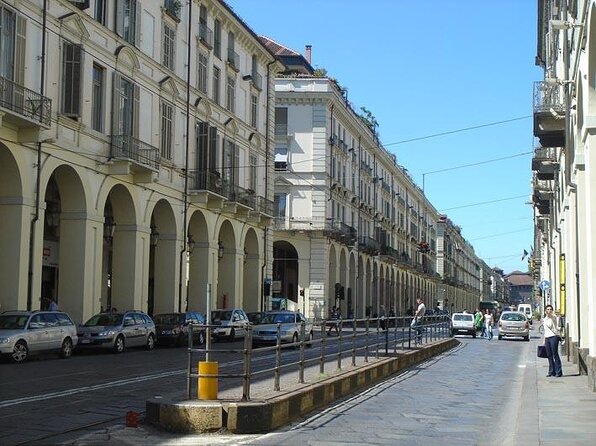
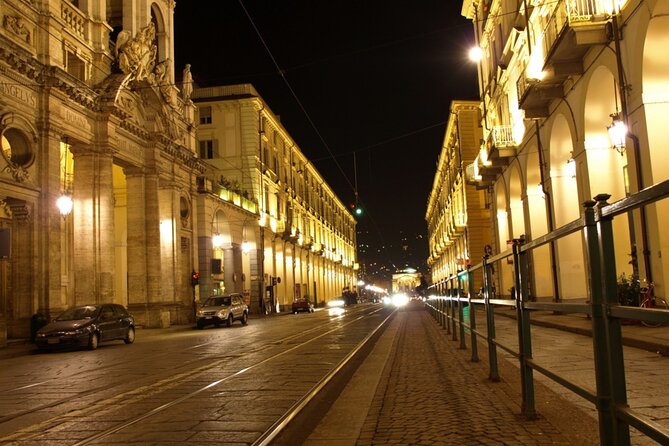
From Piazza Castello, the route includes Via Po, one of the important streets leading through central Turin. The arcaded street was built by Amedeo di Castellamonte in 1868 and includes the original University of Turin building and the historic Caffè Fiorio.
The arcades are useful in practical terms, too. They give you some shelter while walking and create a clear connection between Piazza Castello and the rest of the route. The historic café and university building add everyday city life to the royal and religious landmarks.
Another stop is a church first built between 1648 and 1656 to a design by Carlo Morello. It began as a single-nave church without exterior arcades. Later changes enlarged the choir and added side chapels. Eighteenth-century additions included an altar by Bernardo Vittone, work by Francesco Martinez, and procession pieces by Beaumont, Giuseppe, and Stefano Maria Clemente.
The available information does not identify this church by name, so you should rely on the app’s directions rather than trying to guess it in advance. The stop gives the route another look at Turin’s Baroque art and religious architecture, but the experience does not promise a guided interior visit.
Finishing over the Po at Ponte Vittorio Emanuele I
The final stop is Ponte Vittorio Emanuele I, the oldest existing bridge in Turin. It crosses the Po at a place that has long mattered to the city. From the 15th through the 19th centuries, this crossing served as one of Turin’s main gateways.
Ending at the river gives the route a clear finish. You begin with the grim associations of Piazza Statuto and finish at a major civic crossing. The bridge is also described as one of Turin’s most beautiful and important, so it is more than a simple endpoint for the app.
The stated ending address is Ponte Vittorio Emanuele I, 10124 Turin. The app guides you step by step to the bridge. Follow its instructions closely, since the game depends on reaching each location in order and solving the challenge before moving forward.
What the $8.11 price really buys you
At $8.11 per person, this is inexpensive for a private activity. A couple pays about $16.22, and a small group can keep the total modest, especially since group discounts are available. You are paying for the app-based route, clues, directions, and stories rather than for a person’s time.
That distinction matters. A human guide can answer questions, add context on the spot, and adjust the pace to your interests. This game cannot do those things. On the other hand, you do not need to wait for a scheduled departure or stay with a group.
The price is strongest if you want a short first look at Turin, enjoy puzzles, or need an activity that fits around meals and museum visits. It is less convincing if you want detailed art history or an expert explanation at every site.
Timing, phone setup, and the reported activation problem
The activity takes about one hour and 30 minutes. It is available 24 hours a day, every day of the year, and you can begin at any hour during the stated operating period. You can also pause and resume later, which makes the route easier to fit into a busy city visit.
The game is designed to work offline. You only need your phone while exploring, and the app supplies the directions between stops. That is useful in Turin’s central streets, where you may prefer not to depend on mobile data.
There is one important warning. A player reported a technical problem activating the game, followed by an unsuccessful attempt to get help through chat and an English phone number. The support response asked the player to contact [email protected] with the details.
I would install the Questo app, confirm that the booking appears, and test activation before walking to Piazza Statuto. Do this while you still have time to ask for help. A technical failure after you reach the starting point could spoil the entire outing.
The activity is private, meaning only your group participates. There is no physical guide, no crowd to follow, and no need for direct contact with a tour leader. Service animals are allowed, public transportation is nearby, and most people can participate according to the supplied access information.
Who should book this Turin mystery game?
I would recommend it to independent visitors who like solving clues and want a playful way to cover several central sights. It also suits couples, families with older children, and friends who prefer not to join a fixed walking group.
The route has a good mix of archaeology, churches, royal buildings, squares, a historic street, and the Po. You will learn the darker side of Turin, but you will also see major city landmarks that belong in a first visit.
I would not choose it as your only Turin history experience. The app gives you clues and stories, but it does not replace the depth, questions, or local judgment of a live guide. The technical activation issue also means you should prepare before starting.
Book it if the low price, flexible schedule, offline access, and spooky theme match your style. Skip it if you want a formal historical tour, guaranteed personal assistance, or a fully guided explanation at each stop.
FAQ
How long does the Ghosts of Turin game take?
The experience lasts approximately one hour and 30 minutes.
Where does the activity start?
It starts at Piazza Statuto in Turin, Italy.
Where does the route finish?
The route ends at Ponte Vittorio Emanuele I, 10124 Turin.
Do I need a physical tour guide?
No. The activity is self-guided through the Questo app and does not include a physical guide.
Can I start at any time?
Yes. The experience is available every day, 24 hours a day, during the stated operating period. You can start at any hour and pause or resume later.
Do I need an internet connection while playing?
No. The experience is designed for offline play, so you do not need an internet connection while exploring.
What is the cancellation policy?
You can cancel at least 24 hours before the start time for a full refund. Cancellations or changes made less than 24 hours before the start time are not accepted for a refund.
Just added around Italy
- Turin Scavenger Hunt and Highlights Self Guided Audio Tour★ 5.0 · 6 reviews
- Turin Scavenger Hunt and Sights Self-Guided Tour★ 5.0 · 2 reviews
- Trieste Exploration Game and City Tour on your Phone★ 5.0 · 3 reviews
- Trieste Scavenger Hunt and Sights Self Guided Tour★ 4.5 · 2 reviews
- Trento Scavenger Hunt and Sights Self-Guided Tour★ 4.0 · 9 reviews
- Syracuse Scavenger Hunt & Highlights Self Guided Audio Tour★ 4.5 · 4 reviews
- Ghosts of Catania Exploration Game and Tour★ 4.5 · 2 reviews
- Siena Scavenger Hunt and Highlights Self Guided Audio Tour★ 5.0 · 8 reviews
City Exploration Games, compared.
Sibiu Old Town Exploration Game and Self-Guided Tour
Read our review →
Glasgow Ghost Hunt: The Soul That Got Away Exploration Game
Read our review →
Rotterdam Highlights & Spies: Interactive City Game
Read our review →
Discover Utrecht with a self-guided Outside Escape city game tour
Read our review →
Bristol Street Art: Banksy Exploration Game and Tour
Read our review →
Frankfurt Old Town & Emperors: City Game & Walking Tour
Read our review →
Browse the lists this tour appears in