
Reviewed · CARCASSONNE
Medieval Carcassonne: Interactive Ghost Story & City Game
Carcassonne’s medieval citadel becomes a giant outdoor puzzle box in this self-guided phone game. You follow clues from Square Gambetta across the Aude and up toward Château Comtal, learning about plague, Cathar persecution, royal defenses, and old city life as you go. I like the freedom to start and stop whenever you want, and I like that the route shows you both the lower town and the walled Cité. The catch is that the app setup can be confusing, and a few players have lost time trying to get the game working.
The price is just $6 per person, which makes this a low-cost way to orient yourself before spending money on museum or castle tickets. I also like the private format, since you play only with your own group and do not have to keep pace with a guide. Still, this is not an audio tour, and the English-only format may not suit every family or group.
Key points to know before you play
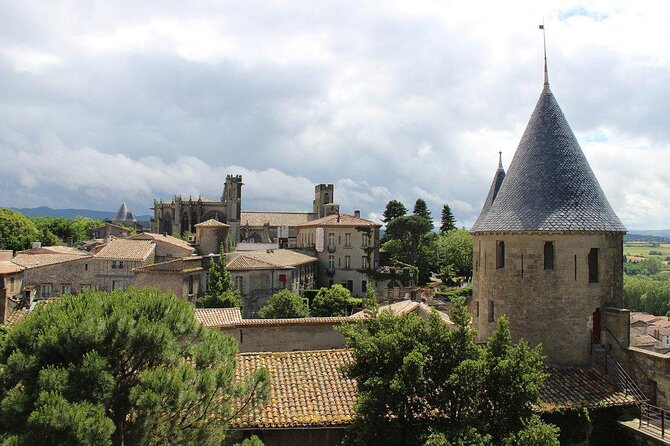
- Ten puzzles cover roughly 3 kilometers: Expect a walking route through both the Bastide de Saint Louis and the medieval Cité.
- The story includes difficult subjects: Plague, persecution, torture, and religious conflict appear alongside architecture and city history.
- You use the Questo app: Bring a charged phone and allow time to install and start the game before walking away from Square Gambetta.
- You can pause the route: Stop for lunch, return the next day, or take a break whenever you like.
- The game ends at Château Comtal: Castle and museum admission are not included.
- It suits independent groups: You get no physical guide, but you also avoid a fixed schedule or shared tour group.
How the Carcassonne city game works
This is a self-guided walking game rather than a standard sightseeing tour. You book online, access the experience through the Questo app, and follow step-by-step directions from Square Gambetta to Château Comtal.
The route contains 10 interactive puzzles. At each stop, you look closely at the surroundings, find the information needed to answer a challenge, and use that answer to move on. It is a simple idea, but it changes how you walk through Carcassonne. Instead of passing a gate or church with only a quick glance, you stop to inspect details.
You play in English, using your own phone. There is no live guide, no set departure time, and no shared group. That makes the experience private and flexible, but it also means you are responsible for reading the instructions and keeping the game moving.
The advertised duration is about one hour and 40 minutes, with a route of roughly 3 kilometers. In practice, you should allow extra time if you stop for photographs, pause for food, visit a monument, or need help with the app. The route can also be resumed later, including more than 24 hours afterward, according to the supplied experience information.
More City Exploration Games in France:
- Romantic Montmartre: Paris Lost Lovers Exploration Game and Tour
★ 4.5 · 107 reviews - Strasbourg: City game – The Gold of Cagliostro
★ 4.2 · 36 reviews - Lyon Ghost Hunt: Follow the Shadows Exploration Game
★ 4.5 · 26 reviews
Starting at Square Gambetta and the Bastide Saint Louis
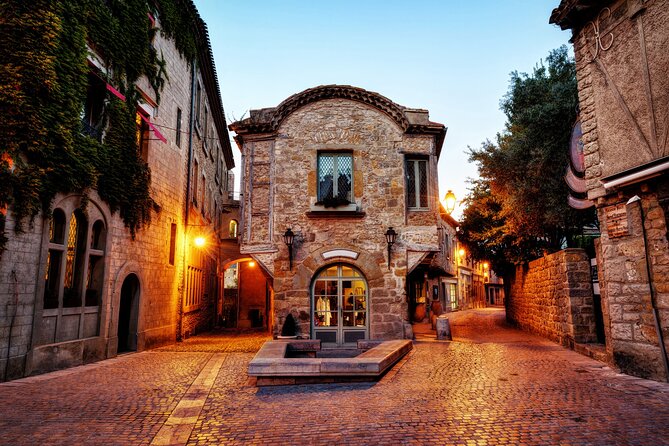
Square Gambetta sits across the Aude from the famous walled Cité. It is the starting point for the old lower town, La Bastide de Saint Louis, built under King Louis IX of France.
This is a useful starting place because it gives you a broader view of Carcassonne. The Cité gets most of the attention, with its towers and walls, but the lower town explains how the city functioned beyond the fortress. Your first challenge asks you to inspect the square and its surroundings rather than simply follow a guide with a flag.
I like this opening because it eases you into the game. You begin in an open public space, learn how the puzzle system works, and then make your way toward the river and the older fortified quarter.
The main concern is the app launch. Some people have found the instructions less clear than expected, especially when trying to install the app or invite other members of the group. Before setting off, give yourself a few minutes to check that the game opens and that the starting instructions are visible.
Notre Dame de la Santé and the old river crossing
The next stop is the small chapel of Notre Dame de la Santé. Built in 1527 with money from the legacy of Jean de Saix, it served as a hospital for people suffering from the plague.
Its position matters. The chapel sits near the narrow passage between fortified buildings and the Pont-Vieux, one of the main crossings over the Aude. The site brings a human scale to Carcassonne’s defenses. Walls and gates protected the city, but disease could still threaten everyone inside.
The puzzle here asks you to look around and identify details at the location. This is one of the better uses of the game format, since the chapel is easy to overlook when you are focused on the larger Cité ahead.
The subject matter may be heavy for younger children. The experience is designed as a family activity, but the route includes illness, persecution, torture, and death. If your children prefer light stories and simple treasure hunts, you may need to explain the darker parts as you go.
The cloth factory near the Pont-Vieux
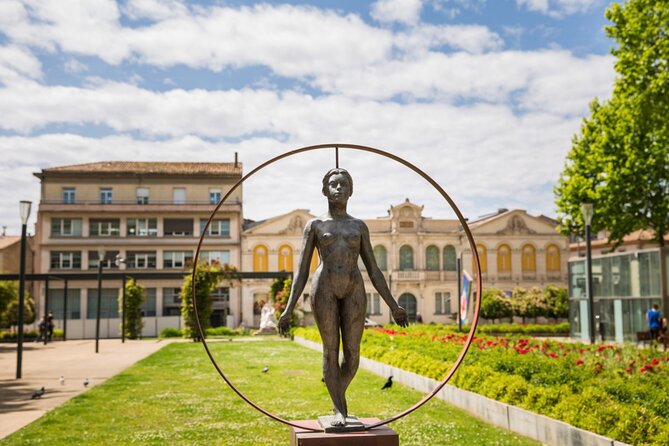
At the foot of the Pont-Vieux, you reach a facade linked to Carcassonne’s prosperous cloth-making period. A noble local family once owned the building. In 1694, it was bought by a person connected with Colbert, the powerful minister of Louis XIV, and turned into a cloth factory.
The factory received the title Manufacture Royale in 1696. The building still visible today is the owners’ residence, one of the few reminders of this period. Its design has similarities to 18th-century buildings in the lower town.
This stop widens the story beyond knights and medieval walls. Carcassonne was not only a fortress or a setting for religious conflict. It was also a place of trade, manufacturing, money, and political influence.
I find this kind of stop valuable because it gives the walk some variety. You are not simply moving from one medieval gate to another. You are seeing how the city changed over time and how wealth left marks on its buildings.
More Escape Games in France:
- Saw2 vs Squid Game – Escape Game Montpellier
★ 5.0 · 752 reviews - Prison Break – Escape game in Montpellier
★ 5.0 · 583 reviews - School of Magic – Escape game Montpellier
★ 4.5 · 536 reviews - Mission Possible – Escape game Montpellier
★ 5.0 · 437 reviews
Saint-Gimer Church by Eugène Viollet-le-Duc
Saint-Gimer Church was built between 1854 and 1859 by Eugène Viollet-le-Duc, the architect closely associated with the restoration of Carcassonne’s medieval citadel. The church was designed with modesty in mind. It has a nave, two side aisles, a polygonal apse, two vestries, and a porch.
For you, the important point is that the route includes a building from the 19th century, not just the Middle Ages. Carcassonne’s appearance owes much to later restoration and reconstruction, and Saint-Gimer helps show that the city’s architectural story did not stop in the medieval period.
The puzzle format encourages you to study the church rather than treat it as a passing landmark. Look at the shape and arrangement of the building as you work out the answer.
The drawback is that the activity does not provide a physical guide to explain architectural terms in person. If you want a detailed discussion of Viollet-le-Duc’s methods or the church’s interior, you will need a separate source or visit.
Porte de l’Aude and the approach to the Cité
Porte de l’Aude is one of the most recognizable entrances into the preserved medieval city. The gate overlooks the Aude and forms part of the fortified wall system.
This is where the route begins to feel more like the Carcassonne most people picture. The river, steep approach, stone defenses, and gate create a strong sense of arrival. The puzzle asks you to observe the gate and its setting, so you get more than a quick photograph before moving on.
The route is also practical for orientation. By this point, you have crossed from the lower town toward the Cité and can see how the river and walls shaped movement through the city.
Take care with your pace here. The experience is designed for independent play, so there is no guide telling you where to stand or when to move aside. You may also want to pause for photographs, which adds time to the advertised one hour and 40 minutes.
The Inquisition Museum and the darker side of the story
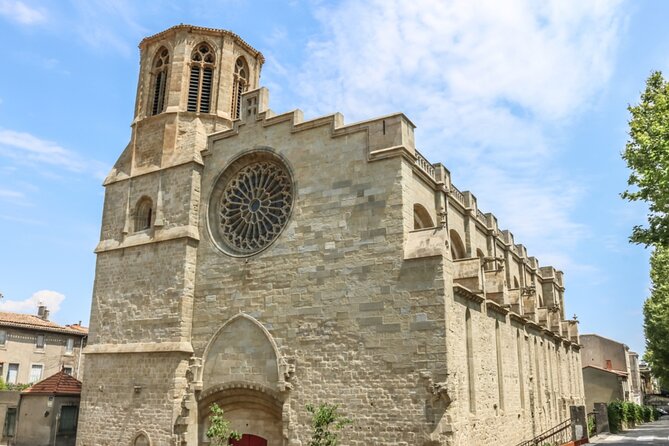
The Inquisition Museum occupies a large 17th-century building and presents instruments of torture dating from the 12th century through the French Revolution. It also covers important figures, their biographies, the Inquisition, and the Cathar castles of the region.
The city game points you toward this part of Carcassonne’s past, but admission to the museum is not included. You can view the area from outside as part of the route, then decide if you want to buy a separate ticket and go in.
That separation matters when you plan your budget. The $6 game is inexpensive, but it does not include the Château Comtal, the Inquisition Museum, or other paid attractions. Think of the activity as a self-guided introduction to the city, not a bundled sightseeing pass.
The subject matter is also worth considering before you book. The experience uses a ghost-story frame and includes persecution, torture, plague, and religious conflict. It may be interesting for older children and adults, but it is not a gentle fairy tale.
Saint-Nazaire Cathedral and Château Comtal
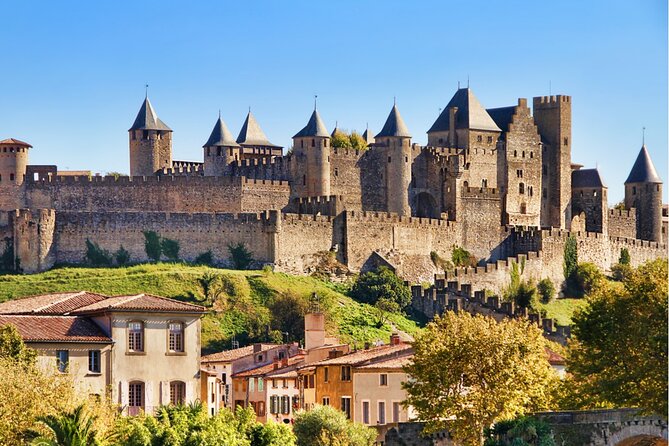
The final area brings you to the historic heart of the Cité. The present Romanesque cathedral began in June 1096. A Lady Chapel was added in the early 15th century, beside an infirmary and chapel built in the 1260s by Bishop Radulph.
Nearby, Château Comtal was built in the 12th century by Bernard Aton Trencavel over the western part of the Roman walls. This is the endpoint of the route and the place where the city’s religious and military stories meet.
The app guides you step by step to Château Comtal. You should follow the directions carefully, since the game depends on reaching the correct location and observing the right details. Once you arrive, you can choose to continue sightseeing with a paid entry ticket, but that ticket is separate.
Ending at the castle makes sense. You finish at one of Carcassonne’s strongest landmarks, with the option to spend more time inside after the game. If you are planning a castle visit, check your schedule so the puzzle route does not leave you rushing before closing.
What the $6 price really gets you
At $6 per person, this is inexpensive by sightseeing standards. A private, self-guided walk with 10 puzzles costs less than many formal guided tours, and the game can provide a useful structure for your first look at Carcassonne.
The value is strongest for people who enjoy solving clues and noticing small details. You are paying for the route design, story content, app access, and the freedom to play on your own schedule. You are not paying for a person, a headset, or entry to the city’s paid attractions.
One phone may be enough for a group, since the activity does not provide audio for each participant. That can make the total cost lower than booking every person separately, but check the booking and app instructions carefully before assuming how your group should access the game.
The flexible access is a real benefit. You can start between the listed operating hours of 6:00 AM and 11:30 PM, pause whenever you want, and continue later. A player who nearly ran out of battery was able to resume more than 24 hours later, which shows how useful the pause feature can be.
App setup, battery, and practical planning
The biggest risk is technical rather than historical. Several people have had trouble launching the game, entering the code, or getting the correct app instructions. In one case, the start process took about an hour. That can ruin a short activity, especially if you have timed castle tickets or a meal reservation.
I would install the Questo app before reaching Square Gambetta. Confirm that the booking or QR code is available, charge your phone fully, and keep a mobile connection available if the app requires one. If something goes wrong, the provider offers assistance through in-app chat and by email at [email protected].
You do not need a physical guide, but you do need to read carefully. The route is offered in English, and limited language choices may be a problem if members of your group are more comfortable in French, Spanish, German, or another language.
Public transport is nearby, and service animals are allowed. The activity is private, and most people can participate, but the 3-kilometer route means you should be ready for a substantial walk through historic streets.
Who will enjoy this format most
I would recommend this for couples, friends, and families with older children who enjoy clues, city walks, and independent schedules. It gives you a reason to examine details and covers more than the most famous postcard views.
It can also work well on a first afternoon in Carcassonne. The route introduces the lower town, river crossing, Cité entrance, churches, and castle area, helping you decide which places deserve a longer visit.
I would be more cautious if you want a traditional guided tour. There is no guide to answer questions in real time, no live storytelling, and no audio narration. One player specifically expected an audio guide and found the format different from what they had imagined.
The activity may also frustrate young children who want to stop and play rather than solve the next clue. The puzzles require attention, and the historic content can be more detailed than a simple children’s game.
Should you book Medieval Carcassonne?
Book it if you want a cheap, private way to walk from the lower town to the Cité while paying attention to places you might otherwise pass. The flexible schedule, pause feature, and mix of architecture, legends, and difficult history make it more useful than a simple sightseeing stroll.
Skip it if you need a live guide, an audio tour, several language choices, or guaranteed trouble-free technology. The app is the key to the whole experience, so prepare it before you arrive and keep a backup plan for seeing Carcassonne on your own.
For $6, I see it as a modest-cost orientation game rather than a complete tour. If you enjoy the puzzles, continue with the Château Comtal or Inquisition Museum using separate admission. If you mainly want expert historical explanation, choose a conventional guided visit instead.
FAQ
How long does Medieval Carcassonne: Interactive Ghost Story & City Game take?
The activity lasts approximately one hour and 40 minutes and follows a route of about 3 kilometers. Extra time may be needed for photographs, breaks, app problems, or visits to paid attractions.
Where does the game start and finish?
It starts at Square Gambetta in Carcassonne and ends at Château Comtal. The Questo app provides step-by-step directions between the stops.
Is a guide included?
No. This is a private, self-guided mobile game with no physical tour guide. You follow the route and solve the challenges through the Questo app.
Are monument entry tickets included?
No. Admission to Château Comtal, the Inquisition Museum, and other attractions is not included in the $6 activity price.
Can I pause the game and continue later?
Yes. You can pause at any time and resume later. The experience information states that it can also be continued more than 24 hours afterward.
What language is the game offered in?
The game is offered in English. Other language options are not listed for this Carcassonne experience.
Just added around France
- Bordeaux: Outdoor Escape Game – Le Canelé d’Or★ 4.6 · 13 reviews
- Bordeaux: Outdoor Escape Game – Braquage à la bordelaise★ 4.9 · 5 reviews
- Bayonne: Outdoor Escape Game Discover Bayonne – Txokolatea★ 3.4 · 8 reviews
- Aix Treasure Hunt★ 5.0 · 15 reviews
- Dinan: Outdoor escape game, The symbols of the apocalypse★ 4.4 · 7 reviews
- Escape Game Outdoor The Walking Dead in Caen★ 3.0 · 6 reviews
- Escape game Urban Survival Team The Walking Dead in Strasbourg★ 4.5 · 6 reviews
- Strasbourg: Adventure in a virtual reality escape room★ 5.0 · 12 reviews
City Exploration Games, compared.
Sibiu Old Town Exploration Game and Self-Guided Tour
Read our review →
Glasgow Ghost Hunt: The Soul That Got Away Exploration Game
Read our review →
Rotterdam Highlights & Spies: Interactive City Game
Read our review →
Discover Utrecht with a self-guided Outside Escape city game tour
Read our review →
Bristol Street Art: Banksy Exploration Game and Tour
Read our review →
Frankfurt Old Town & Emperors: City Game & Walking Tour
Read our review →
Browse the lists this tour appears in