
Reviewed · PARIS
Kids/teens escape game in Montmartre
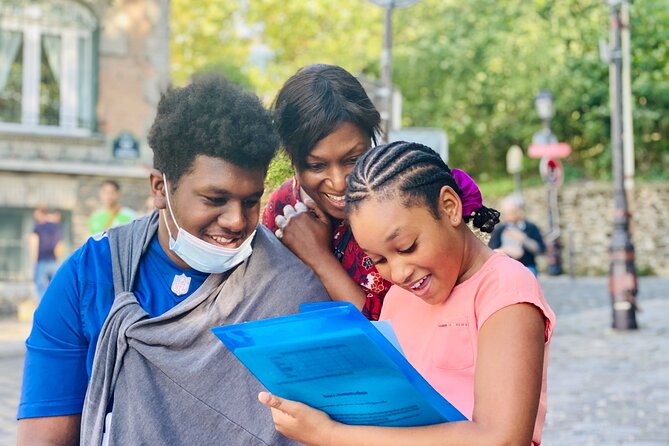
Montmartre becomes a giant outdoor puzzle board on this two-hour family game. Instead of asking children to trail behind while adults study church facades, the guide gives them questions, arithmetic, observation tasks, and small history challenges tied to the streets around Sacré-Coeur.
I like the mix of play and place: your children learn about Picasso, cabarets, architecture, and Parisian legends while walking through one of the city’s most atmospheric districts. I also like the practical touch of a host who can help with toilets, explain the neighborhood, and take free family photos. The main drawback is that some puzzles may be too hard for younger children, and the walk does not include entry into Sacré-Coeur.
Key points before you book
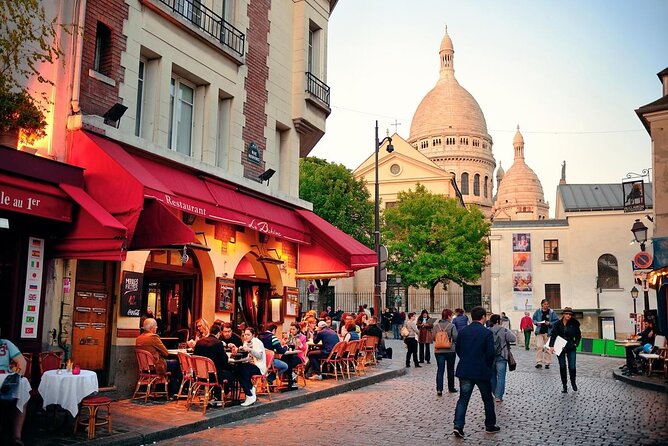
- A two-hour Montmartre puzzle walk covers Sacré-Coeur, Place du Tertre, Le Mur des Je t’aime, Au Lapin Agile, Le Bateau-Lavoir, and Le Passe-Muraille.
- Children from age 3 through teens can take part, with easier activities for small children and a more demanding adult version for older children and parents.
- The guide is part game master and part local helper, offering stories, practical assistance, and free photographs.
- The activity begins at the upper funicular station, then ends near Place Émile Goudeau, so you see Montmartre as a walking neighborhood rather than a single monument.
- The price is $41.86 per person, which is fair for a private-feeling family activity but less attractive if only one child takes the game seriously.
- The format is best for families who enjoy riddles, not for those seeking a formal, detailed tour inside the basilica.
Why this game works in Montmartre

Montmartre can be a tricky place for families. The district has steep streets, crowds around the famous church, artists working near Place du Tertre, and enough history to make an adult’s head spin. Children may see plenty, yet remember little unless they have a task.
This game gives them a reason to look closely. A window, statue, sign, painting reference, or unusual building becomes part of the challenge. You are still seeing the district, but your child has a job to do.
That matters because Montmartre rewards attention. The area is not just Sacré-Coeur and a view over Paris. It is also tied to artists, cabaret culture, street stories, and the early development of modern art. The questions help turn those details into something your family can discuss as you walk.
I especially like the flexible role of the host. Guides including Jules, Sasha, Jeanne, William Morris, and Églantine have been praised for being patient, friendly, and willing to adjust the pace. The guide is not simply reading facts aloud. The job is to keep the children moving through the clues while giving adults enough context to enjoy the neighborhood too.
More Family and Kids Games in Paris
- Louvre Museum Guided Family Treasure Hunt
★ 5.0 · 78 reviews - Louvre Museum – Private Family Tour with Da Vinci Treasure Hunt
★ 5.0 · 38 reviews - Paris Sweet & Chocolate Family Treasure Hunt
★ 5.0 · 37 reviews
Starting above Rue Foyatier and Sacré-Coeur
The meeting point is the upper funicular station at 7 Rue Foyatier. This puts you close to the Basilica of the Sacred Heart, one of Paris’s most recognizable sights and a useful place to begin.
The first stop takes about 10 minutes. Your children answer a riddle about the basilica and get their first taste of how the game works. You can admire the broad white building and its position high above the city, but do not expect an interior visit. One family specifically found it disappointing that the activity did not go up to or inside the basilica.
That is worth knowing before you pay. If your main goal is to tour Sacré-Coeur, this is not the right product by itself. If your goal is to use the basilica as a starting point for a wider family walk, it works well.
The funicular is convenient for reaching the starting area, though the meeting point is still in a busy part of Montmartre. Give yourself enough time to locate the guide. One family had trouble finding the host, so checking the exact meeting point and guide details before setting out is sensible.
Walking Montmartre with a mission
The main part of the activity lasts about two hours and takes place on foot around Montmartre. The children answer questions and complete educational games based on what they see. The tasks cover observation, language, arithmetic, painting, architecture, and local history.
This is not an escape room with locked doors and a single enclosed setting. Think of it as an outdoor puzzle trail, with the streets providing the scenery and the guide providing the structure.
The pace is described as laid back, which can be a help with children. You have time to look around, ask questions, and stop when a younger child needs a break. The tradeoff is that the experience may feel less thrilling if your family expects a fast succession of dramatic clues.
Age matters here. The activity is advertised for children from age 3, but the level of challenge will not be identical for everyone. Children around 7 to 11 have been a good fit for the age-appropriate version, while older children and adults can try a harder game. One family used the adult version with children aged 9 and 11 and found it suitable.
For children under 10, plan to help. Some puzzles may be tedious or difficult, and a younger child may need an adult to read, explain, or connect the clue to the place in front of you. The younger booklet has also been printed in cursive at times, which caused problems for children who had not learned to read that style.
That detail is small but important. A three-year-old can participate through pictures, spoken clues, and teamwork, but should not be expected to solve written riddles alone. The game works best when the family treats the puzzle as a shared activity rather than handing the booklet to the child and waiting.
Au Lapin Agile and Montmartre’s cabaret past

Au Lapin Agile is one of the most interesting stops because it brings a different side of Montmartre into the game. Your children answer questions or complete an educational task about the famous cabaret, described here as Paris’s oldest.
The stop takes about 10 minutes. That is enough time to see the exterior and understand why the building matters, without turning the activity into a long lecture. For adults, it adds useful context to the neighborhood’s artistic and nightlife past. For children, the clue gives a purpose to a building they might otherwise pass without noticing.
This is one of the better examples of the game’s approach. You are not just ticking off famous addresses. You are using each place to ask a question, spot a detail, or connect the district to a wider story.
Same streets, a different set of clues:
- Paris: Palais Garnier Mystery Game with Entry Ticket
★ 4.3 · 400 reviews - Who Killed Victor ? Escape Game at Père Lachaise Cemetery
★ 4.8 · 258 reviews - Escape game in Montmartre
★ 5.0 · 247 reviews - Escape Hunt Paris, Escape Game
★ 4.5 · 122 reviews
Place du Tertre and the artist quarter

Place du Tertre is the postcard stop, with its small square, artists, and highly recognizable Montmartre setting. The activity gives children questions and games based on what they see.
The square can be crowded, so keep your family close and listen carefully for the guide. The game may help you move through the area with more purpose, but it cannot remove the crowds or make the square quiet.
For adults, this stop is a chance to talk about how Montmartre became linked with artists and painting. For children, the task is more useful than a long explanation. They can search, count, compare, and observe while you take in the square.
I would not choose this activity expecting a full art lecture. The educational goal is broad, covering painting and architecture along with arithmetic and language. It is light learning, designed to keep children involved rather than prepare them for an exam.
Le Mur des Je t’aime and a gentler puzzle stop
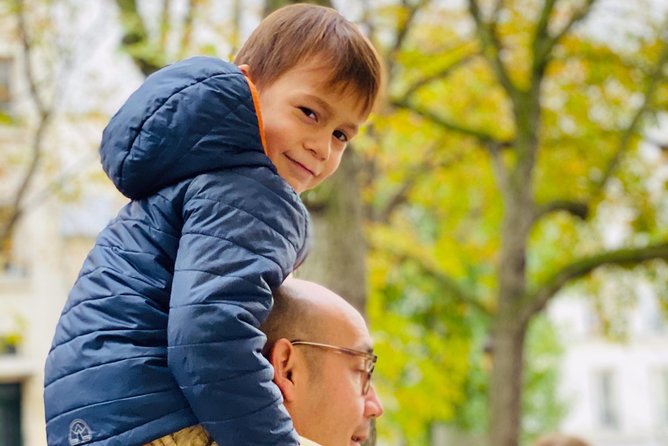
Le Mur des Je t’aime, or the Wall of Love, offers a change of pace. The family can admire the artwork while the children solve another question or complete a short game.
This stop is especially useful for younger children because the visual setting gives them something clear to look at. It also breaks up the older, more historical subjects. The activity moves between art, buildings, legends, and simple observation, which keeps the subject matter from feeling too heavy.
The stop takes about 10 minutes. That short timing helps maintain energy, though families who want long photo stops may feel slightly rushed. Your guide can take family photographs free of charge, a thoughtful touch when one parent is usually missing from the picture.
Le Bateau-Lavoir and Picasso’s Montmartre

Le Bateau-Lavoir is the studio associated with Picasso and the creation of cubism. The children answer questions or complete educational games about the site.
This stop gives the walk its strongest art connection. The building itself may not make immediate sense to a child, so the game is useful: it turns an otherwise plain-looking address into a clue about how artists worked and how new forms of art developed.
You should expect a short introduction rather than a museum visit. The stop lasts about 10 minutes, and the activity remains outdoors. Still, it gives you a simple opening to explain that famous art movements began in ordinary workspaces, not only in grand galleries.
If you want a detailed account of Picasso’s life or a serious discussion of cubism, you will need another tour or museum visit. If you want your children to remember that Montmartre played a part in modern art, this stop does the job.
Le Passe-Muraille and a playful local legend
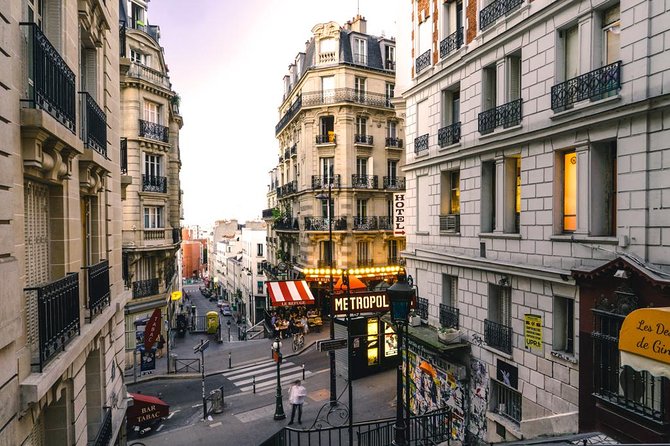
Le Passe-Muraille is a statue linked to the famous story of a man who could walk through walls. Children answer a riddle or complete a game about the statue.
This is exactly the kind of stop that suits the format. It is unusual, easy to spot, and linked to a playful story. A child may remember the wall-walking figure long after forgetting a date or architectural term.
The stop also shows that Montmartre is not only about major monuments. Small public artworks and local tales help give the neighborhood its personality. The guide can explain the story while the children work on their clue.
Ending near Place Émile Goudeau
The walk ends at Place Émile Goudeau, at 14 Rue Ravignan. This is near Le Bateau-Lavoir and gives you a practical finish in the heart of Montmartre rather than sending you back to the starting point.
The route is therefore one-way. That is useful if you want to continue exploring, eat nearby, or walk toward another part of Paris. It also means you should think about your next stop before booking, especially with tired children.
The activity lasts about two hours, but the supplied stop timings add up to more than a simple point-to-point walk. Expect the main game to fill the time, with short stops and movement between locations. A moderate level of fitness is advised. Montmartre includes slopes and walking, and young children may tire even if the game is going well.
What the $41.86 price buys you
At $41.86 per person, this is not the cheapest way to walk around Montmartre. You can visit the public sights without paying an activity fee, and families on a tight budget could create their own scavenger hunt.
The value comes from the planning and the host. You receive a ready-made game, a route through several important sites, explanations of the district, help with practical issues, and free photos. The guide also keeps the children focused, which can be worth a great deal to parents who would otherwise spend the morning saying please look up from the phone.
The price makes more sense when several family members take part and everyone treats it as an activity, not just a child-care service. It is less convincing if the adults want a long cultural talk or if your children dislike puzzles.
The high rating, 4.9 from 68 ratings, and 97 percent recommendation suggest that the format has worked well for many families. Still, the lower scores point to real limits: some clues feel tedious, younger children may struggle with written material, and the historical explanation may feel light.
Practical details for a smoother morning
You receive confirmation at booking, and the ticket is mobile, so you do not need to print anything. Service animals are allowed, and the meeting point is near public transportation.
The group can hold up to 100 people, though the experience is most enjoyable when your children can hear the host and get attention during the clues. Ask for the correct game level when arranging the activity, especially if your children are close in age but have different reading skills.
Wear comfortable shoes and allow time for the slopes. Bring water and plan for a toilet stop before or during the walk. One useful feature of the host’s role is help with practical needs such as locating a bathroom.
The activity needs good weather and a minimum number of participants. If poor weather or low participation cancels the session, you can choose another date or receive a full refund. You can also cancel for a full refund up to 24 hours before the start time. Inside that window, refunds are not offered.
Who should book this Montmartre game?
I would choose it for families with children who enjoy solving clues, spotting details, and learning through play. It is particularly well suited to children around 7 to 11, while teens may prefer the harder version. Parents who want a relaxed walk with a little structure will likely get the most from it.
I would hesitate if your children are very young and cannot read, unless an adult is happy to take an active role. I would also choose another activity if your priority is going inside Sacré-Coeur, receiving a detailed art lecture, or seeing Montmartre at a fast pace.
Should you book it?
Book this if you want Montmartre to feel like a family adventure rather than a list of monuments. The strongest parts are the child-focused puzzles, the friendly guide role, the range of stops, and the chance to learn about art and local stories without making children sit through a formal talk.
Skip it if your family dislikes riddles or if $41.86 per person feels high for an outdoor walk. For most families with school-age children, though, it offers a smart way to give a famous Paris neighborhood more shape and meaning. Just set the right expectations: this is a playful cultural walk, not an inside tour of the basilica or a detailed academic lesson.
FAQ
Where does the Montmartre escape game start?
It starts at the upper station of the Montmartre funicular, at 7 Rue Foyatier, 75018 Paris, France.
Where does the activity end?
The walk ends at Place Émile Goudeau, 14 Rue Ravignan, 75018 Paris, France.
How long does the experience last?
The activity lasts approximately two hours.
What is the price?
The listed price is $41.86 per person.
What ages can take part?
The activity is suitable for children starting at age 3 and for teens. Different versions or difficulty levels are available for younger children and older participants.
Does the tour enter Sacré-Coeur Basilica?
No. You see the basilica and answer a riddle about it, but the activity does not include going inside.
Is the activity suitable for people with limited mobility?
A moderate level of physical fitness is recommended. The experience involves walking through Montmartre, an area with slopes.
Can I cancel for a refund?
You can cancel up to 24 hours before the start time for a full refund. Cancellations or changes made less than 24 hours before the start time are not refunded. If poor weather or an insufficient number of participants causes cancellation, you can choose another date or receive a full refund.
Just added around Paris
- Paris: Treasure Hunt & Walking Tour “Secret Weapon X”★ 4.8 · 17 reviews
- Paris Treasure Hunt – Explore the Seine from Louvre to Eiffel★ 5.0 · 18 reviews
- Paris: escape game in Montmartre★ 4.6 · 18 reviews
- Batman Escape Game in Paris : Welcome to Gotham City !★ 4.5 · 20 reviews
- Paris: Virtual-Reality Escape Room Adventure★ 4.8 · 27 reviews
- Paris Kids Louvre Treasure Hunt Private Tour★ 5.0 · 28 reviews
- Outdoor Escape Game in Paris : The Stone of Nicolas Flamel★ 5.0 · 29 reviews
- Louvre Museum – Private Family Tour with Da Vinci Treasure Hunt★ 5.0 · 38 reviews
Family and Kids Games, compared.





Greek Mythology Treasure Hunt for Kids – Athens Private Tour
Read our review →Browse the lists this tour appears in