
Reviewed · LONDON
Jack the Ripper: Night Murder Mystery Walking Tour in London
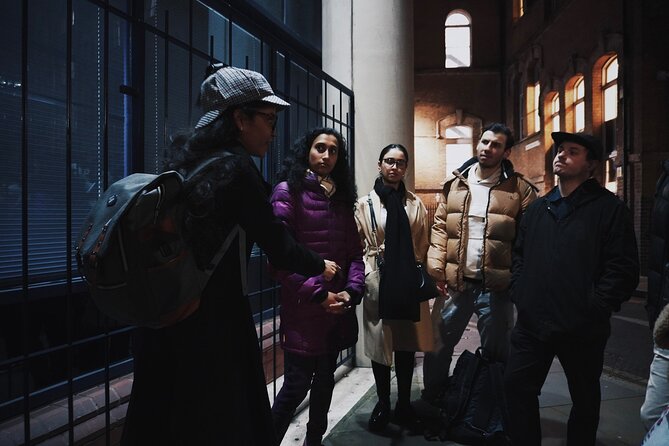
The most compelling part of this Jack the Ripper night tour is the setting. You follow narrow Whitechapel streets after dark, moving from one crime scene to the next while your guide rebuilds Victorian London around you. The route links poverty, overcrowding, police failures, and the lives of the women caught in the case.
I like two things in particular. First, the tour gives the victims more attention than the killer. Second, the story unfolds in a clear sequence, so you can understand how the crimes, clues, and theories fit together. The main drawback is simple: you walk for about two and a half hours, often without a place to sit, and the outdoor commentary can be hard to hear if the group spreads out.
Key points to know before you book
- Seven Whitechapel locations: Follow a route through Brick Lane, Princelet Street, Puma Court, Gunthorpe Street, Goulston Street, St Botolph without Aldgate, and the Ten Bells area.
- A chronological story: The guide connects the locations in order, making the growing fear and confusion easier to follow.
- Victims receive real attention: Annie Chapman, Martha Tabram, Catherine Eddowes, and others are treated as people, not just names in a murder case.
- Strong guide-led experience: Guides including Tyson, Kory, Dougal, Hadi, Korhan, Lisa, and Anahita have brought history, theories, and local context to the walk.
- Night adds atmosphere: Dark streets and cool weather can make the setting feel closer to the Victorian period, though rain and poor sound carry are possible.
- Good price for a long walk: At $22.93 per person, you get about 150 minutes of guided storytelling and several historic stops.
Why a night walk changes the Jack the Ripper story
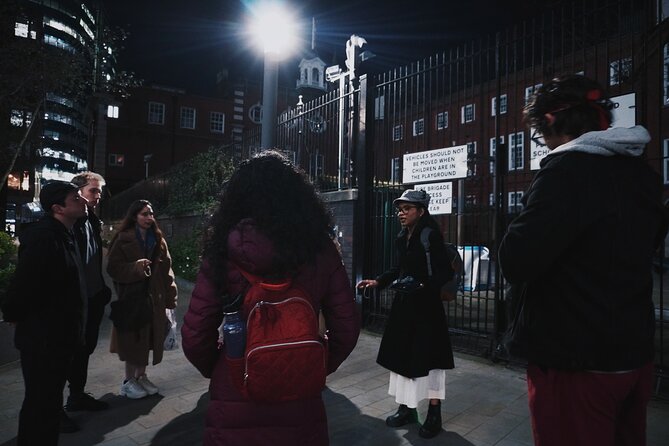
You can read about the Whitechapel murders in a book or watch a documentary from a comfortable sofa. This tour asks you to walk through the same tightly packed part of London, from one location to another, while the guide explains what is known and what remains guesswork.
That physical movement matters. Whitechapel is no longer the Victorian slum described during the tour, but some alleys and street lines still help you understand the fear of moving through the area after dark. You can see how quickly the route shifts from busy streets to narrow passages.
The tour also avoids making the killer the only subject. A strong guide places the women’s lives, work, poverty, and limited choices at the center. That approach gives the story more weight and keeps the evening from becoming a simple parade of gruesome details.
At 2 hours and 30 minutes, this is longer than a quick city walk. You will cover several locations in sequence, with roughly 17 minutes assigned to each stop before allowing time to move between them. Wear comfortable shoes and expect to remain on your feet for most of the evening.
More Murder Mystery Games in London:
- Interactive Jack the Ripper Night Walk: London’s Murder Mystery
★ 5.0 · 171 reviews - Colombia’s Finest Outdoor Murder Mystery London
★ 5.0 · 122 reviews - London: Murder Mystery Cruise With 3-Course Dinner
★ 4.5 · 18 reviews
Starting at St Mary’s Whitechapel Church Memorial
The meeting point is St Mary’s Whitechapel Church Memorial on an unnamed road in London E1 1FE. This places you near the Whitechapel area from the beginning, rather than spending the first part of the tour on a long transfer from central London.
Your guide introduces the case and the social conditions of the district. This opening matters because the murders did not occur in isolation. Poverty, overcrowding, insecure work, and poor protection for vulnerable women shaped the setting.
You should arrive ready to listen closely from the start. The tour has a maximum group size of 25, which is small enough for a guide to keep an eye on the group, but large enough that you may need to move toward the speaker at each stop.
The meeting point is outdoors, so allow extra time to get there and dress for the forecast. Night conditions are part of the experience, but cold rain can make the walk less comfortable. One group completed the route through torrential rain and still had a good evening, but dry weather will make the storytelling easier to follow.
Brick Lane and the Victorian world behind the crimes
The first stop is Brick Lane, now known as a major cultural street but once part of a poor and crowded district. Your guide explains the housing conditions, desperation, and social pressure that shaped daily life in Victorian Whitechapel.
This is an important beginning because it gives you context before the tour names individual crimes. You learn how overcrowding and poverty affected women who had few safe options. The point is not to excuse the crimes, but to show the conditions in which vulnerable people lived and worked.
Brick Lane also helps you compare old and new London. The street you see today has a very different character, so the guide’s descriptions and historical images are useful. One guide, Korey, was praised for bringing period news reports and photographs of the neighborhood to the walk.
The stop lasts about 17 minutes. You will likely spend that time listening outdoors, with limited opportunity to sit.
Princelet Street and the lives behind the names
Princelet Street is quieter and narrower than the larger roads nearby. Here, the story turns toward the living conditions of women such as Annie Chapman.
This part of the tour works best when the guide moves beyond dates and crime details. Annie Chapman becomes more than a name in a list. You begin to understand the difficult circumstances surrounding women who needed shelter, money, and safety in a city that offered little of any three.
Guides such as Hadi have handled this subject with care, using a calm tone and historical context rather than pushing the material for shock value. That balance matters. The case is grim enough without turning real suffering into entertainment.
Princelet Street can also give you a clearer sense of scale. Narrow streets, close buildings, and poor lighting help explain why witnesses, police, and suspects could struggle to see what was happening. The route does not claim that atmosphere proves anything, but it shows you why the setting became part of the case’s lasting power.
More Escape Games in London:
- Private Escape Room with a Zombie in London
★ 5.0 · 128 reviews - London: Food Treasure Hunt and Walking Tour
★ 5.0 · 92 reviews - One-Hour Private Capital Caper Escape Room Gaming in London
★ 4.0 · 58 reviews - One-hour Private Star Struck Escape Room Gaming in London
★ 4.0 · 43 reviews
Puma Court and the danger of narrow passages
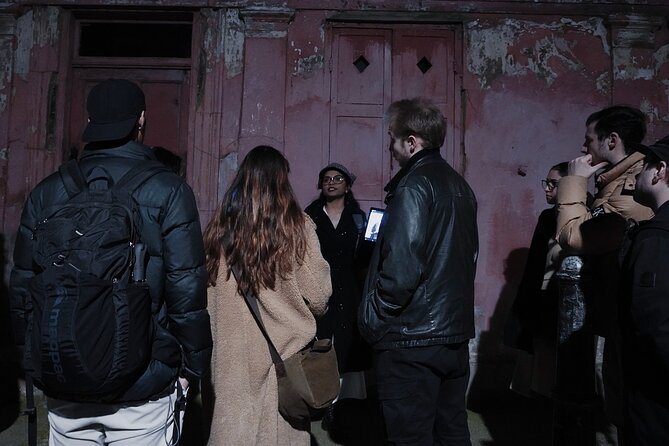
Puma Court is described as one of the places that has changed little since the 19th century. It is a useful stop because the physical setting does more work here than a broad modern road would.
Your guide explains how someone could disappear into nearby shadows. That does not solve the case, but it gives you a sense of the practical problems facing anyone trying to patrol or investigate the area.
I would pay close attention at this point to the guide’s description of movement through Whitechapel. The value is not just the location itself. It is the connection between street design, poor lighting, social fear, and the limits of Victorian policing.
The route remains outdoors, and the group may need to gather tightly so everyone can hear. One useful tip from the experience is to stay near the guide, especially if you want every detail. A single complaint noted that commentary became difficult to hear when the guide looked away or the group spread out.
The Ten Bells and the human side of the case
The Ten Bells is one of the best-known names connected with the Whitechapel murders. The tour stops outside the pub to discuss the women believed to have visited there shortly before their deaths and the reason the building remains linked to the case.
The stop does not simply treat the pub as a spooky photo opportunity. It helps explain the role of public houses in working-class life and the last known movements attached to several victims. The focus stays on what can be established, rather than pretending every connection is certain.
This is also the point where the tour’s atmosphere can feel strongest. You are outside a real historic pub in the neighborhood at night, hearing about people whose final hours have been studied for generations.
You may want a photograph here, but do not expect a long break. The stop forms part of the continuing route. The supplied route description says the tour wraps up at the Ten Bells, while the listed endpoint is Mitre Square, so check the exact meeting and finish details when booking if the final location matters to you.
Gunthorpe Street and Martha Tabram’s disputed place in the story
Gunthorpe Street is linked to the murder of Martha Tabram. Some researchers consider her a possible first victim of Jack the Ripper, while others do not include her among the canonical victims.
This uncertainty is one of the better parts of the tour. Instead of giving you a neat answer, the guide examines the clues and explains why the theory remains disputed. You see how historians and crime researchers weigh timing, location, method, and connections between cases.
The stop also shows why the phrase Ripperologist matters. A good guide is not simply reciting a fixed script. The guide presents competing theories and lets you see where evidence ends and interpretation begins.
If you enjoy mysteries, this is likely one of the most engaging stops. If you prefer only settled facts, you may find the speculation frustrating. The tour works best when you accept that the central question has never received a final answer.
Goulston Street, the apron, and the chalk message
At Goulston Street, the guide discusses a bloody piece of apron linked to Catherine Eddowes. Nearby, a chalk message became one of the case’s most debated clues.
This section shows how quickly evidence can turn into controversy. The apron was a physical object, but its discovery raised questions about who left it, why it was there, and what the nearby writing meant. The chalk message then added another layer of uncertainty and fueled later theories.
You will hear about the competing explanations rather than a forced conclusion. Guides have also used period news reports and neighborhood photographs to help make the evidence easier to picture.
This stop can be crowded or noisy, depending on the evening. Stay close and ask questions during pauses rather than speaking while the guide is facing away. Clear delivery makes a big difference here because the details can become confusing if you miss one step.
St Botolph without Aldgate and a pause for reflection
St Botolph without Aldgate was associated with vulnerable women seeking refuge. The tour pauses here to consider how Victorian society failed the women later remembered mainly through the name of their killer.
This is the most reflective part of the walk. It pulls the story away from clues and theories and back toward the people involved. You are asked to think about poverty, limited support, and the lack of protection available to women in desperate situations.
I value this stop because it keeps the evening from becoming a simple true-crime show. The case is famous, but the women had lives before they became victims. A guide who gives that point enough time can make the tour feel more human and less sensational.
The stop lasts about 17 minutes, but the tour does not offer many sitting breaks. If your knees or feet tire easily, plan accordingly. Most people can take part, and service animals are allowed, but this remains a long walk through city streets.
Finishing near Mitre Square
The listed endpoint is Mitre Square, London EC3A 5DE. The route description connects the finish with the final victim named in the tour material, so it provides a dramatic closing location and a chance to gather the main theories.
The endpoint also gives the guide room to explain why Jack the Ripper remains more famous than other killers active in Whitechapel at the same time. The final discussion may include theories about the killer’s identity, and guides have sometimes stayed afterward to talk through those ideas.
This extra conversation is valuable if you enjoy weighing suspects and evidence. It is less useful if you need to leave immediately after the formal walk, so allow a little flexibility around your evening plans.
The tour does not include admission tickets to the listed locations. The experience is a guided outdoor walk, and the price covers the storytelling and route rather than entry to a museum or private site.
Guide quality makes the biggest difference
The material is dark, but the guide determines how the evening feels. Tyson has been praised for humor, energy, and keeping the group moving during bad weather. Kory and Korey have been noted for strong storytelling, period details, and wider London history.
Dougal has focused on creating a detailed picture of 19th-century life, while Hadi has handled the victims’ stories with care and restraint. Korhan and Korhn Yasin have also brought strong subject knowledge and clear explanations to the route. Lisa and Anahita have led organized, informative walks as well.
The guides do not all have the same style. Some focus more on theories, while others give more time to social history and the victims. That variation is normal for a group tour, but the overall strength of the experience rests on clear speaking, good pacing, and the ability to keep 25 people together.
If your guide offers time for questions at the end, use it. The unresolved parts of the case are often more interesting than the familiar facts.
Price, pace, and practical value
At $22.93 per person, this is a fair price for a 2.5-hour guided walk in central London. You are paying for a long route, several stops, historical explanation, and a guide who connects the locations into one story.
The value is strongest if you enjoy walking and want a focused evening activity. It costs less than many larger sightseeing experiences, while giving you access to a part of London you might not choose to explore alone at night.
The main tradeoff is comfort. There are few places to sit before the end, and the walk continues in cold or wet weather. Wear shoes with good grip, bring a waterproof layer, and keep your phone charged if you want photographs.
The tour is offered in English and has mobile tickets. Group discounts may be available. Free cancellation applies if you cancel at least 24 hours before the start time. Changes or cancellations inside that window are not accepted for a refund.
Who should book this Whitechapel walk?
I would choose this tour if you like crime history, Victorian London, old neighborhoods, or mysteries with no final solution. It also suits you if you want an evening activity that combines local streets with storytelling rather than a standard pub visit or bus tour.
It is especially good for people who want the victims treated with dignity. The strongest parts are not just the murder details. They are the explanations of poverty, social failure, and the limited choices available to women in the area.
You may want to skip it if you dislike grim subjects, long outdoor walks, or unresolved theories. The tour discusses murder and vulnerable people in direct historical terms, even when the guide handles the material carefully.
Should you book it?
Book it if you want a serious, atmospheric walk through Whitechapel and you are comfortable staying on your feet for about two and a half hours. At $22.93, the length and route offer solid value.
I would make the booking after checking the exact finish point and preparing for the weather. Stay close enough to hear, listen for the difference between evidence and theory, and give the victims as much attention as the killer. That is what makes this tour more worthwhile than a simple spooky walk.
FAQ
How long does the Jack the Ripper walking tour last?
The tour lasts approximately 2 hours and 30 minutes.
How much does the tour cost?
The listed price is $22.93 per person.
Where does the tour begin?
The meeting point is St Marys Whitechapel Church Memorial, on an unnamed road in London E1 1FE, United Kingdom.
Where does the tour finish?
The listed endpoint is Mitre Square, London EC3A 5DE.
Which locations does the walking tour visit?
The route includes Brick Lane, Princelet Street, Puma Court, the Ten Bells area, Gunthorpe Street, Goulston Street, and St Botolph without Aldgate.
Is the tour offered in English?
Yes. The tour is offered in English.
How many people can join the tour?
The maximum group size is 25 people.
Are service animals allowed?
Yes. Service animals are allowed.
Can most people take part?
Yes. Most people can participate, though you should be prepared for an outdoor walk lasting about two and a half hours.
Can I cancel for a full refund?
Yes. You can cancel at least 24 hours before the experience start time for a full refund. Cancellations within 24 hours are not refunded.
Is a mobile ticket available?
Yes. The experience offers mobile ticketing.
Just added around London
- Immersive London Treasure Hunt Adventure – Outdoor Escape Room★ 5.0 · 11 reviews
- London’s Crown Secret: Self-Guided Royal Puzzle Quest★ 4.5 · 8 reviews
- London Charles Dickens Puzzle Questo and Self-Guided Tour★ 5.0 · 6 reviews
- London (Covent Garden) Scavenger Hunt and Sights Self-Guided Tour★ 5.0 · 7 reviews
- London Scavenger Hunt and Highlights Self-Guided Tour★ 4.0 · 4 reviews
- London: Murder Mystery Cruise With 3-Course Dinner★ 4.5 · 18 reviews
- Wizarding London: Interactive Game & Magical Walking Tour★ 4.0 · 26 reviews
- Private Bespoke Scavenger Hunts★ 5.0 · 26 reviews
Murder Mystery Games, compared.
Branson Murder Mystery- Branson’s Original #1 Murder Mystery
Read our review →
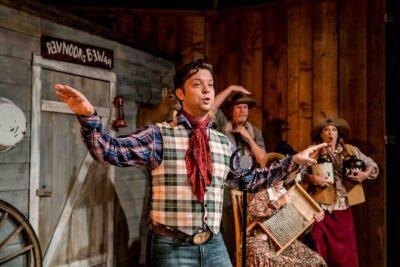
WhoDunnit Hoedown – Branson’s Best Murder Mystery Dinner Show
Read our review →

Ancient Greek Theatre Murder Mystery Experience
Read our review →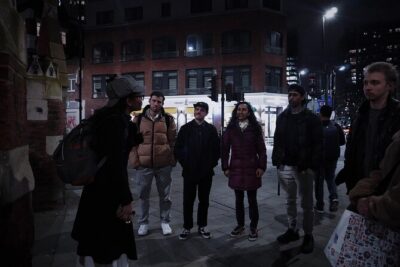
Interactive Jack the Ripper Night Walk: London’s Murder Mystery
Read our review →Ancient Greek Theatre Murder Mystery Experience
Read our review →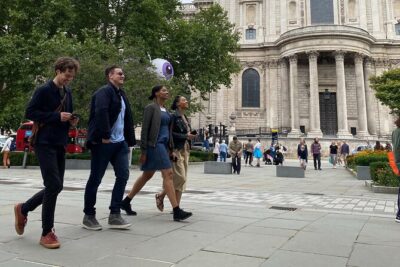
Colombia’s Finest Outdoor Murder Mystery London
Read our review →Browse the lists this tour appears in