

Reviewed · POMPEII
Escape from Pompeii: Self-Guided Mystery Puzzle Adventure
Pompeii becomes a giant puzzle board in this self-guided mystery game. You follow clues from Porta Marina through temples, villas, bakeries, theaters, gardens, and the amphitheater, seeing many of the city’s major sights as the story unfolds. It is a clever way to add purpose to a huge archaeological site.
I like the low price, about $7.24 per person, and the freedom to pause whenever you want. I also like that this is a private activity for your own group, with no guide setting the pace. The main catch is important: the game is in English only, and your Pompeii entry ticket is not included.
Key points to know before you book
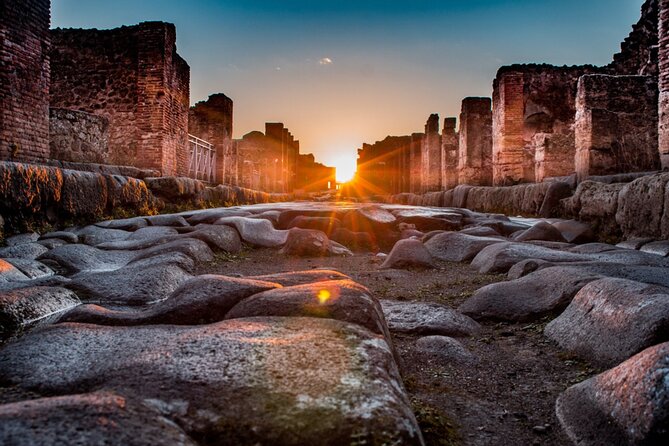
- Follow a 15-stop route: The game runs from Porta Marina Superiore to Pompeii’s amphitheater.
- Use your own phone: The Questo app provides the clues and story.
- Plan for about two hours: The stated duration is roughly 1 hour 45 minutes to 2 hours 15 minutes.
- Bring a Pompeii admission ticket: Entry is separate from the game price.
- Expect English content: The activity is offered in English, even if the app itself displays other language options.
- Set out during the listed hours: The activity is available daily from 9:00 a.m. to 3:30 p.m.
Turning Pompeii into a mystery
Most visits to Pompeii involve a map, a guidebook, or a guide explaining one ruin after another. This game gives you another way in. Instead of simply walking from sight to sight, you solve a clue, read the next part of the story, and use the answer to find your next location.
That format can help you keep moving through a site that is easy to find overwhelming. Pompeii is large, and the streets can begin to blur together after a while. A sequence of small challenges gives you a reason to pay attention to a statue, a fountain, a doorway, or a painted wall.
You begin at the ticket office at Porta Marina Superiore on Via Villa dei Misteri, 2. The first clue sets the route in motion. From there, the game takes you through the Archaeological Park and ends at the Amphitheatre of Pompeii on Piazza Immacolata.
You are not joining a scheduled group. Your own party participates together, and you can stop when you want. That makes the activity especially practical for families, couples, and friends who prefer a shared game to a formal walking tour.
More Self-Guided Games in Italy
- Florence Self-Guided Treasure Hunt & Medici Mystery Walking Tour
★ 5.0 · 69 reviews - Siena Medieval Power Quest: Self-Guided Family Feud Game
★ 4.5 · 38 reviews - Bologna Secrets Quest: Self-Guided Hidden Gems Adventure
★ 4.0 · 24 reviews
What the two-hour route actually covers
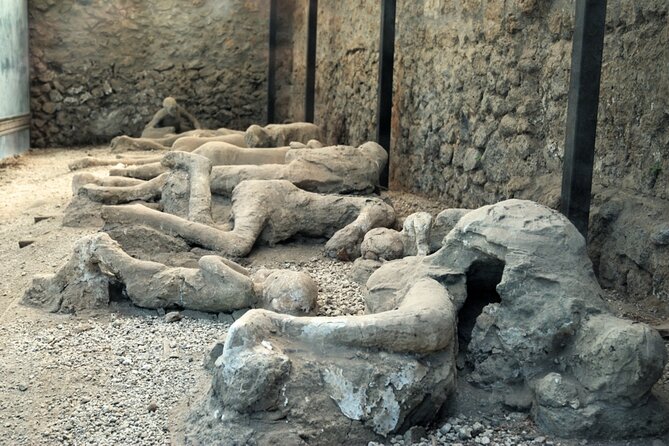
The route includes 15 stops, though the five-minute times shown for each location are best understood as short clue points, not strict time limits. You can spend longer at places that interest you, particularly the House of the Faun, the Forum, the theater, or the Garden of the Fugitives.
1. Porta Marina Superiore and the first clue
Your starting point is the Ticket Office at Porta Marina Superiore. This is where the game gives you its opening clue and the directions for the next stage.
This beginning is useful because you get a clear starting point rather than having to search for an app-based route inside the archaeological park. Before you begin, make sure your phone is ready and that you have your Pompeii admission arranged. The activity itself does not pay for entry.
2. The Archaeological Park of Pompeii
The next clue brings you into the main archaeological area. Here, the game begins connecting the modern route with the remains of the ancient city.
You should treat this part as an orientation stop. Pompeii contains many streets and structures, and a clue-based route can help you get your bearings quickly. The game is not a replacement for the park’s signs or a full archaeological explanation, but it gives you a clear reason to keep looking around.
More Puzzle Walks and Quests in Italy:
- Milan Da Vinci Mystery: Self-Guided Puzzle Quest
★ 4.0 · 19 reviews - The Magic of Navigli: Self-Guided Puzzle Quest in Milan
★ 5.0 · 7 reviews - Love in Pisa: Self-Guided Romantic Puzzle Adventure
★ 5.0 · 6 reviews - Brescia Hidden Legends: Self-Guided Puzzle Quest
★ 4.5 · 6 reviews
3. The Centauro di Igor Mitoraj
One of the early clues is connected to the Centauro statue by Igor Mitoraj. The modern sculpture creates an interesting contrast with Pompeii’s ancient buildings.
The task here asks you to study the statue and use what you see. This is a good reminder that the route is not limited to ruins from the Roman period. You will need to pay attention to present-day art as well as ancient streets and walls.
4. The Temple of Jupiter
The route then reaches the Temple of Jupiter, one of the major religious buildings in the Forum area. The clue here continues the story and points you toward the next stop.
This is one of the places where the game format can work well. You are looking at a large, open ruin with plenty of visual details, and the challenge gives you a specific reason to inspect it instead of simply passing through.
5. The House of the Tragic Poet
At the House of the Tragic Poet, you look for another clue and use it to confirm the correct direction. The house is one of the residential stops on the route, giving you a closer look at the private side of Pompeii.
You should expect the game to ask you to observe details rather than simply read a long explanation. If you enjoy spotting symbols, layouts, and small features in ancient buildings, this part will likely appeal to you. If you prefer a full explanation of the house’s art and architecture, you may want to bring an additional guide.
6. The House of the Faun
The House of the Faun is one of Pompeii’s best-known residences, and the game gives you a new challenge here. This is also one of the stops where you are explicitly free to pause and continue at your own pace.
I would allow extra time here if the house interests you. The listed five-minute stop is enough for the clue, but not necessarily enough for a careful look at the property. The self-guided format works in your favor because no guide or group is waiting for you to move on.
7. The Fountain of Silenus
The next clue is at the fountain with a relief of Silenus resting on a wineskin. It is a small but distinctive detail, and the game uses it as another visual checkpoint.
This kind of stop shows how the route mixes major landmarks with smaller objects. You are not only moving between famous buildings. You are also asked to notice details that could easily be missed during a quick walk through Pompeii.
8. The bakery on Via Roma
At Via Roma, 36, you receive another clue at the bakery. This stop adds a practical glimpse of everyday commercial life in the ancient city.
A bakery may not have the scale of a temple or amphitheater, but it helps you picture how Pompeii functioned as a lived-in town. The game’s strength here is its variety. You move between public buildings, private homes, religious sites, food businesses, and open spaces.
9. The Forum of Pompeii
The Forum is one of the route’s major viewing points. Here, you can enjoy the broad setting and continue exploring at your own pace.
The clue route does not force you to spend a fixed amount of time in the Forum. That is helpful because this is a place where you may want to stop, look around, and take in the surrounding buildings. The game gives you structure, but you remain in control of the visit.
10. Teatro Piccolo
The route continues to the Teatro Piccolo, or Small Theater. You can explore around it while admiring the building and waiting for the next part of the story.
A theater stop broadens the picture of Pompeii beyond homes and temples. It points to the city’s public entertainment and social life. As with the other locations, the game provides a prompt, but it does not promise a live explanation of the theater’s design or use.
11. The House of the Ceii
At the House of the Ceii, another challenge directs you onward. This residential stop gives the route a quieter change of pace after the Forum and theater.
You will get more from this stop if you look closely rather than rushing to solve the clue. The game is designed around observation, so the buildings themselves are part of the answer. Still, you should remember that the activity is a game first, not a detailed guided lesson.
12. The Thermopolium of Vetutius Placidus
The Casa e Thermopolium di Vetutius Placidus is one of the more distinctive stops. A thermopolium was a food and drink shop, and this location adds another piece to the picture of daily life in Pompeii.
The clue here sends you onward, but the building is worth treating as more than a checkpoint. You can pause to consider how different this setting feels from the wealthy houses and formal public spaces elsewhere on the route.
13. The Garden of the Fugitives
The Garden of the Fugitives is an archaeological site and one of the more sobering locations on the route. Here, you are invited to enjoy the view and continue exploring at your own pace.
Because of the subject associated with the site, this stop may feel more serious than the puzzle sections. The self-guided format lets you take a quiet moment rather than moving along with a group. You can decide how much time you want to give it.
14. The Plaque of Domenico Fontana
In modern Pompei, the route brings you to the plaque of Domenico Fontana. The clue here helps you solve the next challenge and directs you toward the final stop.
This location also shows that the game is not confined to one narrow type of ancient monument. You encounter traces connected with the wider story of Pompeii, including a later reference point before the final archaeological landmark.
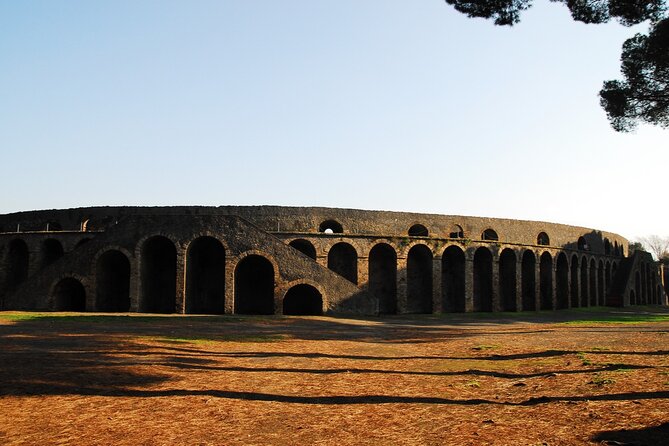
15. The Amphitheatre of Pompeii
The story and the city exploration game finish at Pompeii’s amphitheater. Ending here gives the route a clear final destination and makes it easy to know when the activity is complete.
The amphitheater is a fitting last stop because it is one of Pompeii’s most recognizable structures. Once you arrive, you can continue looking around according to the access and visiting conditions in force that day, but the game itself has ended.
The app, language, and pace
You receive a city exploration game on your phone through the Questo app. The app supplies the clues, story, and directions, while you provide the walking, observation, and decision-making.
You do not get a tour guide. That is both the appeal and the limitation. I like being able to pause for photos, stop at a house, or take a break without holding up anyone else. On the other hand, you cannot ask a guide to explain a fresco, clarify a Roman term, or help when a clue seems unclear.
The activity is offered in English only. This point deserves close attention. The app may show language choices, but the game content itself is in English. If your English is limited, solving clues in hot weather could become tiring rather than fun. Read the language information carefully before paying, especially if you expected Spanish or another language.
The stated duration is about 1 hour 45 minutes to 2 hours 15 minutes. Your actual visit can run longer because the route includes 15 archaeological stops and Pompeii rewards slow looking. The game sets the basic pace, but it does not prevent you from lingering.
Is $7.24 good value?
At about $7.24 per person, the game is inexpensive compared with a private guided tour. You are paying for a structured activity, not for admission, transport, or an expert escort.
I see the best value for people who already plan to visit Pompeii and want a light layer of entertainment. The game can help children and teens stay involved, and adults who enjoy puzzles may find it more memorable than simply following a map.
The value is weaker if you want detailed archaeological commentary. You will need a separate guide, audio guide, or book for that. You also need to buy the Pompeii entry ticket separately, so the total cost of your visit is higher than the game price alone.
Group discounts are available, which may make the activity more appealing for a larger party. Since only your group participates, the per-person cost can remain modest while everyone works through the same story.
Practical details that affect the day
The listed operating hours are Monday through Sunday, 9:00 a.m. to 3:30 p.m., for the stated availability period from February 23, 2022, through February 7, 2027. Plan your start with enough time to reach the final amphitheater before the activity’s listed closing time.
You receive confirmation when you book, and 24/7 customer support is included. The activity is near public transportation, and service animals are allowed. Most people can take part, though you should be comfortable walking through a large archaeological site while using a phone.
The start point is Via Villa dei Misteri, 2, at the Porta Marina Superiore ticket office. The finish is the Amphitheatre of Pompeii, Piazza Immacolata. That point-to-point route matters, so do not assume you will finish where you began.
Free cancellation is available if you cancel at least 24 hours before the start time. Cancellations or changes made inside that 24-hour window are not refunded or accepted.
Who should choose this Pompeii game?
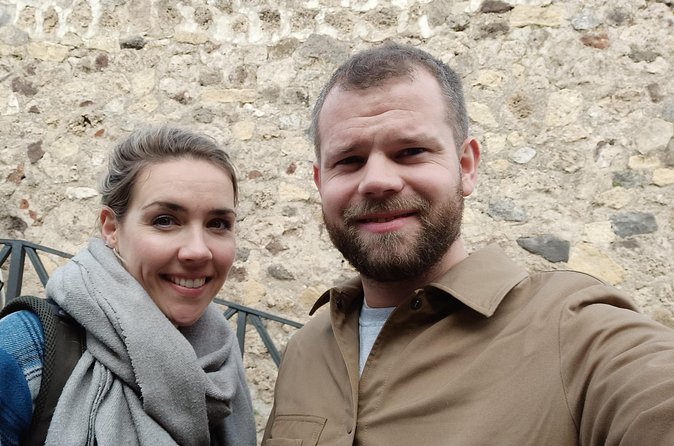
I would choose this for a couple, family, or group of friends who enjoy solving clues and want freedom from a scheduled guide. It also suits anyone who has already visited Pompeii and wants a different way to move through familiar areas.
It is less suitable if you want a scholarly tour, a specific language other than English, or a fully explained visit led by an expert. It may also frustrate you if you dislike using your phone while sightseeing.
Bring a charged phone, allow more than the bare minimum time, and read every clue carefully. Most importantly, arrange your Pompeii entry ticket separately and confirm that English is comfortable for everyone in your group.
Should you book it?
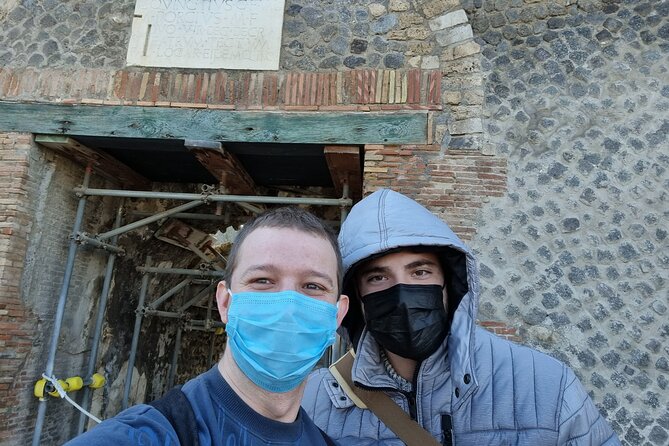
Book this game if you want a low-cost, private way to connect Pompeii’s major sights with a bit of problem-solving. The route covers a strong mix of temples, houses, public spaces, food shops, gardens, theaters, and the amphitheater, and you can pause whenever you like.
Skip it if your main goal is expert interpretation or if you expected the game in Spanish or another language. For the right group, $7.24 buys a useful structure for exploring Pompeii. It does not replace admission or a guide, but it can make a long visit feel more active and focused.
FAQ

How long does the Pompeii mystery game take?
The stated duration is approximately 1 hour 45 minutes to 2 hours 15 minutes.
Where does the activity start?
It starts at the Ticket Office at Porta Marina Superiore, Via Villa dei Misteri, 2, 80045 Pompei, Italy.
Where does the activity end?
The game ends at the Amphitheatre of Pompeii on Piazza Immacolata, 80045 Pompei, Italy.
Is a tour guide included?
No. This is a self-guided activity played through the Questo app, and no tour guide is included.
Is admission to Pompeii included?
No. Entry tickets are not included in the activity price.
What language is the game in?
The game is offered in English. The game content is in English even if the app may display other language options.
Can I pause during the route?
Yes. At several stops, you can stop for as long as you like and continue exploring at your own pace.
Is the activity private?
Yes. Only your group participates in the activity.
Can I cancel for a full refund?
Yes, if you cancel at least 24 hours before the scheduled start time. Cancellations made less than 24 hours in advance are not refunded.
Just added around Italy
- Ghosts of Turin: Hidden Spell Exploration Game★ 3.5 · 8 reviews
- Turin Scavenger Hunt and Highlights Self Guided Audio Tour★ 5.0 · 6 reviews
- Turin Scavenger Hunt and Sights Self-Guided Tour★ 5.0 · 2 reviews
- Trieste Exploration Game and City Tour on your Phone★ 5.0 · 3 reviews
- Trieste Scavenger Hunt and Sights Self Guided Tour★ 4.5 · 2 reviews
- Trento Scavenger Hunt and Sights Self-Guided Tour★ 4.0 · 9 reviews
- Syracuse Scavenger Hunt & Highlights Self Guided Audio Tour★ 4.5 · 4 reviews
- Ghosts of Catania Exploration Game and Tour★ 4.5 · 2 reviews
Self-Guided Games, compared.






Browse the lists this tour appears in