
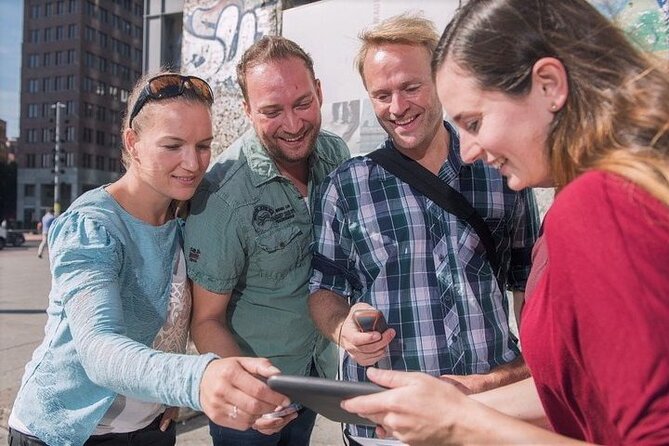
Reviewed · FLANDERS
e-Scavenger hunt Turnhout: Explore the city at your own pace
Turnhout’s best surprise is how much story fits into a walk through its center. This self-guided game links a 14th-century UNESCO-listed beguinage, a striking church, playing-card history, museums, an old café, and a major cultural center. You explore with your own group, not a guide or a large tour party.
I like the freedom most: you can stop for food, drinks, photos, or a breather whenever you wish. I also like the price, $37.33 per group of up to six, which makes this a practical choice for families and friends. The main drawback is navigation. The app works with your phone and data, but some directions can be less clear than the questions, so the advertised two to four hours may stretch much longer.
Key points to know before you book

- The beguinage is the visual highlight: Enter the quiet square behind the gate and see why it earned UNESCO World Heritage status in 1998.
- Turnhout’s playing-card story is unusual: The city’s industry began when Philip Jacobus Brepols pressed cards in 1826.
- You set the pace: The game has no time limit, so you can pause at a café, stop for lunch, or split the walk across a longer day.
- The group size keeps the cost low: One booking covers up to six people, making it especially useful for families or small teams.
- Expect questions of mixed difficulty: Some are quick wins, while others require close attention and a bit of discussion.
- It is mainly a central-city walk: The route covers many worthwhile sights, but it is not a formal museum tour or a guided deep explanation at each stop.
A self-guided way to meet Turnhout
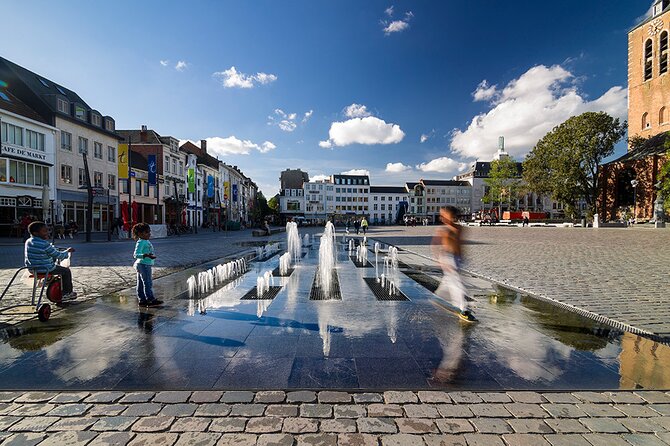
The activity begins at Stationstraat 38, near Turnhout’s train station area, and ends back at the meeting point. You receive confirmation when you book, then use the online app on your own smartphone. The game is offered in English, and your party plays privately.
That setup matters. You are not racing behind a guide or trying to keep a group together. You can let children read the clues, ask the questions yourself, or divide up the work among friends. For a family, the game gives younger members a reason to lead the way rather than simply follow adults through another town.
The advertised playing time is about two to four hours. Treat that as a useful estimate, not a fixed schedule. The route includes breaks between assignments, and you can stop for a meal or drink. One outing became a six-hour, 12-kilometer walk because the group spent extra time finding its way and taking breaks. That is not necessarily a fault, but it shows why you should avoid booking a tight onward connection.
The app and questions are the heart of the activity. The walking is moderate in spirit, though the total distance depends on how carefully you follow the route and how often you pause. The distances between assignments are often about 350 meters, which gives you regular changes of scene without forcing a long march between every clue.
More Scavenger Hunts in Belgium
- e-Scavenger hunt Antwerp: Explore the city at your own pace
★ 4.5 · 67 reviews - e-Scavenger hunt Bruges: Explore the city at your own pace
★ 4.5 · 58 reviews - Bruges Scavenger Hunt and Highlights Self Guided Audio Tour
★ 4.0 · 54 reviews
The beguinage and its quiet square
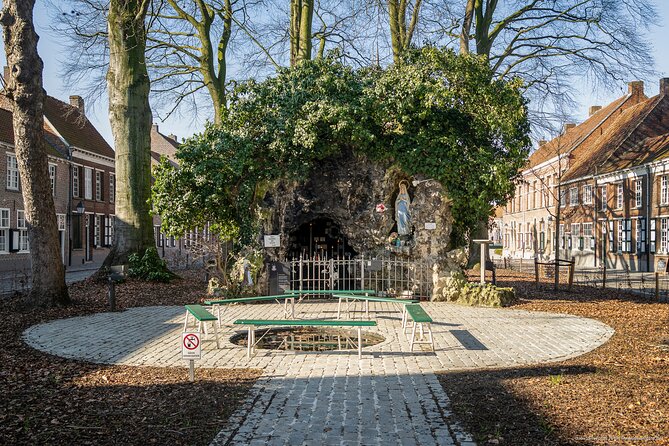
The first major stop is Turnhout’s beguinage, a place with an immediate sense of age and calm. The site dates from the 14th century, and its UNESCO World Heritage recognition came in 1998. The gate leads you into Begijnhof, the attractive square inside.
This is the kind of place where a game can help you look closely. Instead of merely passing through, you are asked to notice details and connect the setting with the question on your phone. The square also gives you a welcome change from ordinary streets, with a slower feel and a more enclosed layout.
Allow extra time here if you enjoy taking photographs or reading the prompts carefully. The beguinage is one of the stops that gives the walk its character. At the same time, remember that the activity is not a guided architectural visit. The app offers clues and facts, but it will not provide the sustained explanation you would get from a specialist guide.
St. Peter’s Church, plain outside and dramatic within
St. Peter’s Church offers a sharp contrast. Its exterior is described as notably austere, so you might first assume it is a fairly restrained church among many others. The interior is the reason to pay attention.
The stop works well in a scavenger hunt because it rewards observation. You are not simply checking off another landmark. You are comparing what the outside promises with what you find inside. If the church is open during your visit, take a moment to look around rather than rushing to the next question.
The exact amount of time you spend here is up to you. The route gives you a prompt, but the experience depends on how much you want to stop and inspect the building. As with the other sights, opening conditions are not described in the tour information, so do not make the church your only reason for choosing a particular start time.
How playing cards put Turnhout on the map
Turnhout has an unusually clear link between a local person, a product, and the city’s identity. In 1826, Philip Jacobus Brepols pressed the first playing cards in Turnhout. That act helped set an entire industry in motion, and the city became one of the world’s important playing-card producers.
This is one of the most memorable facts in the route because it explains why Turnhout is known as the City of the Playing Card. The story also gives the walk a thread that ties several stops together. You are not just seeing isolated buildings. You are learning how printing and paper shaped the town.
The game format makes this information easy to absorb. You encounter the facts while moving through the city, then use them to answer questions. That is useful if you want a light introduction rather than a long industrial history lesson. If playing cards or printing interest you, you will probably want to spend longer at the related museum stops than the basic schedule allows.
Same streets, a different set of clues:
- Escape Hunt Brussels, Escape Game
★ 5.0 · 103 reviews - e-Scavenger hunt Ghent: Explore the city at your own pace
★ 4.5 · 41 reviews - Beer Tasting and Scavenger Hunt in Brussels – About 3 Hours
★ 4.5 · 35 reviews - e-Scavenger hunt Mechelen: Explore the city at your own pace
★ 4.0 · 34 reviews
The Taxandria Museum in House Metten Thoren
The Taxandria Museum occupies House Metten Thoren, a 16th-century museum building. Its focus is the past of Turnhout, so it adds local context to the clues you encounter outside.
A museum stop can be a good reset in the middle of a walking game. You have been looking at streets and buildings, and then you get a chance to connect them with objects and stories from the area. The activity introduces the museum as part of the route, but it does not promise a full museum visit or include admission details.
For that reason, check your available time before entering. If you want to explore the museum properly, your visit could push the outing beyond the two-hour end of the estimate. The flexible format helps here because you are free to pause rather than hurry through.
Printing, paper, and the city’s working story
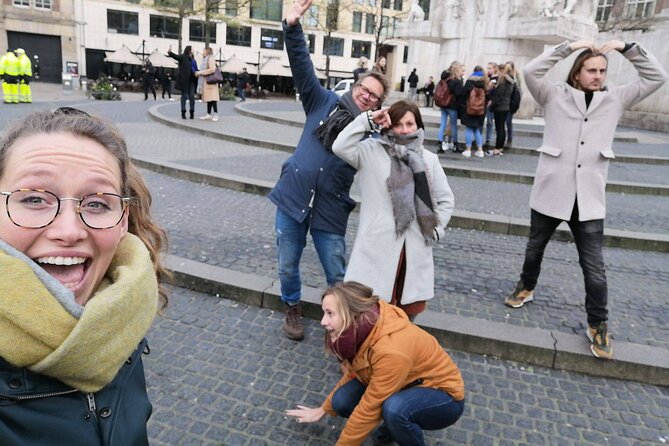
The Historical Printing Company adds another layer to Turnhout’s reputation. It holds an extensive paper collection, with different sub-collections brought together in one place. The collection has also been digitized and can be viewed online.
This stop is particularly useful after learning about Brepols and playing-card production. It shows that Turnhout’s printing identity is not limited to one old business story. Paper, printing, and collected material all form part of the city’s cultural record.
Again, think of the game as an introduction. The app can point you toward the stop and give you a reason to care, but the depth of your visit depends on how much time you have. Someone who wants a quick city walk can keep moving. Someone with an interest in paper or print should plan a longer day.
A break at the 129-year-old Penge
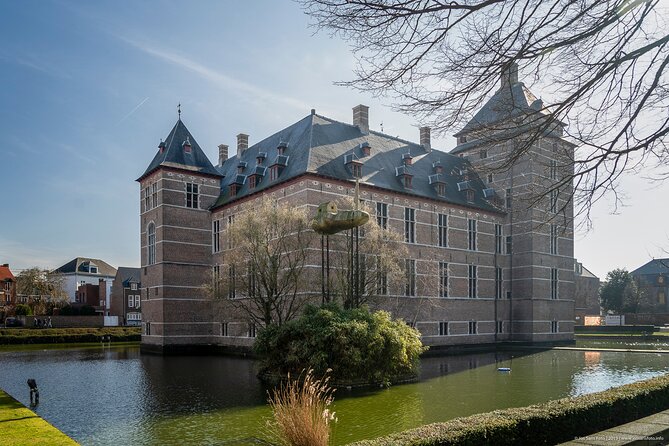
The Penge is identified as Turnhout’s oldest café, at 129 years old. It is a natural point to pause, especially because the game has no time limit.
This is one of the practical strengths of the format. A fixed guided tour can make a café stop feel like a delay. Here, stopping for a drink becomes part of your own plan. You can discuss the last clue, compare answers, and let children or less energetic members of the group recharge.
The café also gives the city walk an everyday feel. Museums and churches explain the past, while a long-running local café shows how the town is used in ordinary life. The supplied information does not specify menus, prices, or opening hours, so treat it as a possible break rather than a guaranteed scheduled stop.
De Warande and Turnhout’s cultural life
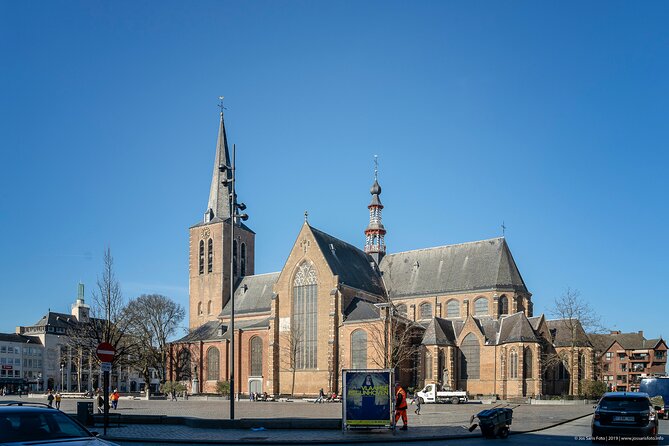
De Warande is a provincial cultural center and one of the first cultural centers in Flanders. It includes a theater and concert hall, giving the route a look at Turnhout’s present-day cultural life alongside its older buildings.
This stop broadens the experience. The walk is not only about heritage sites and historical collections. It also shows how the city supports performances and public culture today. For a short route, that range is valuable: you move from a medieval religious site to a modern cultural institution, with printing and local history in between.
The game itself is not a ticket to a theater performance, and no event schedule is included. Think of De Warande as an exterior or orientation stop unless you separately arrange something there.
How the questions work in practice
The questions are not all at the same level. Some are simple and keep the walk moving. Others are seriously difficult and may require you to examine a building, discuss the clue, or search your surroundings carefully.
That unevenness can be a feature for a mixed group. Easy questions help children stay involved, while harder ones give adults and competitive friends something to debate. The points system adds a little purpose without turning the day into a high-pressure contest.
The wording deserves a practical note. Some English language errors have been reported as distracting. If you are booking because you want polished English instruction, this may bother you. If you see an awkward phrase, focus on the location and the task rather than expecting the app to read like a professionally edited guidebook.
Wayfinding is the bigger issue. Google Maps can help, but the route may not always give you the clearest next-point signage. I would keep your phone charged, make sure you have mobile data, and allow spare time. A printed map is not listed as included, so do not assume you will receive one.
Who will enjoy this Turnhout game most
This is a good fit for a family that wants sightseeing with a task attached. Children can search for answers, take responsibility for the route, and help the adults notice details. It also suits friends who like a gentle competition and want the freedom to stop at a terrace.
Small work groups can use it as a team activity. The private format means you are not mixed with strangers, and the maximum of six people is large enough for a compact team without making discussion unwieldy. The game has already proved suitable for larger family groups when divided into small teams, though each booking covers up to six.
It is less suitable if you want a guide telling stories at every stop, a tightly managed itinerary, or a route with perfect directional signs. It is also not ideal for anyone who dislikes using a phone while sightseeing. A smartphone and data are not included, and you need both to play.
The activity is offered in English. Service animals are allowed, and the experience is described as suitable for most participants, including people with hearing impairments. It is near public transportation, which makes the starting point practical for an arrival by train or local transit.
Is $37.33 good value for a group of six?
At $37.33 for up to six people, the price works out especially well for a full family or friend group. Split six ways, it is a low-cost way to spend several hours in the city. Even with only two people, you are paying for a private activity rather than a per-person guided tour.
The value comes from flexibility. You get the app, the city game, and a route connecting several significant places. You do not get a smartphone, mobile data, museum admission, food, drinks, or a live guide. Budget separately for those items.
A full-day plan can make the price feel even better. Start with the game, pause for lunch or a café stop, and give the Taxandria Museum or Historical Printing Company more time if they fit your schedule. Just remember that a longer day may mean walking farther than the basic estimate.
Free cancellation is available if you cancel at least 24 hours before the start time. Changes or cancellations made within 24 hours are not accepted for a refund, and the cut-off follows local time.
Should you book the Turnhout e-scavenger hunt?
Book it if you want an affordable, private way to get oriented in Turnhout while learning why the city is linked to beguines, printing, paper, and playing cards. The UNESCO-listed beguinage, St. Peter’s Church, Brepols story, Taxandria Museum, Penge café, and De Warande give the route more variety than a basic landmark checklist.
I would choose it for families, friend groups, and small teams that enjoy solving clues and setting their own rhythm. I would also recommend planning more than two hours if you want café or museum time.
Skip it if you need a live guide, flawless English, or highly precise directions. For everyone else, bring charged phones, mobile data, comfortable shoes, and a relaxed schedule. The best way to use this activity is not to race for the final answer, but to let the questions lead you into parts of Turnhout you might otherwise pass by.
FAQ
How long does the Turnhout e-scavenger hunt take?
The estimated duration is two to four hours. It can take longer if you pause for food and drinks, spend more time at the sights, or need extra time to find the next location.
How many people can join one booking?
One private game is designed for a team of up to six people. Only your group participates.
What language is the game offered in?
The activity is offered in English.
Where does the activity start and finish?
It starts at Stationstraat 38, 2300 Turnhout, Belgium. The activity ends back at the meeting point.
Do I need my own phone and mobile data?
Yes. A smartphone and data are not included. The online app used to play the game is included.
Can I cancel for a refund?
You can cancel for a full refund up to 24 hours before the experience start time. Cancellations or changes made less than 24 hours before the start are not accepted for a refund.
Just added around Belgium
- Discover Mechelen while playing! Escape game – The Walter case★ 3.5 · 2 reviews
- Discover the secrets of Mechelen while playing! Escape room★ 4.0 · 6 reviews
- Discover Mechelen while escaping the zombies! Escape room★ 4.0 · 3 reviews
- Discover Liège while playing! Escape game – The Walter case★ 4.5 · 5 reviews
- Discover Namur while playing! Escape game – The Walter case★ 4.5 · 2 reviews
- e-Scavenger hunt Namur: Explore the city at your own pace★ 3.5 · 5 reviews
- Children’s escape game in the city of Liège Marsupilami★ 4.0 · 3 reviews
- Namur: Escape Game in the city – The Alchemist★ 4.0 · 5 reviews
Scavenger Hunts, compared.

Amazing Cozumel Race: Small-Group Tour and Scavenger Hunt
Read our review →
An Epic Scavenger Hunt: New York City Central Park Adventure
Read our review →

Escaping and spying on the Berlin Wall Scavenger hunt
Read our review →
Browse the lists this tour appears in