
Reviewed · ROME
Rome: Scavenger Hunt For Kids with Prizes around City Center
Rome’s famous sights become much more fun when your children have a job to do. This family scavenger hunt turns the Spanish Steps, Trevi Fountain, and Pantheon into a giant outdoor puzzle, with riddles, photo tasks, and teamwork along the way. It is a clever way to keep young minds active while you see the city center.
I like the route’s strong mix of major landmarks and simple games. I also like that the activity teaches bits of Roman history and architecture without asking children to sit quietly through a formal lecture. The main consideration is that it lasts 2.5 hours on foot, with little relief from Rome’s sun and crowds, so comfortable shoes, water, and an early start matter.
Key points to know before booking
- The route links three major sights: You visit the Spanish Steps, Trevi Fountain, and Pantheon in one continuous city-center outing.
- Children solve the clues themselves: The guide provides the activity, while your family works through riddles, puzzles, and challenges as a team.
- Bruno has earned especially warm praise: He is described as kind, playful, and good at holding the attention of children who tire quickly of sightseeing.
- The experience stays outdoors: Monument and museum entry is not included, and the activity is about seeing Rome from its streets and piazzas.
- The price is $22 per person: That is fair if you value a private guide and a ready-made family activity, but it is not a substitute for paid monument tours.
- Plan for walking and weather: Bring water, sunscreen, hats, cameras, and shoes that can handle stone streets and stairs.
Why a treasure hunt works well in central Rome
Rome can be a tough city for children. The sights are extraordinary, but the usual adult routine can feel like a long chain of names, dates, columns, and crowded pavements. A scavenger hunt gives children a reason to look closely and keep moving.
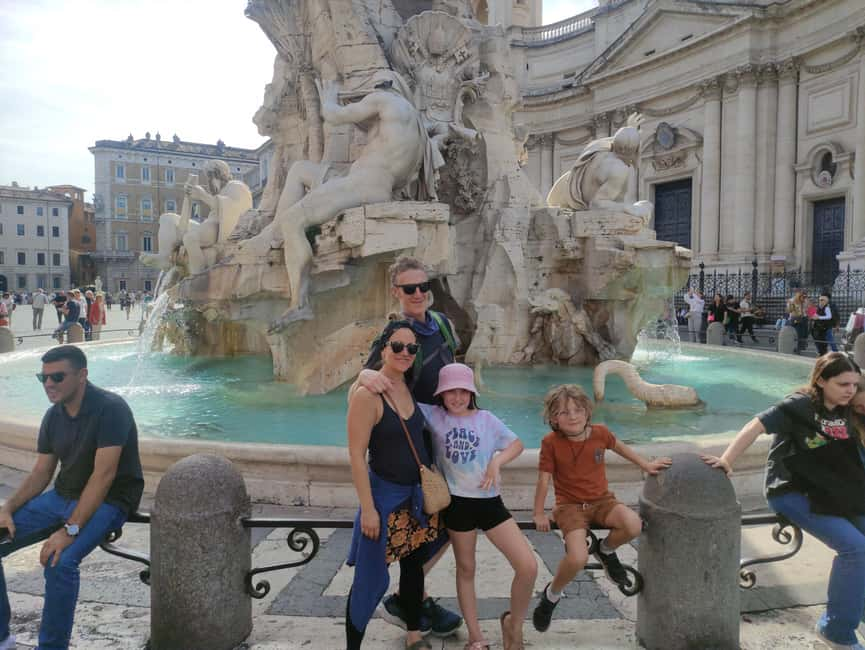
Instead of simply passing the Trevi Fountain, your child may be asked to count coins or search for symbols in the stonework. At the Pantheon, the building becomes part of a riddle. The Spanish Steps provide the opening scene and first challenge rather than just another photo stop.
That change in approach matters. You still see the landmarks, but the focus shifts from listen to this explanation to can you find the answer? I find that especially useful for families with mixed ages, since adults can help with history and reading while younger children handle visual clues and photo tasks.
The activity is described as self-guided, yet a private English-speaking guide is included. In practical terms, you should expect the guide to organize and introduce the hunt, then let your family work through the challenges rather than deliver a nonstop walking lecture. Bruno is the guide named in the feedback, and his playful style was singled out as a reason children stayed involved. Guide assignments can vary, so Bruno may not be available on every date.
More Family and Kids Games in Italy
- Rome: 2.5-Hour Family Vatican Highlight Scavenger Hunt
★ 4.6 · 51 reviews - Private Family Scavenger Hunt & Art Lab Tour – Rome Landmarks
★ 5.0 · 30 reviews - Rome: Treasure Hunt for Kids and Families Trevi and Pantheon
★ 5.0 · 14 reviews
Meeting the guide at Piazza Mignanelli
The activity begins by the Column of the Immaculate Conception in Piazza Mignanelli. This is beside the Spanish Steps area, a useful central meeting place surrounded by some of Rome’s most recognizable streets.
Arrive ready to walk. The route is not a bus tour, and transportation between the stops is not included. You will move through public streets, piazzas, and narrow lanes, with clues and challenges built into the walk.
The meeting point also gives you a practical chance to settle children before the hunt starts. Fill water bottles, check sunscreen, and make sure everyone has shoes they can wear for 2.5 hours. Rome’s polished-looking center still includes uneven paving and stairs.
Because the Spanish Steps area can become crowded, an early starting time is the sensible choice. You will have more room for children to look for clues, and you will spend less time trying to keep a family group together in a thick crowd.
The Spanish Steps turn into the first puzzle
The Spanish Steps are an effective opening because children can see at once that this is not a standard sightseeing walk. The first clue is connected with the steps, and the stairs themselves become part of the challenge.
Expect riddles and a race to work out the answer while taking in views over the city. The exact tasks can vary, but the format is active: notice something, discuss it, and decide what to do next. Children who enjoy competition may like the sense of a mission, while quieter children can contribute by spotting details or solving word clues.
The steps are also the first physical test. Families should not treat the opening as a gentle stroll. Younger children may need help with the stairs, and adults should keep an eye on the group when the area is crowded.
The reward is a memorable first stop. Rather than spending several minutes looking at the steps and moving on, your children begin by using the setting. That makes the landmark more likely to stick in their minds after the day is over.
Searching for clues around the Trevi Fountain
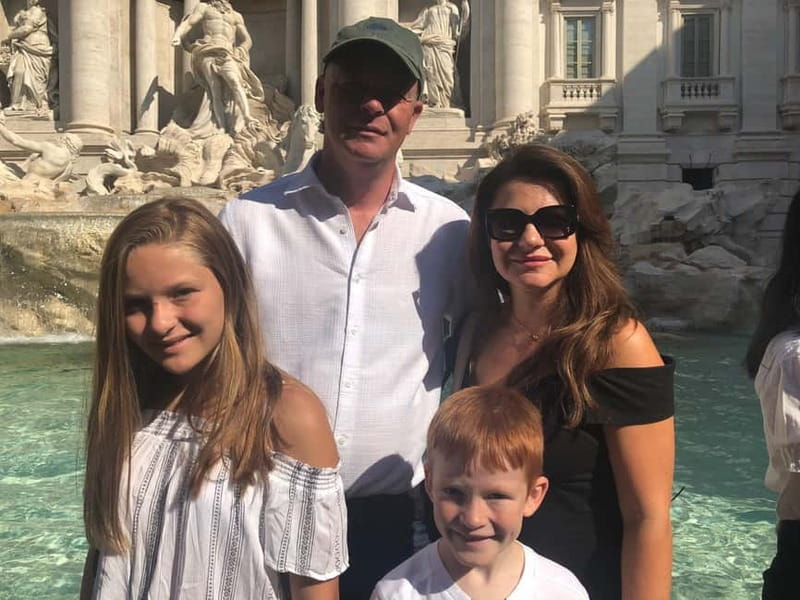
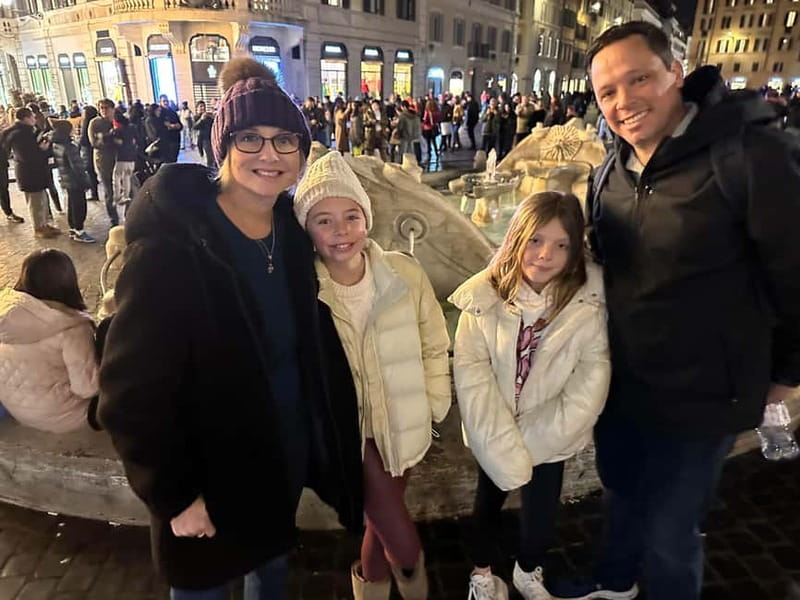
The walk continues to the Trevi Fountain, one of Rome’s most theatrical public sights. The fountain is usually crowded, so the activity works best when you accept that this is a place for observation and quick teamwork, not a quiet pause.
The games here may involve counting coins thrown into the fountain or locating symbols in its carved decoration. These are simple tasks, but they give children a reason to study the details around them. You are not asking them to remember a long explanation. You are asking them to look.
The fountain also offers a good parent-child balance. Adults can help children notice architectural details, while children can take the lead in counting, searching, and checking the clue. A camera is worth bringing, especially for photo challenges that add another small task to the stop.
There is one practical drawback. Trevi Fountain is a difficult place for a loose group to wander. Keep children close, follow the guide’s instructions, and expect to spend some time waiting for a clear view. The hunt cannot remove the crowds, but it can make that crowded stop feel purposeful.
More Scavenger Hunts in Italy
- Angels & Demons Rome Scavenger Hunt: The Illuminati Escape Game
★ 4.5 · 103 reviews - Rome: Scavenger Hunt Self-Guided Tour
★ 4.6 · 15 reviews - Private Family Scavenger Hunt & Art Lab Tour– Rome Landmarks
★ 5.0 · 7 reviews - Treasures of Rome Scavenger Hunt for Friends Team Building & Company Incentive
★ 4.5 · 2 reviews
Solving Pantheon puzzles through architecture
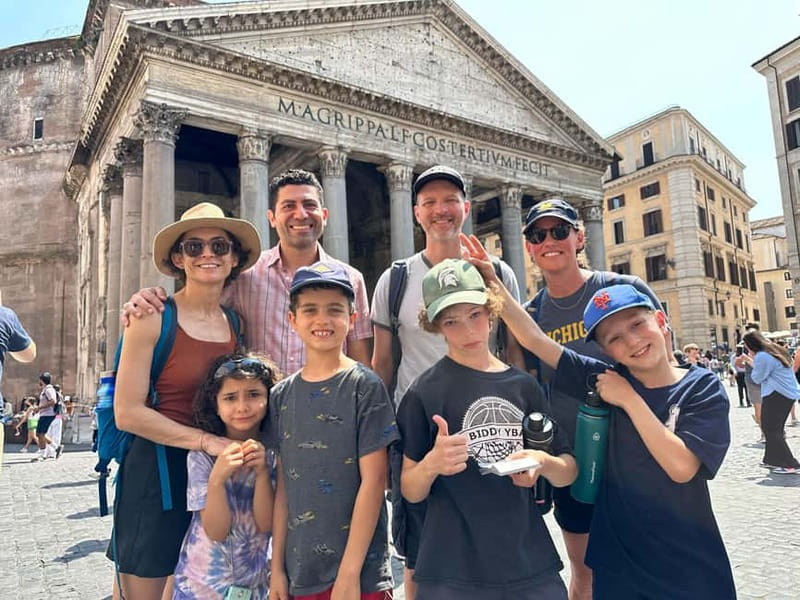
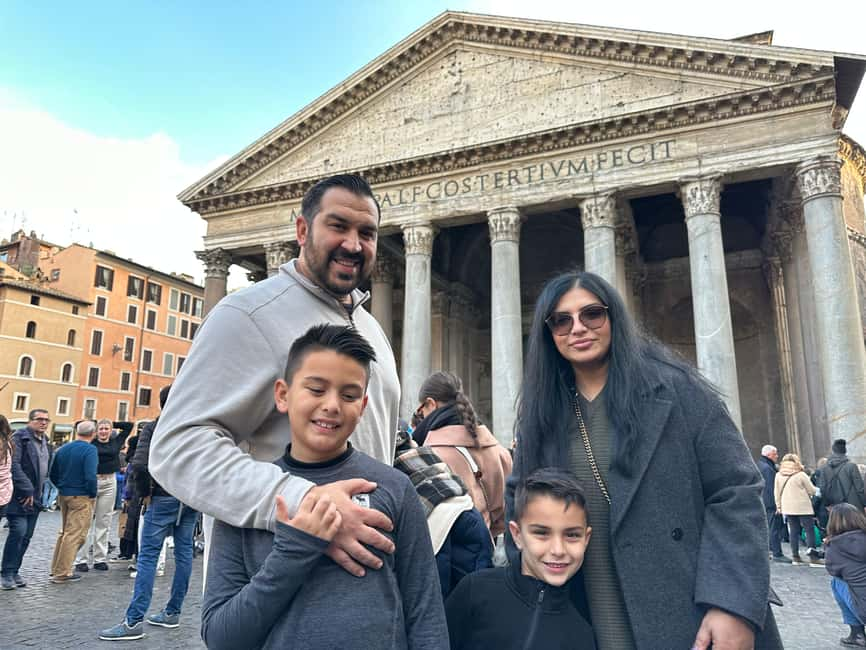
The Pantheon adds the strongest history and architecture element to the route. This ancient building is more than a famous facade. Its columns, scale, and design give children plenty to notice, and the puzzles use those features as material.
The challenges are inspired by the Pantheon’s long history and test observation and creativity. You might work together to piece together a riddle, connect a clue to the building, or use visible details to reach the next answer. The supplied information does not promise a monument entry, so plan to experience this stop from the outside unless you arrange a separate visit.
That distinction is important. The $22 price covers the interactive hunt and private guide, not admission to monuments or museums. If your family wants to go inside the Pantheon or add other paid sights, those costs are separate.
Still, the exterior stop has real value. Children can learn why columns matter, how a building’s design catches attention, and how a very old structure remains part of daily city life. The lesson arrives through a puzzle rather than a formal talk, which is likely to work better for children who get bored easily.
Narrow lanes, piazzas, and the space between landmarks
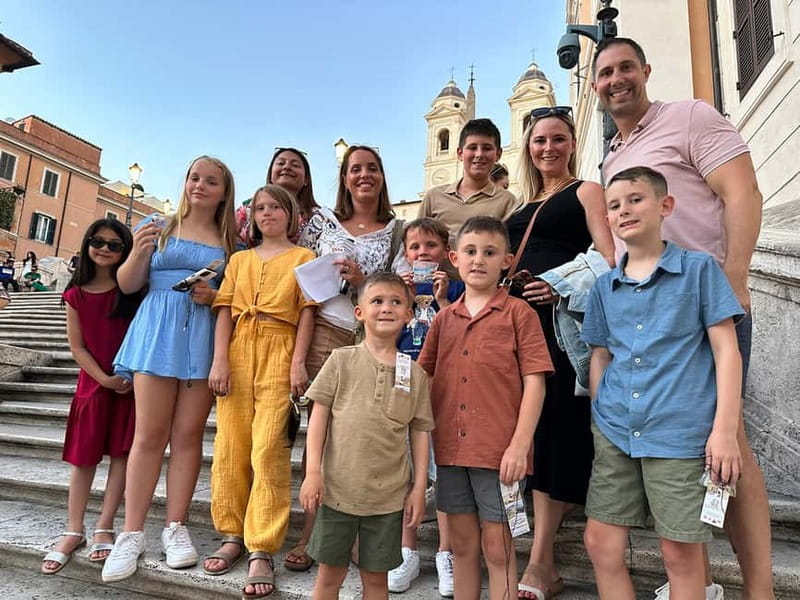
The best part of a city-center route is often the walking between the headline sights. The hunt includes further clues in Rome’s piazzas and narrow alleyways, giving you a look at the city as a connected place rather than a list of isolated monuments.
These sections also keep the experience from feeling like a three-stop checklist. Children have more chances to find clues, complete photo tasks, and solve problems. Adults get a little more of the atmosphere of central Rome, even though the activity is designed around the children.
Do not expect a museum-style tour of every lane or square. The focus is the game, and the guide will keep the group moving toward the next challenge. That is a strength if your family needs structure, but a limitation if you prefer to pause often for detailed explanations or spontaneous shopping.
The hunt ends back at the meeting point. That makes the activity easier to fit into a day of sightseeing, since you finish where you began instead of needing to find your way back from an unfamiliar neighborhood.
What the guide adds to a self-guided hunt
The phrase self-guided can sound confusing alongside the promise of a private guide. The useful way to understand it is this: the clues and activities are designed for your family to solve, while the guide provides the framework and support.
You are not simply following a guide who gives every answer. Children are expected to think, spot details, and work as a team. That gives them a sense of accomplishment, especially when a clue takes a few attempts to solve.
At the same time, you are not left to navigate a complicated game alone. The guide is there to explain the activity, keep the route on track, and help maintain the energy of the group. Bruno was praised for being gentle, playful, and engaging, including with a child who usually loses interest in sightseeing.
That personal attention is the main reason the price can make sense. A family of four pays about $88 before any separate admissions, food, or drinks. You are paying for a planned activity and private guide, not just access to public landmarks. For families who would otherwise spend the day persuading children to keep walking, that can be good value.
If your children are old enough to enjoy riddles and challenges, the value improves. Very young children may need adults to do much of the reading and problem-solving, while older children may appreciate taking charge of the clues.
Timing, heat, and the practical side of the route
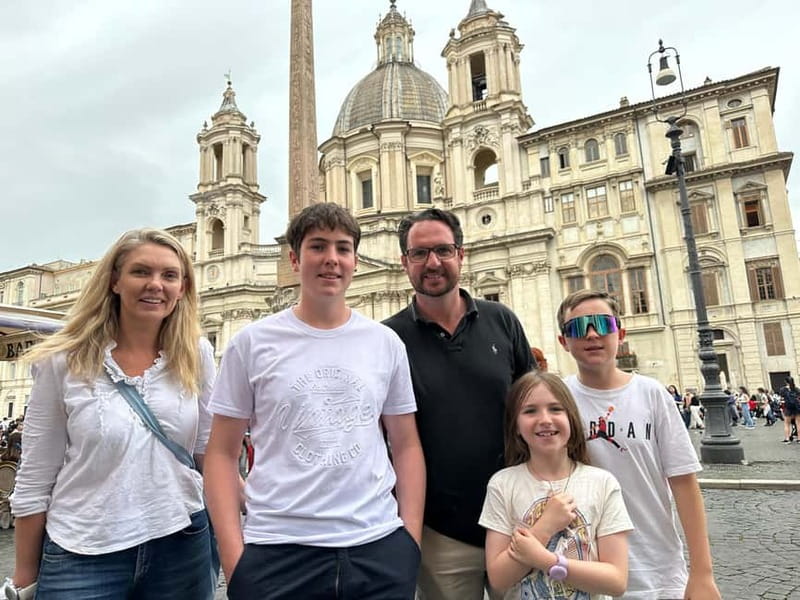
Two and a half hours is long enough to see the main stops without making the activity an all-day commitment. It is also long enough for heat, thirst, tired feet, or crowds to affect the mood.
Start early if you can. The advice is practical rather than decorative. Earlier hours generally make it easier to stay together, see the fountains and buildings, and give children room to focus.
Bring:
- Comfortable walking shoes
- Water
- Sunscreen
- A hat
- A camera
Meals and drinks are not included, so plan food around the activity. The route includes public streets and major piazzas, but no transport to or from the attractions. If your family needs a rest every half hour, this may feel demanding. If your children enjoy missions and movement, the steady pace should help.
The activity is not suitable for wheelchair users. The stairs, uneven streets, and walking format make that a significant limitation, not a minor footnote. Families should also consider whether every child can manage the physical demands before booking.
Is $22 per person good value?
At $22 per person, this sits in a reasonable range for a private, family-focused activity in central Rome. The price includes the interactive treasure hunt and private guide, which means you are buying a structured experience rather than a list of clues to follow on your own.
The price does not include monument or museum entry, meals, drinks, or transportation. That keeps the basic cost clear, but you should add any extra sights and refreshments to your family budget.
I would consider it good value for parents who want one enjoyable activity that introduces Rome without forcing children through a formal tour. It is less compelling for adults who only want detailed historical commentary, or for families already planning several paid guided visits.
The strongest value comes from the way the activity holds a family together. You see the Spanish Steps, Trevi Fountain, and Pantheon while children have something concrete to do. That can save you from spending the morning negotiating over every next stop.
Who should book this Rome scavenger hunt?
I would recommend it most strongly for families with children who enjoy puzzles, teamwork, photos, and short challenges. It also suits a child who tends to lose interest during standard sightseeing, since the activity keeps changing from one task to the next.
It works well as an introduction to Rome. You get a first look at several major landmarks, a basic sense of the city’s architecture and culture, and a reason to return later for longer visits inside the monuments.
I would think twice if your group dislikes walking, struggles in heat, or prefers an unhurried schedule. The route is active, the main sights can be crowded, and the hunt has a set structure. It is also not the right choice if wheelchair access is essential.
The small number of published ratings is perfect, with three five-star ratings, but that is not a large sample. The consistent themes are useful: children stayed engaged, the guide’s manner mattered, and the activity worked for adults as well as children. I would use those points as a guide to fit, not as a guarantee that every child will love every clue.
Should you book it?
Book this scavenger hunt if you want to see central Rome through your children’s eyes. The Spanish Steps, Trevi Fountain, and Pantheon provide the setting, but the real benefit is the structure: children solve, search, photograph, and cooperate while you help them understand what they are seeing.
Choose it especially if you want a private English-speaking guide and a family activity that feels more active than a normal walking tour. Start early, bring water and sun protection, and expect to stay outdoors for the full 2.5 hours.
Skip it if you want interior visits, a detailed academic lecture, or a wheelchair-friendly route. For the right family, though, $22 per person buys a practical and cheerful way to make Rome’s grandest sights feel like a shared adventure rather than a long list of stops.
FAQ
How long does the Rome scavenger hunt last?
The activity lasts 2.5 hours.
Where does the scavenger hunt begin?
Meet the guide by the Column of the Immaculate Conception in Piazza Mignanelli.
Where does the activity finish?
The hunt ends back at the original meeting point.
Which Rome landmarks are included?
The route includes the Spanish Steps, Trevi Fountain, and Pantheon, along with clues and challenges in nearby piazzas and narrow streets.
Is a guide included?
Yes. A private English-speaking guide is included. The hunt itself is self-guided in the sense that your family solves the riddles and completes the challenges.
Are monument entrance tickets included?
No. Entrance fees to monuments and museums are not included.
What should I bring?
Bring comfortable shoes, water, sunscreen, a hat, and a camera.
Is the activity suitable for wheelchair users?
No. The activity is not suitable for wheelchair users.
More Family and Kids Games in Rome
- Colosseum and Roman Forum Treasure Hunt Tour for Kids & Families
★ 5.0 · 3 reviews - Trevi Pantheon and Spanish Steps Treasure Hunt for Kids & Families in Rome
★ 5.0 · 2 reviews - Vatican Treasure Hunt with Guided Tour for Families with Kids
★ 5.0 · 2 reviews - Berlin: Self-Guided Family and School Class Scavenger Hunt
★ 4.6 · 128 reviews
More Scavenger Hunts in Rome
- Rome Scavenger Hunt and Highlights Self-Guided Tour
★ 5.0 · 2 reviews - Hamburg: Scavenger Hunt Self-Guided Tour for Children
★ 4.5 · 319 reviews - Amazing Cozumel Race: Small-Group Tour and Scavenger Hunt
★ 5.0 · 291 reviews - 3hr Seaside Scavenger hunt
★ 5.0 · 250 reviews
Just added around Rome
- Villa Borghese escape game★ 3.0 · 3 reviews
- Vatican Treasure Hunt with Guided Tour for Families with Kids★ 5.0 · 2 reviews
- Trevi Pantheon and Spanish Steps Treasure Hunt for Kids & Families in Rome★ 5.0 · 2 reviews
- Rome: Hidden Treasures of Trastevere Self-Guided Puzzle Quest★ 4.0 · 5 reviews
- Rome Treasure Hunt With Leonardo da Vinci★ 4.0 · 3 reviews
- Treasure hunt in Rome, Ghetto and Trastevere★ 5.0 · 8 reviews
- Treasures of Rome Scavenger Hunt for Friends Team Building & Company Incentive★ 4.5 · 2 reviews
- Colosseum and Roman Forum Treasure Hunt Tour for Kids & Families★ 5.0 · 3 reviews
Scavenger Hunts, compared.

Amazing Cozumel Race: Small-Group Tour and Scavenger Hunt
Read our review →
An Epic Scavenger Hunt: New York City Central Park Adventure
Read our review →

Escaping and spying on the Berlin Wall Scavenger hunt
Read our review →
Browse the lists this tour appears in