Reviewed · PARIS
Paris Louvre : Private Treasure Hunt for Families or groups
A poisonous vial, coded clues, and some of the Louvre’s biggest masterpieces make this more than a standard museum visit. I like the private format, which lets the guide adjust the pace for your family, and I like the way the game gives children a reason to look closely at famous art. Guides Hugo and Lisa have earned especially warm praise for keeping children involved.
The main catch is the age range. Six- to nine-year-olds seem the best fit, while a three-year-old may lose interest and some older children may find the clues too hard. At $648 for up to five people, this is a serious splurge, so confirm every ticket is included before you go.
Key points to know before booking
- A mystery drives the visit: Your family searches for a deadly vial hidden among the Louvre’s masterpieces.
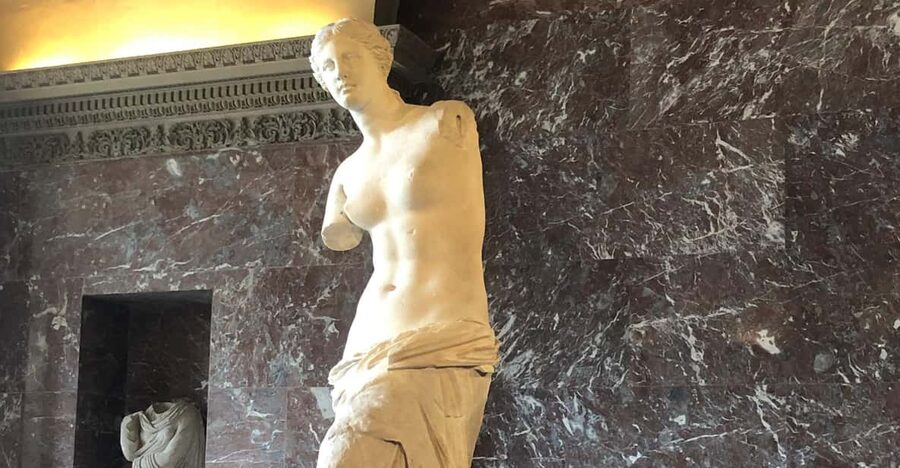
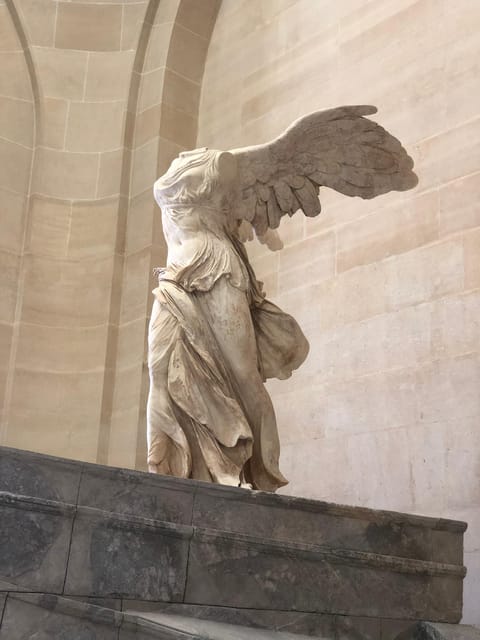
- Three major artworks anchor the route: The Mona Lisa, Venus de Milo, and Winged Victory of Samothrace are built into the game.
- The two-hour format is focused: You see selected highlights rather than trying to cover the enormous museum.
- The guide matters a great deal: Hugo and Lisa received strong praise for patience, warmth, and keeping children involved.
- The activity suits school-age children best: Six- to nine-year-olds are the clearest target, while toddlers may struggle.
- The price covers a private group of up to five: Louvre admission, a guide, and a booklet are included, but food and drinks are not.
A Louvre mission instead of a museum march
The Louvre can be a tough sell to children. Its scale is huge, its galleries can feel formal, and the most famous paintings are often surrounded by people. This private treasure hunt gives your family a simple reason to keep moving: find the hidden vial before the curse takes effect.
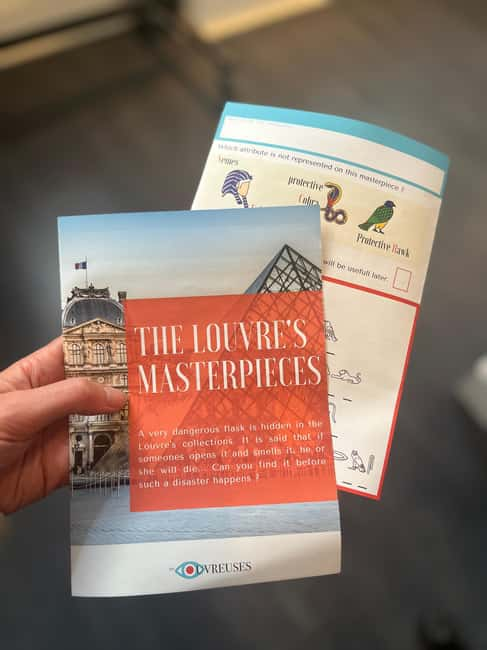
The story is intentionally theatrical. A dangerous vial is said to cause eternal sleep when inhaled, and clues scattered among artworks point toward its hiding place. The guide uses riddles, observation games, and coded messages to turn the museum into a puzzle room.
I like this approach because the game gives children something specific to do. Instead of asking them to admire one painting after another, you can ask them to spot a detail, solve a clue, or connect one artwork with the next. That small shift can make the difference between a child who is engaged and one who is asking when the museum visit will end.
Still, this is not a free-form scavenger hunt. The guide controls the route and the challenges, and the two-hour schedule means the activity has to keep a steady pace. If your children prefer open-ended play, or if they are too young to follow a story, the format may not hold them for the full visit.
More Family and Kids Games in Paris
- Louvre Museum Guided Family Treasure Hunt
★ 5.0 · 78 reviews - Kids/teens escape game in Montmartre
★ 5.0 · 68 reviews - Louvre Museum – Private Family Tour with Da Vinci Treasure Hunt
★ 5.0 · 38 reviews
Meeting beneath the Louis XIV statue
The meeting point is outside at 8 Place du Carrousel, beneath the statue of Louis XIV. This detail matters because the Louvre has several entrances, courtyards, and nearby landmarks, and a first-time visitor can easily waste time looking for the right spot.
Plan to arrive with your party together. One serious problem has been reported involving a missing ticket, which left one member of a group outside while the others went in. Before the day of the tour, check that the booking shows the exact number of people in your party and that each person has an admission ticket.
The tour is private and limited to your group of up to five people. That is a good setup for a family. You do not have to wait for strangers, and your guide can speak directly to your children instead of addressing a large crowd.
French and English are available. You should also leave large luggage and big bags behind, since they are not allowed for this activity. Food and drinks are not included, so handle snacks before or after the tour rather than expecting a museum break during the game.
Walking into the Louvre with tickets included
Entry tickets are included, and the activity advertises skip-the-ticket-line access. That saves useful time, especially when you have children who are already eager to start the mission.
Do not confuse this with skipping all museum security or walking into every gallery without a pause. The practical benefit is that your admission is arranged and you meet the guide at the agreed point before entering. Keep the meeting instructions handy and avoid arriving at the last minute.
Once inside, the guide introduces the case. The booklet becomes part of the experience, giving the children something to hold and follow as the clues unfold. A physical booklet can be more useful than a phone-based game, since it keeps young participants focused on the task rather than on a screen.
The story also gives the guide a natural way to explain what you are seeing. A clue might draw attention to a gesture, symbol, face, or object in a work of art. You are not simply being told that a masterpiece is important. You are being asked to inspect it.
Mona Lisa: a famous face with a job to do
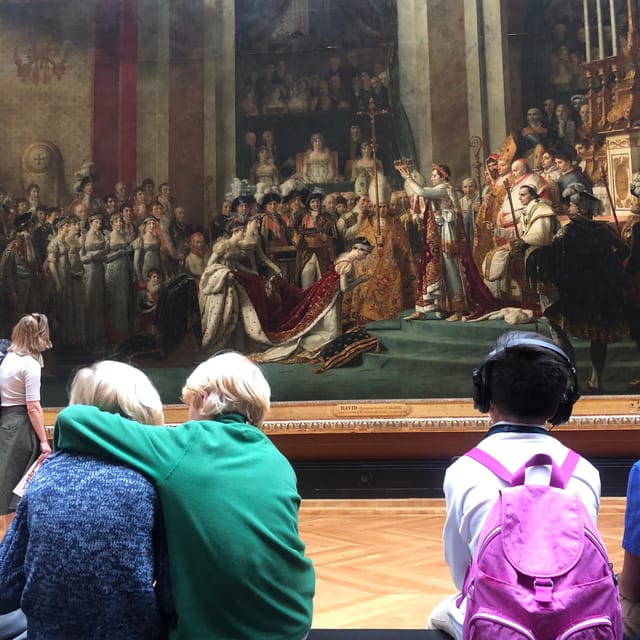
The Mona Lisa is one of the tour’s main stops. You can expect a crowded viewing area and a quick look rather than a quiet, private encounter. That is normal for the Louvre’s best-known painting, but it is worth setting expectations with your children.
The treasure hunt gives them a task at the painting, which may help them focus despite the crowd. Instead of standing at the front and trying to memorize an art lecture, they can watch for a detail or work through a clue.
This is also where a good guide can make a real difference. Hugo has been praised for keeping children ages six and nine interested, and Lisa has been praised for patience and for helping children learn while having fun. Those comments point to the most important part of this format: the guide must turn the artwork into an active challenge.
You may not spend long at the Mona Lisa. That is sensible. The painting is a required highlight for many families, but the goal here is to use it as one part of a larger case, not to spend the entire two hours in one room.
More Treasure Hunts in France
- Paris Sweet & Chocolate Family Treasure Hunt
★ 5.0 · 37 reviews - Paris Kids Louvre Treasure Hunt Private Tour
★ 5.0 · 28 reviews - Paris Treasure Hunt – Explore the Seine from Louvre to Eiffel
★ 5.0 · 18 reviews - Treasure Hunt in Paris – From the Panthéon to the Louvre
★ 5.0 · 17 reviews
Venus de Milo: a slower look at a marble icon
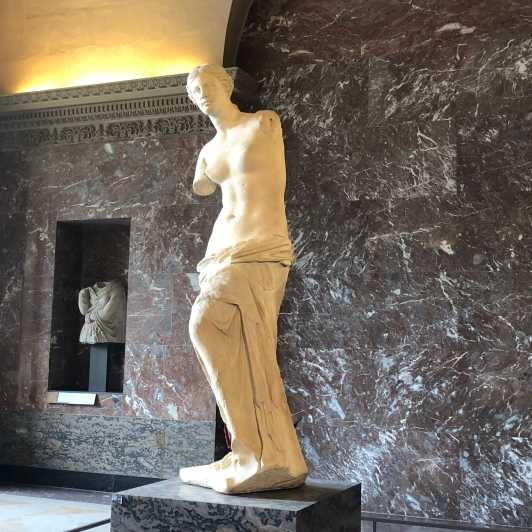
The Venus de Milo receives about 15 minutes on the stated route. That is enough time for the guide to set a challenge, explain the work, and let the children search for clues without turning the stop into a long lecture.
This statue is a useful contrast to the Mona Lisa. The painting is viewed in a busy crowd, while the Venus offers a different kind of visual puzzle. Children can examine the figure, pose, and missing arms while thinking about what the guide is asking them to notice.
I like the fact that the itinerary includes a timed stop here. A clear limit keeps the tour moving and helps prevent the family from spending too long on one object. At the same time, 15 minutes can feel short if your children become fascinated by the sculpture or if the gallery is crowded.
The guide’s role is to connect the artwork to the mystery. The best version of the activity will make the clues feel linked rather than random. You should expect the guide to ask your children to observe, compare, and decode, not simply provide a standard explanation of the statue.
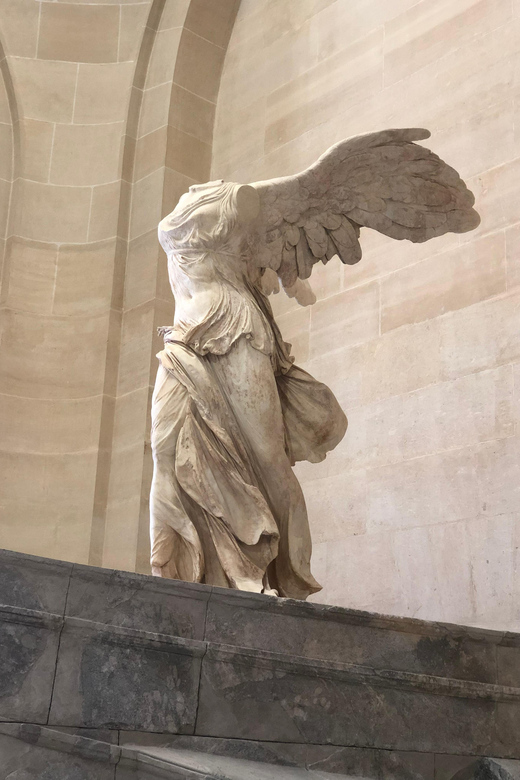
Winged Victory of Samothrace and the sense of discovery

Winged Victory of Samothrace, also called Nike, is another major stop. The sculpture’s setting and dramatic pose make it a strong choice for a family treasure hunt. The work feels different from the two earlier highlights, so the route does not become a parade of similar objects.
The challenge here continues the search for the vial. Your children trace the clues from one artwork to the next, using observation games and coded messages to piece together the case.
This is one of the tour’s most useful features. The activity does not ask children to remember a list of dates and names. It asks them to notice what is in front of them. Even if they forget some art facts later, they may remember the thrill of solving a problem beside a famous sculpture.
The Louvre is too large to cover in two hours, and this tour does not try. The selected route gives you a manageable sample of its best-known works. If you want room after the game to visit other departments at your own speed, plan a separate museum visit rather than expecting the treasure hunt to cover everything.
How the guide can make or break the game
The experience depends heavily on the person leading it. Hugo and Lisa have been singled out for being patient, kind, and effective with children. One guide was particularly praised for keeping two children, ages six and nine, attentive through the Louvre visit.
That praise also points to a useful booking question: ask for the family treasure hunt format, not a general adult art tour. The experience is designed around participation, and the guide’s energy needs to match the children’s age and attention span.
There is some unevenness in the available feedback. One family found the clues too difficult and the activity less engaging than expected, even though the guide was excellent. Another family found that a nine-year-old loved it while a three-year-old did not. This suggests that the puzzles are not equally easy for every child.
For the best result, treat the adults as part of the detective team. Let the children try first, but help them read a clue or connect an idea when needed. The private setting makes this easier and avoids putting a shy child on the spot in front of a large group.
Is $648 good value for five people?
The price is $648 per group of up to five. That is not a cheap Louvre outing, but the comparison should be with five separate admissions plus a private guide, not with a basic museum ticket.
The fee includes Louvre entry, the guide, and the booklet. You are paying for a private two-hour activity built around major works and a family-focused story. If all five places are used, the cost works out to about $130 per person, which is easier to justify for a family that wants a guided experience and a smooth entry.
For a group of two or three, the value is weaker. You still pay the full group rate, and the activity may cost more than a standard Louvre visit by a wide margin. The private format becomes more attractive when you have four or five people and would otherwise need to organize separate tickets and guidance.
I would book it for a family that values structure and wants children to connect with art. I would skip it if your main goal is to see as many galleries as possible, spend hours with a favorite painter, or keep the day inexpensive.
Age, pace, and practical fit
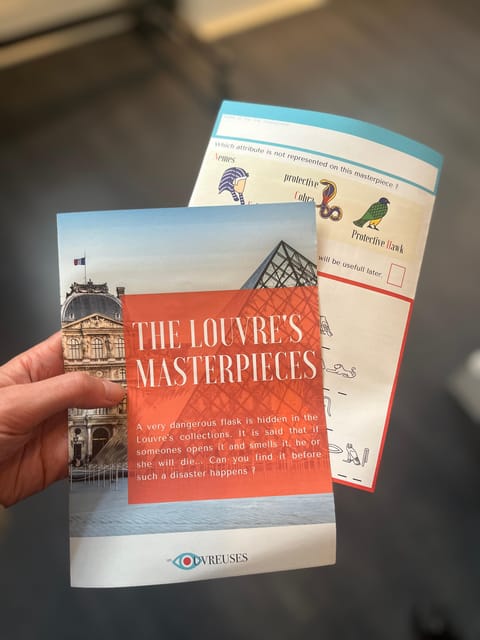
The clearest age fit is around six to nine. Children in that range can usually follow a fictional mission, share the clues, and take part in simple observation challenges. Older children may also enjoy it, though some may find the activity too young depending on their interests.
A three-year-old may not be able to follow the puzzle or stay engaged through the full route. The tour is private, so an adult can help, but you should not assume the game will entertain every child in the group.
The duration is two hours. That is long enough to visit the listed highlights without making the museum feel like an all-day assignment. It is also short enough to fit into a larger Paris schedule, provided you allow time to reach the meeting point and leave the museum afterward.
You can cancel up to 24 hours before the start for a full refund, and the reserve-now, pay-later option keeps your money available until closer to the visit. Starting times vary, so check the available slot before making other plans.
Should you book this Louvre treasure hunt?
Book it if you have a private group of up to five, children around six to nine, and a real wish to make the Louvre feel like an adventure rather than a formal art lesson. The included tickets, focused route, booklet, and mystery all work toward that goal.
I would be cautious if your youngest child is three, if your children dislike riddles, or if you expect a simple and very easy scavenger hunt. The clues can feel demanding, and the guide’s approach matters. Confirm the number of tickets before arrival, and make sure the children understand that the adults are joining the mission too.
For the right family, this offers a lively introduction to the Mona Lisa, Venus de Milo, and Winged Victory of Samothrace. For the wrong age group, it can become an expensive two hours. Use the children’s ages, the full-group price, and your interest in a private guide as the deciding factors.
FAQ
How long does the Louvre treasure hunt last?
The activity lasts two hours.
Where do I meet the guide?
Meet the guide beneath the Louis XIV statue at 8 Place du Carrousel, outside the Louvre.
What artworks are included?
The route includes the Mona Lisa, Venus de Milo, and Winged Victory of Samothrace, also called Nike.
Are Louvre admission tickets included?
Yes. Louvre Museum entry tickets are included, along with the guide and a booklet.
What languages are available?
The tour is available in English and French.
How many people can join the private group?
The price covers a private group of up to five people.
More Treasure Hunts in Paris
- Paris: Treasure Hunt & Walking Tour “Secret Weapon X”
★ 4.8 · 17 reviews - Montmartre Treasure Hunt — Fun and Cultural Investigation
★ 5.0 · 6 reviews - Family Treasure Hunt in Montmartre
★ 4.5 · 6 reviews - Paris Covered Passages Treasure Hunt — Self-guided Game
★ 5.0 · 5 reviews
Just added around Paris
- Treasure Hunt in Paris – From the Panthéon to the Louvre★ 5.0 · 17 reviews
- Paris Treasure Hunt to the Auction Rooms★ 5.0 · 2 reviews
- Paris Covered Passages Treasure Hunt — Self-guided Game★ 5.0 · 5 reviews
- Montmartre Treasure Hunt — Fun and Cultural Investigation★ 5.0 · 6 reviews
- Private Scavenger Hunt in Montmartre★ 5.0 · 2 reviews
- Paris Scavenger Hunt and Highlights Self-Guided Tour★ 3.5 · 5 reviews
- Edith Piaf’s Paris: Self-Guided Story Puzzle Walk★ 3.5 · 3 reviews
- Marais Treasure Hunt & Discovery — Self-guided Paris Game★ 5.0 · 3 reviews
Treasure Hunts, compared.


St. Augustine: Treasure Hunt Cruise with Onboard Show
Read our review →

Fun, Flexible Treasure Hunt Around Manchester with Cryptic Clues & Hidden Gems
Read our review →
Fun, Flexible Treasure Hunt Around York with Cryptic Clues & Hidden Gems
Read our review →