
Reviewed · LOUVRE MUSEUM
Louvre Guided Treasure Hunt for Families and Kids
The clever idea here is simple: turn the Louvre into a two-hour treasure hunt instead of asking children to march through endless galleries. Your guide leads the family through major works, while each child uses an age-matched booklet to answer questions, draw, color, and collect clue cards.
I like the private format, since the guide can adjust the pace for your children. I also like the skip-the-line museum entry, which can save precious family energy. The main concern is price: at $743 for up to four people, this is a costly Louvre visit, especially if your children lose interest in puzzles or you want to see a large number of artworks.
Key points to know before booking
- Age-based activities: Children ages 3 to 6 and 7 to 12 receive different challenges while following the same general route.
- Famous Louvre highlights: The route includes the Venus of Milo, Winged Victory of Samothrace, and Mona Lisa.
- Private family attention: Your group receives a guide rather than joining a large mixed tour.
- Useful two-hour limit: The visit is long enough for major sights without asking young children to endure an all-day museum trip.
- Skip-the-line entry: This can be especially valuable at busy times, when the Louvre entrance takes patience.
- Price is the trade-off: The cost makes the most sense for a family of four that wants structure, help with navigation, and a child-focused guide.
Why a treasure hunt works at the Louvre
The Louvre is difficult for children for a basic reason: it is too big to understand in one visit. Even adults can feel lost among its wings, staircases, grand rooms, and thousands of objects. A child who hears only dates and artistic terms may simply decide that the museum is boring.
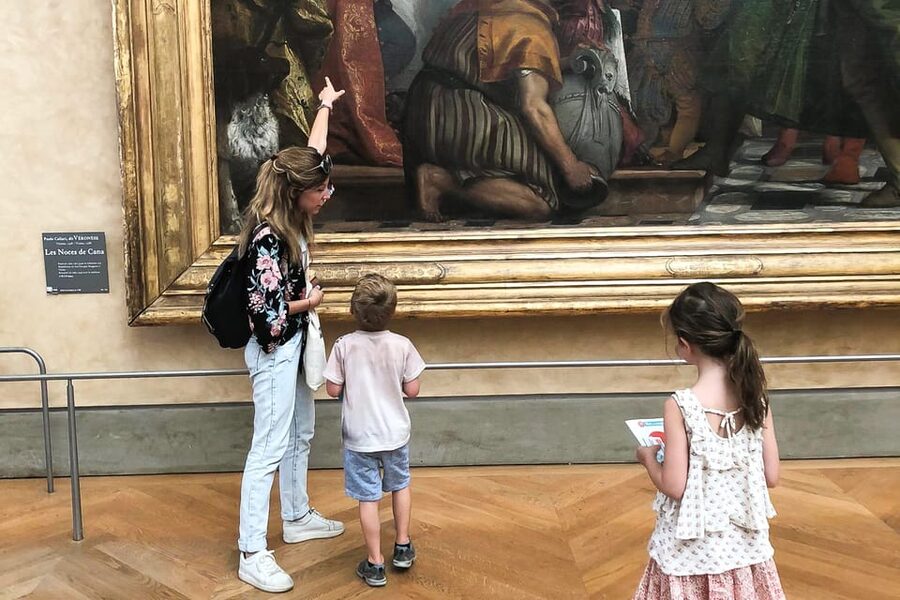
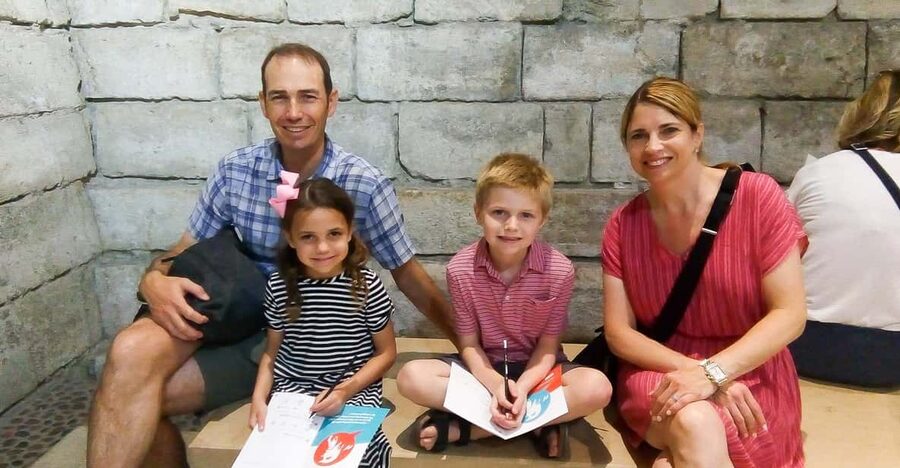
This activity gives children a job. They receive an activity booklet and use observation skills to answer questions about the works in front of them. Each answer earns a clue card, and the cards eventually lead to a final puzzle.
That structure matters. Your child is not only being told to look at a statue. The child is asked to notice something, make a choice, and work toward a result. Younger children can color or draw, while older children receive challenges better suited to their reading and observation skills.
The two age groups follow the same broad course, so a family with children at different stages does not have to split up. The guide can explain a work in a way that makes sense to a preschooler and still offer something useful to an older child.
The activity is not only for children. You can listen as the guide explains the art, royal connections, and stories behind the objects. That balance is important. A family tour fails if the adults spend two hours managing children and learn nothing themselves.
More Treasure Hunts in France
- Louvre Museum Guided Family Treasure Hunt
★ 5.0 · 78 reviews - “Old Marseille” district tour and treasure hunt
★ 5.0 · 74 reviews - Louvre Museum – Private Family Tour with Da Vinci Treasure Hunt
★ 5.0 · 38 reviews
Meeting at the Louis XIV statue near the pyramid
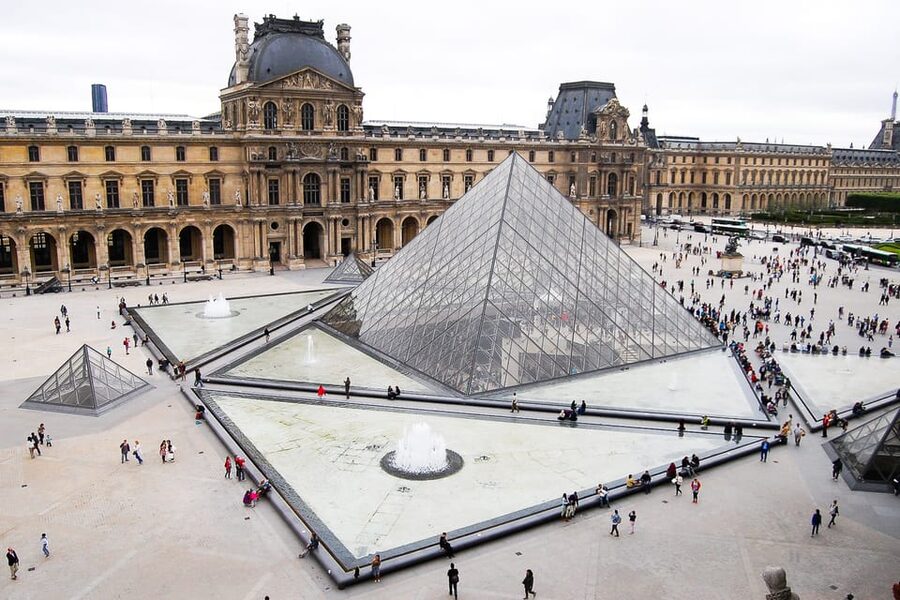
The meeting point is by the equestrian statue of Louis XIV near the Louvre glass pyramid at 8 Place du Carrousel. This is an important detail because the Louvre complex has several nearby entrances and open spaces, and families do not want to begin the morning by searching for a guide.
Bring identification or a photocopy of it. Large bags and luggage are not allowed, and anything larger than 55 by 35 by 20 centimeters cannot enter the museum. Pack lightly and wear comfortable clothes. Food and drinks are not included, so plan around the two-hour visit rather than expecting refreshments during the activity.
The guide speaks English, and the group is private. The exact guide is not guaranteed, but families have worked with guides including Marcella, Justine, Amy, Marine, Sebastien, Roseane, Yaelle, Valerie, and Quinten. The strongest pattern is the guide’s ability to adjust explanations for different ages and keep the visit moving.
The opening briefing and age-matched booklets
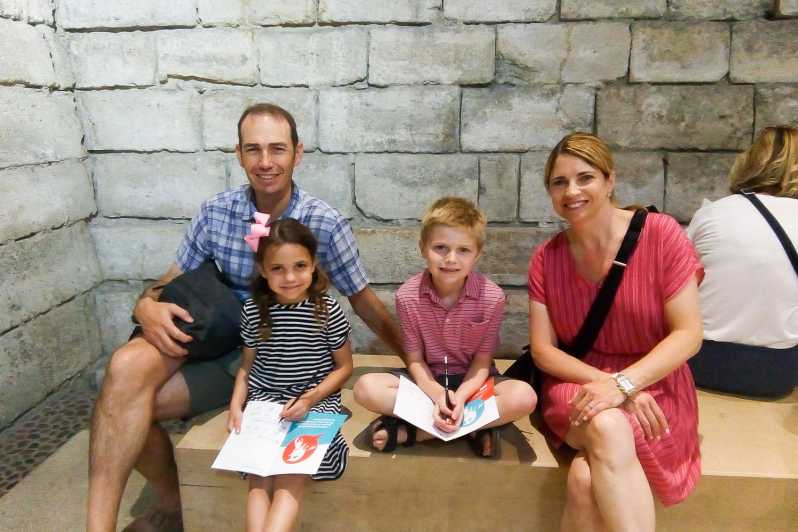
At the start, your guide gives each child a booklet designed for a specific age range. Children from 3 to 6 receive simpler tasks, often involving drawing, coloring, or easy visual clues. Children from 7 to 12 face more involved questions that ask them to inspect details and think about what they see.
This is more useful than giving every child the same worksheet. A three-year-old cannot work through the same written puzzle as a ten-year-old, yet both can look at the same statue and notice different things.
The booklet also gives the guide a practical way to keep the group together. Instead of stopping at every object for a long lecture, the guide can ask the children to complete a task, talk through the answer, and move on once the group is ready.
Parents should expect an active visit, not a quiet, traditional art lecture. Your children may be asked to search for details, compare parts of an artwork, or spot something unusual. That is a strength for most families, though one parent noted that some activities took time away from viewing additional works.
Venus of Milo and the Louvre’s famous sculptures
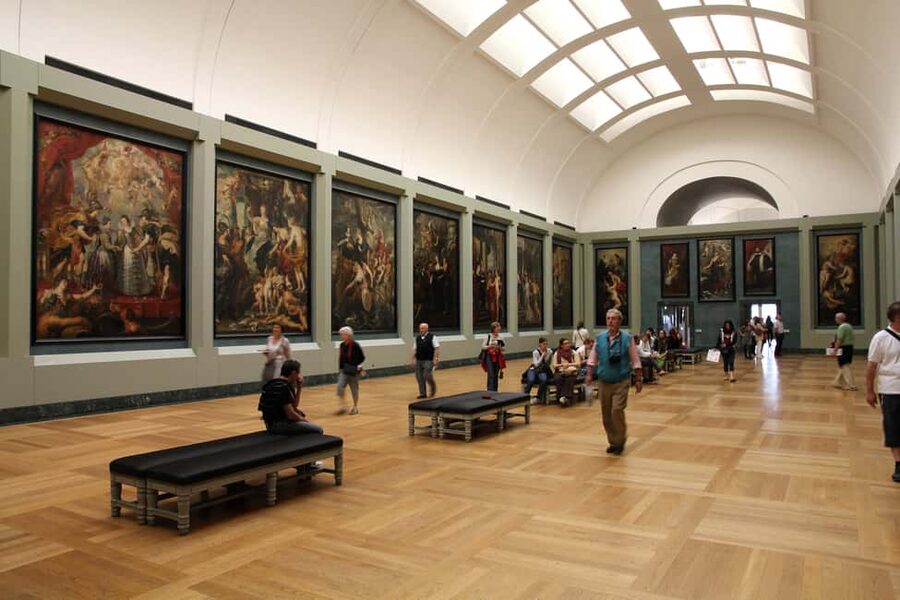
The route includes the Venus of Milo, one of the museum’s best-known ancient sculptures. It gives the guide a natural chance to talk about how viewers read a statue, what is missing, and how the work became famous.
The treasure hunt format helps here because children can focus on the statue as a visual problem rather than a distant masterpiece they are expected to admire on command. Ask your child what they notice first: the pose, the clothing, the missing arms, or the scale of the sculpture.
The route also includes the Winged Victory of Samothrace. This dramatic sculpture sits at the top of a grand staircase, making it one of the Louvre’s most memorable encounters even before the guide begins explaining it. The setting allows children to think about movement, wind, clothing, and how a sculpture can suggest action while remaining still.
A practical limitation is that a two-hour visit cannot cover the entire museum. The experience focuses on selected highlights and other works that fit the hunt. If your personal goal is to see a wider range of paintings, decorative arts, or ancient objects, you may want extra museum time after the tour, if your schedule and energy allow.
Same streets, a different set of clues:
- Saw2 vs Squid Game – Escape Game Montpellier
★ 5.0 · 752 reviews - Prison Break – Escape game in Montpellier
★ 5.0 · 583 reviews - School of Magic – Escape game Montpellier
★ 4.5 · 536 reviews - Mission Possible – Escape game Montpellier
★ 5.0 · 437 reviews
The Mona Lisa, crowds, and realistic expectations
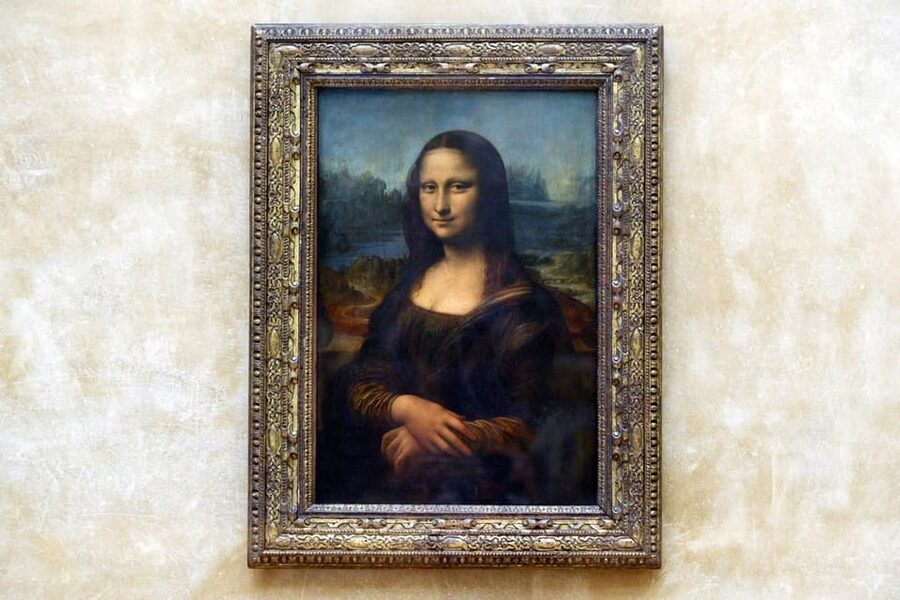
The Mona Lisa is included, as you would expect from a family highlight tour. The guide can help you reach the area and explain what makes the painting important beyond its fame.
One family said the guide brought them close to the Mona Lisa, while another felt that using an iPad for a spot-the-difference activity was less useful than simply looking at the real painting. That is a fair criticism. Activities are helpful when they direct a child’s attention to the artwork, but they can feel misplaced if they distract from the painting itself.
Crowds also shape this part of the visit. Skip-the-line tickets can help you avoid a long entry wait, and one family estimated that the benefit saved about an hour. They do not make the Mona Lisa room private or quiet. You should still expect other people, limited viewing time, and a famous painting that may look smaller than your child imagines.
The guide’s value is partly practical here. Instead of trying to find the correct gallery while carrying bags, watching children, and checking a map, you follow someone who knows the route. That is a real benefit in a museum with confusing scale.
Collecting clues and solving the final puzzle
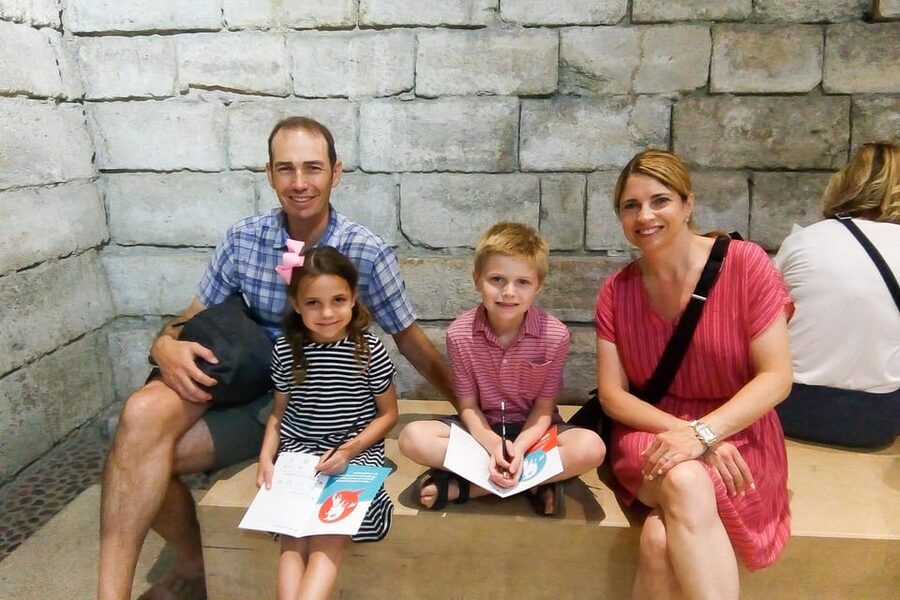
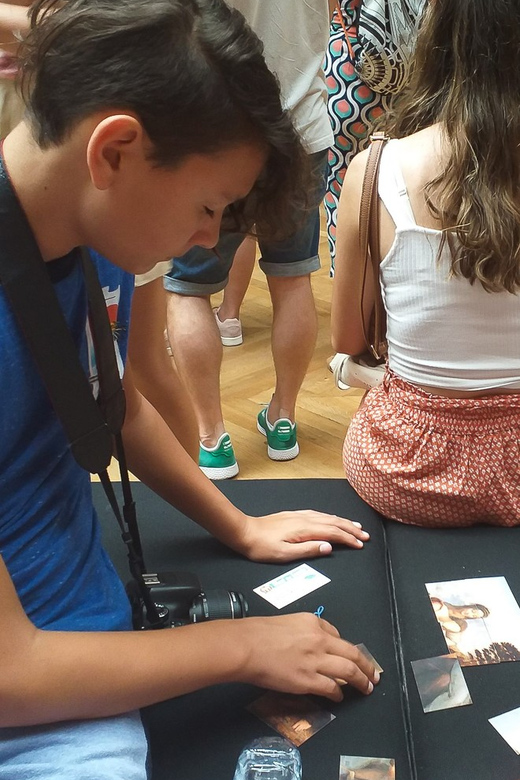
The central game develops as the visit continues. With each answer, children receive a clue card. Once all cards are collected, the children use them to solve the final puzzle.
This gives the tour a clear finish. Young children often need a reason to keep going, and a final answer is easier to understand than the vague promise of seeing one more painting. The guide can also use the clues to keep siblings working together instead of competing for attention.
The hunt does require stopping at each selected work long enough to answer the question. That makes the visit slower than a fast highlight walk. If your family wants to race through the Louvre and see as many objects as possible, the booklet may feel like an obstacle.
I see the slower pace as a reasonable exchange for families with children who need structure. The most successful visits appear to be those where the guide keeps the explanations concise and lets the children act quickly. Guides such as Marcella and Amy were praised for holding children’s attention, while Marine was noted for combining art stories with timely navigation.
What the adults get from the experience
The best family museum activity does not treat parents as luggage carriers. Here, the guide explains the art for adults while giving children something concrete to do.
You may hear short stories about the Louvre, French royalty, sculpture, and the museum’s famous paintings. The format favors clear explanations over a long academic talk. That is the right choice for a family visit, since children need movement and adults need enough context to make the objects meaningful.
Several guides were praised for their patience and enthusiasm. Sebastien was described as especially effective with a group ranging from age 5 to 13. Roseane helped make the museum and royal past easier to follow. Quinten was praised for explaining the stories behind the art in a way that worked for both adults and children.
The private setting also lets you ask questions without worrying about holding up a large group. If one child needs a break or another wants to look longer at a sculpture, the guide has more room to adapt.
Is two hours enough?
Two hours is a smart length for many families. It gives you time to enter, follow a planned route, see the major highlights, and finish the hunt before fatigue takes over.
A two-hour visit is not enough for a full Louvre exploration. Think of it as an introduction, not a complete museum day. You will see selected works rather than every major department.
Some families praised the pace as fast and well suited to children. Another family found it too slow because the quiz activities required extended stops. Both reactions make sense. The ideal pace depends on your children, their ages, and how much they enjoy solving questions in front of an artwork.
If your children are 3 to 6, the coloring and drawing tasks may help them stay involved. If they are 7 to 12, the clue system may give them a stronger sense of progress. For teenagers, the activity could work, but the supplied information mainly supports its use with younger children through age 12.
What $743 means for a family of four

The price is $743 per private group of up to four people. With four participants, that works out to about $186 per person. With only two people, the per-person cost becomes much higher.
That is a serious price for a two-hour museum visit. You are paying not just for admission, but for a private English-speaking guide, skip-the-line tickets, the booklets, and the treasure hunt materials. You are also paying for someone else to handle the route and keep children engaged.
For a family of four that might otherwise struggle through the Louvre, the value can be strong. The visit may prevent a wasted museum day, reduce arguments, and help adults enjoy the art. For a family with older children who already enjoy museums, buying regular admission and planning your own route will cost less.
The price makes the most sense when you value time and calm. It makes less sense if your priority is seeing the maximum number of artworks or keeping your Paris budget tight.
Who should book this Louvre activity?
I would consider this for families visiting the Louvre for the first time, especially those with children between 3 and 12. It is also useful when siblings have different ages and attention spans, since the booklet challenges can be adapted without sending the family on separate routes.
It suits parents who want the major sights but do not want to spend the morning studying a museum map. It also suits grandparents traveling with children, since the guide can handle the explanations, navigation, and activity flow.
I would think twice if your children dislike worksheets, puzzles, or stopping to answer questions. I would also think twice if your main goal is a long, adult-focused art visit. The hunt is designed to keep children involved, and that means you will not move through the galleries as quickly as you might alone.
The activity is wheelchair accessible, but large bags and luggage are not permitted. Hotel pickup and drop-off are not included, and tips are extra. Cancellation is free up to 24 hours before the start, and you can reserve now and pay later, which helps if your Paris plans are still shifting.
Should you book the Louvre family treasure hunt?
Book it if your family needs a clear plan, your children are likely to respond to clues, and you want to see the Louvre’s famous works without managing the entire visit yourself. The strongest part is the combination of a private guide, age-appropriate booklets, and a final puzzle that gives children a reason to keep looking.
Skip it if $743 feels too high for two hours or if your children are unlikely to take part in the activities. For the right family, this can turn an intimidating museum into a shared game. For the wrong one, it can feel like an expensive guided walk with too many pauses.
FAQ
How long does the Louvre treasure hunt last?
The activity lasts two hours, including the guided museum visit and the treasure hunt.
Where do you meet the guide?
You meet by the equestrian statue of Louis XIV near the Louvre glass pyramid at 8 Place du Carrousel.
What ages are the activity booklets designed for?
The booklets are designed for children ages 3 to 6 and for children ages 7 to 12. Each age range receives adapted challenges.
Which Louvre artworks are included?
The route includes the Venus of Milo, the Winged Victory of Samothrace, and the Mona Lisa, along with other selected works.
Is the tour private and wheelchair accessible?
Yes. The activity is for a private group and is wheelchair accessible.
What should you bring to the Louvre?
Bring comfortable clothes and identification or a photocopy of it. Bags larger than 55 by 35 by 20 centimeters, large luggage, and oversize luggage are not permitted.
More Family and Kids Games in France
- Kids/teens escape game in Montmartre
★ 5.0 · 68 reviews - Paris Sweet & Chocolate Family Treasure Hunt
★ 5.0 · 37 reviews - Paris Kids Louvre Treasure Hunt Private Tour
★ 5.0 · 28 reviews - Hamburg: Scavenger Hunt Self-Guided Tour for Children
★ 4.5 · 319 reviews
Just added around France
- Bordeaux: Outdoor Escape Game – Le Canelé d’Or★ 4.6 · 13 reviews
- Bordeaux: Outdoor Escape Game – Braquage à la bordelaise★ 4.9 · 5 reviews
- Bayonne: Outdoor Escape Game Discover Bayonne – Txokolatea★ 3.4 · 8 reviews
- Aix Treasure Hunt★ 5.0 · 15 reviews
- Dinan: Outdoor escape game, The symbols of the apocalypse★ 4.4 · 7 reviews
- Escape Game Outdoor The Walking Dead in Caen★ 3.0 · 6 reviews
- Escape game Urban Survival Team The Walking Dead in Strasbourg★ 4.5 · 6 reviews
- Strasbourg: Adventure in a virtual reality escape room★ 5.0 · 12 reviews
Treasure Hunts, compared.


St. Augustine: Treasure Hunt Cruise with Onboard Show
Read our review →

Fun, Flexible Treasure Hunt Around Manchester with Cryptic Clues & Hidden Gems
Read our review →
Fun, Flexible Treasure Hunt Around York with Cryptic Clues & Hidden Gems
Read our review →
Fun, Flexible Treasure Hunt Around Bath with Cryptic Clues & Hidden Gems
Read our review →York Treasure Hunt Adventure: The Mystery of The Gunpowder Snitch
Read our review →Browse the lists this tour appears in