

Reviewed · FLANDERS
e-Scavenger hunt Hasselt: Explore the city at your own pace
Hasselt’s e-Scavenger Hunt turns a city walk into a self-guided game, with clues, tasks, and facts leading you from the Gin Museum and historic churches to museums, squares, and the Japanese Garden. You get the shape of a guided tour without having to meet a guide at a fixed hour.
I like the freedom to start when you want, and I like the private format for a group of up to six. The trail also gives you a good mix of Hasselt’s sights, from the Virga Jesse Basilica to the Modemuseum and Grote Markt. The main drawback is depth: this is a playful introduction, not a full historical tour, and the price feels much better for six people than for two.
Key points to know before you book

- Start any time: The activity is listed as available daily from noon to midnight, so you can fit it around lunch, shopping, or another Hasselt visit.
- Best value for a group: One booking covers up to six people, making the per-person cost far lower with friends or family.
- A game, not a guided lecture: Expect tasks, clues, and short facts rather than long explanations at every stop.
- A wide look at Hasselt: The route touches religious buildings, city history, fashion, gin, gardens, and local personalities.
- Bring your own phone and data: The app and mobile connection are not supplied.
- Check the translation setting: Automatic phone translation can create confusing double translations, so switch it off before starting.
How the Hasselt city game works

You begin at Diesterstraat 1 in central Hasselt, then use the online app to follow the digital trail. The activity is private, so only your own group takes part. You are not tied to a guide, a departure time, or the pace of strangers.
The advertised duration is about two to four hours. That is a sensible range for a route with many points of interest, but your actual time will depend on how quickly you solve the tasks and how long you pause at the sights. The game brings you back to the starting point at the end.
The app can use both a map and GPS, which is helpful in a city you do not know. The map gives you a broad sense of direction, while GPS helps confirm where you are near a stop. That combination is one of the most practical parts of the experience.
You will need a smartphone and mobile data. The app itself is included, but the device and connection are yours to provide. The activity is offered in English. If your phone automatically translates the app, turn that feature off first. Double translation can make an already short clue harder to understand.
A demonstration game is provided with the purchase. Use it before setting off. It gives you a quick sense of how the tasks work and lets you decide if this format suits your group.
More Scavenger Hunts in Belgium
- e-Scavenger hunt Antwerp: Explore the city at your own pace
★ 4.5 · 67 reviews - e-Scavenger hunt Bruges: Explore the city at your own pace
★ 4.5 · 58 reviews - Bruges Scavenger Hunt and Highlights Self Guided Audio Tour
★ 4.0 · 54 reviews
Gin Museum: an unusual first taste of Hasselt
The Gin Museum gives the route an immediate local flavor. Hasselt is closely associated with jenever, the juniper-based spirit known in English as gin, and the museum explains the drink through attention to both mind and body.
The stop is useful because it gives you something more distinctive than a standard square-and-church walk. You are not simply checking off buildings. You are getting one part of Hasselt’s identity, tied to production, drinking culture, and the city’s own character.
Keep your expectations in check. The app offers a short game-based visit to the city and its sights, not a full museum guide. If you want detailed information about distilling or an extended museum visit, you may need extra time beyond the trail.
Virga Jesse Basilica and the city’s religious story
One of the churches on the route was built in the 18th century and is now a basilica. Inside is the statue of Mary of Jesse, known as Virga Jesse, dating from the 14th century.
This is a good example of how the trail connects Hasselt’s present-day streets with older religious traditions. The statue gives the building a focus beyond its architecture. You have a specific object and story to look for, which works well in a scavenger hunt.
The short format may leave you wanting more context. The app is designed to keep the group moving, so it will not replace a specialist explanation of the basilica, its art, or the Virga Jesse tradition. Still, it gives you a reason to stop and pay attention rather than walk past another church door.
St. Quintinus Cathedral in the center
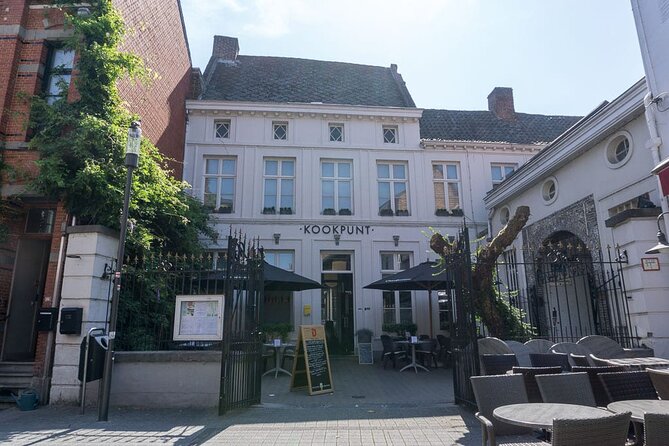
St. Quintinus Cathedral is dedicated to Quintinus and sits in central Hasselt. The church became a cathedral in 1967, when the Diocese of Hasselt was founded.
That recent change is worth noting. The building’s religious role did not simply begin centuries ago. Its status changed with the creation of the diocese, giving the stop a link between older architecture and modern church administration.
Because the cathedral is in the center, it fits naturally into a walking route. You can use the game’s prompt to notice the building, then continue through the compact core. The stop is likely to appeal most to people who enjoy seeing how civic and religious buildings shape a city center.
Same streets, a different set of clues:
- Escape Hunt Brussels, Escape Game
★ 5.0 · 103 reviews - e-Scavenger hunt Ghent: Explore the city at your own pace
★ 4.5 · 41 reviews - Beer Tasting and Scavenger Hunt in Brussels – About 3 Hours
★ 4.5 · 35 reviews - e-Scavenger hunt Mechelen: Explore the city at your own pace
★ 4.0 · 34 reviews
Modemuseum Hasselt in the Oud Gasthuis

Modemuseum Hasselt occupies a 17th-century building known as the Oud Gasthuis. The combination is the attraction: fashion exhibitions in an old building create a sharper contrast than a modern museum alone would.
The stop broadens the route beyond churches and local history. You get a sense of Hasselt as a city with an interest in design and clothing, not just heritage sites. If fashion is your main reason for visiting, allow yourself time to explore the museum beyond the app’s brief prompt.
The game’s structure can only give you a taste of each place. That is helpful if you want a broad city orientation, but less satisfying if you expect detailed museum interpretation at every stop.
Plopsa Indoor Hasselt and the family angle
Plopsa Indoor Hasselt is Belgium’s first partially covered theme park. It is beside the Ethias Arena and Grenslandhallen, giving the trail a modern entertainment stop alongside its older landmarks.
This point makes the activity more useful for a mixed-age group. Children may respond more readily to a theme park reference than to a cathedral or a former hospital building. The route does not turn into a theme-park visit, but the stop adds variety.
You should not assume every attraction on the trail is a full included admission. The listed inclusions cover the online game and city trail, not tickets to separate attractions. Treat Plopsa Indoor as a point of interest unless you have separately arranged entry.
Hasselt’s town hall and a changing city center
Hasselt’s current town hall, also called Stadskantoor, opened in 2018. It replaced the old town hall and gives the route a clear look at the city’s present-day administration.
I appreciate this kind of stop because it keeps the walk from becoming a string of old buildings. Cities change, and a new town hall says something about how Hasselt organizes itself now. The game can help you compare the newer building with the older streets around it.
The value here comes from context rather than spectacle. Do not expect a major attraction in the same sense as a museum. It is a useful piece of the city’s current story.
The beguinage and the marks of destruction
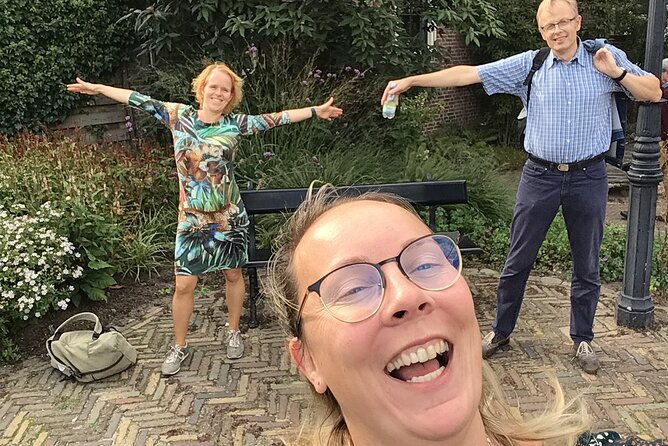
Hasselt’s oldest beguinage was mentioned as early as 1245 and stood outside the ramparts, near what is now the Virga Jessecollege on Guffenslaan. It was destroyed during the Iconoclasm.
This is one of the route’s more thoughtful historical points. You are asked to consider a place that is no longer intact. The absence itself becomes part of the story, showing how religious conflict and deliberate destruction changed the city.
For this stop, a little imagination helps. You may not see a complete beguinage waiting in front of you, so the app’s historical clue matters more than the physical view. It is a good reminder that a city tour should include lost places as well as surviving landmarks.
The Japanese Garden: a change of pace
The Japanese Garden in Hasselt is described as the largest of its kind in Europe. It is presented as a place to experience Japanese culture, and its inclusion gives the route a different mood from the dense center.
This stop may require more planning than the central sights, depending on how the route connects its points. The supplied information does not give exact walking distances or admission details, so check the app’s directions and allow time for the detour.
I like the contrast. After churches, civic buildings, and museums, a garden gives you a calmer visual break. The trail’s game format may encourage you to keep moving, but this is one place where you may want to pause instead of treating the stop as another answer to enter.
Herkenrode and 600 years of women’s history
The trail also points to Herkenrode, where a chronological route tells the story of an abbey and 600 years of women connected with it.
This adds a major historical theme to the day. The stop is not just about an impressive structure. It directs your attention to the women who lived and worked there across six centuries, which gives the abbey a human focus.
Herkenrode may not feel like part of a short central-city stroll. The supplied details do not state the transport arrangements, distances, or admission rules, so you should check the app before committing your schedule. If the trail sends you farther out, the two to four hour estimate may feel tight if you also plan full visits.
Lieutenant Dusart and Hasselt’s colonial past
Another point introduces Dusart, who attended the Royal Military School in Brussels and became a lieutenant at 19. In 1890, he left for Congo, then the private property of King Leopold II.
This is a brief but important historical thread. It links a local figure to Belgium’s military and colonial past. The subject deserves careful attention, even if the game presents it in only a few lines.
Do not expect the app to provide a long biography. Its role is to place the person within Hasselt’s story and prompt you to think about the city beyond its attractive streets and monuments.
Grote Markt and the everyday city
Grote Markt is compact, much like Hasselt’s central area. Restaurants, hotels, and shops partly surround the square, making it one of the easiest places to connect the game with ordinary city life.
This is where the route can feel least like a formal tour. You can see how people use the center today, not just what happened there in the past. It is also a sensible place to pause for food or a drink, though those costs are not part of the activity.
The square is not presented as a vast monumental space. Its appeal comes from its scale and setting. You can take in the center without spending a full day crossing the city.
Minderbroederskerk and Father Valentinus Paquay
The burial chapel and museum of Father Valentinus Paquay in the Minderbroederskerk draw thousands of visitors each year. The stop adds another religious figure to the route, but with a more personal focus on burial, memory, and devotion.
It is a useful contrast with the larger basilica and cathedral. Instead of looking mainly at institutional buildings, you are introduced to a person whose chapel has become a place of pilgrimage.
As with the other religious sites, the game gives you a reason to notice the location. If you want a detailed account of Father Valentinus Paquay, his life, or the museum, plan on seeking more information at the site.
The Stadsmus and local characters
At The Stadsmus, you learn about Hasselt’s streets and famous inhabitants. The museum also tells the story of a mysterious citizen who appears only once every seven years.
That last detail gives the stop a lighter, more memorable quality. A city museum can easily become a list of dates and names, but a recurring mystery gives you something to discuss as you walk.
The Stadsmus also helps tie the route together. After seeing major buildings and public spaces, you get a closer look at the people and stories behind Hasselt’s streets. It is one of the better stops for understanding local identity, even if the app only offers a short introduction.
Price, group size, and the real value
The cost is $37.21 per group of up to six people. For a full group, that is about $6.20 each, which is a fair price for two to four hours of private entertainment and orientation.
For two people, the same price becomes about $18.61 each. That is where the value becomes less clear. A traditional guided walk may cost a similar amount for two, while giving you live conversation and the chance to ask questions.
You are paying for flexibility and privacy rather than a guide’s commentary. I would choose this for a family or friend group that enjoys puzzles and wants to start around its own schedule. I would choose a human-led walk instead if your main goal is detailed history, local conversation, or help interpreting the sights.
Who will enjoy this format most
This activity suits people who like to move at their own pace and do not want to join a scheduled group. A team of friends can split the tasks, compare answers, and turn a sightseeing walk into a shared challenge.
It also works well for families, provided everyone can use the app and the group is happy with a game format. The private setup means you can stop when you need to, though the activity does not include a guide who can adjust the route or explain every question.
The experience is user-friendly for people with hearing impairments, and service animals are allowed. Most people can participate. English is the offered language, so consider that before booking if your group is more comfortable in another language.
Practical details before setting off
You can start at Diesterstraat 1 in Hasselt and finish back at the same meeting point. The stated operating period runs from February 16, 2020 through February 3, 2027, with daily availability listed from 12:00 AM to 11:59 PM.
Those hours give you unusual freedom, but they do not guarantee that every museum, church, garden, or attraction on the route will be open at the moment you arrive. The app game may be available at any time, while individual sites can have their own schedules.
The booking confirmation is sent at the time of booking. Free cancellation is available if you cancel at least 24 hours before the start time. Cancellations or changes made inside that window are not accepted for a refund.
Should you book the Hasselt e-Scavenger Hunt?
Book it if you want a flexible, private way to see many sides of Hasselt in one outing. The mix of gin, churches, fashion, gardens, local personalities, and public squares is more interesting than a simple monument checklist, and the map and GPS options make the route easy to manage.
I would book with four to six people for the best price. I would also test the demonstration game and check the translation settings before starting. If you want substantial historical explanation or personal conversation, choose a guided walk instead. If you want control, light competition, and a broad first look at Hasselt, this city trail is a practical choice.
FAQ
How much does the Hasselt e-Scavenger Hunt cost?
The price is $37.21 per group, with up to six people included.
How long does the activity take?
The expected duration is approximately two to four hours.
Where does the activity start and finish?
It starts at Diesterstraat 1, 3500 Hasselt, Belgium, and ends back at the meeting point.
Can I start the activity at any time?
The activity is listed as available Monday through Sunday from 12:00 AM to 11:59 PM during the stated operating period.
What language is offered?
The activity is offered in English.
What is included in the booking?
You receive access to the online app and the city trail game for a team of up to six people.
Do I need to bring anything?
You need your own smartphone and mobile data. These are not included.
Can I cancel for a full refund?
Yes. You can cancel at least 24 hours before the experience start time for a full refund. Changes or cancellations made less than 24 hours before the start time are not accepted for a refund.
Just added around Belgium
- Discover Leuven while playing! Escape game – The alchemist★ 4.5 · 5 reviews
- Discover Mechelen while playing! Escape game – The alchemist★ 4.5 · 6 reviews
- Discover Ostend while playing! Escape game – The Walter case★ 4.0 · 16 reviews
- e-Scavenger hunt Kortrijk: Explore the city at your own pace★ 4.5 · 15 reviews
- Discover Ghent with a self-guided Outside Escape city game tour!★ 4.0 · 10 reviews
- Liege Scavenger Hunt and Highlights Self Guided Audio Tour★ 4.0 · 9 reviews
- Discover Dinant while playing! Escape game – The alchemist★ 4.5 · 12 reviews
- Discover Durbuy by playing! Escape game – The alchemist★ 3.5 · 14 reviews
Scavenger Hunts, compared.


Amazing Cozumel Race: Small-Group Tour and Scavenger Hunt
Read our review →
An Epic Scavenger Hunt: New York City Central Park Adventure
Read our review →

Escaping and spying on the Berlin Wall Scavenger hunt
Read our review →
Browse the lists this tour appears in