
Reviewed · VIENNA
Vienna: The Great Plague Exploration Game
Vienna’s old center becomes a giant puzzle board in this self-guided city game, which links medieval churches, old cafés, curious street details, and imperial landmarks through a story about the Great Plague and the song of dear Augustin. You use your own smartphone, follow clues, and move at your own pace.
I like two things right away: the route slips into back streets you might otherwise miss, and the price is remarkably low at about $7.23 per person. Families with restless children and friends who dislike formal sightseeing tours get a more active way to see central Vienna.
The tradeoff is simple: this is not a guided history tour. Some players found the app tricky, and one person wanted more historical explanation. You need a working phone, careful reading, and patience if an answer is not accepted on the first try.
Key points to know before you play
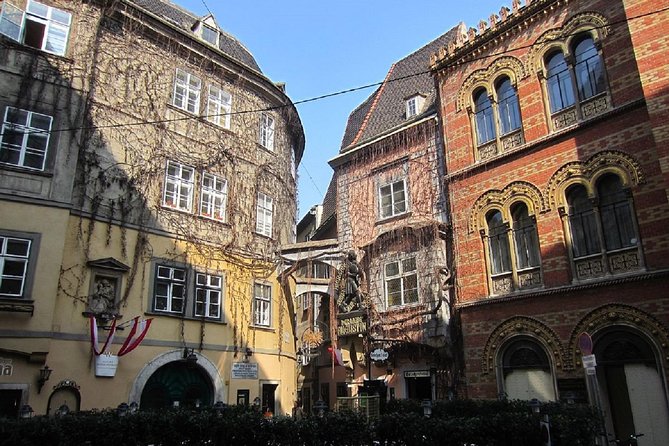
- A 90-minute route through central Vienna: The game runs from Ruprechtskirche to the Hofburg, with stops at major sights and lesser-known details.
- A story about plague-era Vienna: The plot adds meaning to the clues and connects with the history of the song about dear Augustin.
- No physical guide: Audio stories and directions come through your smartphone.
- Flexible timing: Start any time after booking, stop for coffee, and continue when ready.
- Good for families and small private groups: Only your party participates, and children play free.
- Sightseeing fees are separate: The game includes access to the outdoor route, but admission to St. Stephen’s Cathedral, the Albertina, and the Hofburg is not included.
A plague story begins at St. Rupert’s Church
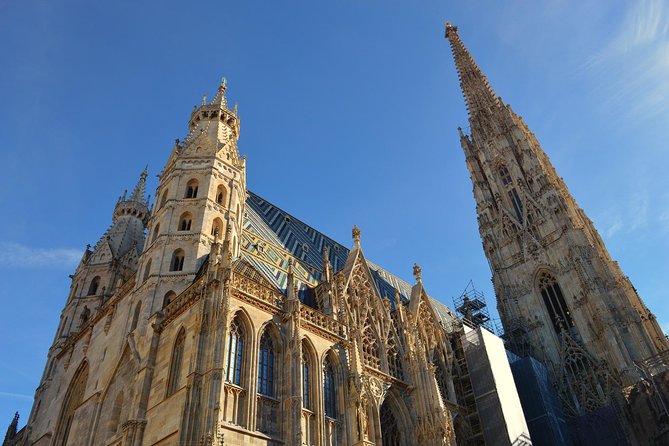
Start at St. Rupert’s Church on Ruprechtsplatz, one of Vienna’s oldest surviving churches. The building is about 13 centuries old and uses stone taken from an ancient Roman settlement. That gives the opening stop a proper sense of age before you even begin solving clues.
Inside, St. Rupert’s has Vienna’s oldest stained-glass window and oldest bells. Look for the 13th-century window in the vaulted apse, showing Christ on the cross with the Madonna and Child below. The church is dedicated to St. Rupert of Salzburg, patron saint of the Danube’s salt merchants.
Your first task is to look around and find the answer that sends you onward. This is a useful introduction to the format. You are not simply walking from one famous building to another. You must pay attention to details, enter an answer, and let the game guide the next move.
The church also hosts ancient music concerts in summer, including evening performances in July. If the doors are open, give yourself time to look around. The game allows flexibility, so you do not need to treat every stop like a timed appointment.
More City Exploration Games in the world:
- Malaga city game: Operation Mindfall
★ 5.0 · 111 reviews - Romantic Montmartre: Paris Lost Lovers Exploration Game and Tour
★ 4.5 · 107 reviews - Sibiu Old Town Exploration Game and Self-Guided Tour
★ 4.5 · 82 reviews
Griechenbeisl brings Vienna’s old café culture into the game
The next stop is Griechenbeisl, one of Vienna’s oldest restaurants. Its name means Greek Inn and recalls the Greek merchants and Levant travelers who once settled in this part of the city near the Holy Trinity Greek Orthodox Church.
This is a place with a strong connection to Vienna’s musical past. Mozart, Beethoven, and Schubert all dined here. The Mark Twain Room displays framed signatures of famous diners, including Luciano Pavarotti and Johnny Cash.
The challenge asks you to inspect the place and solve a question or puzzle. That makes the restaurant more than a quick photo stop. You are looking for a detail, checking the setting, and learning why the address matters.
I like this part of the route because it gives you a reason to notice an old eating place rather than walk past it. You can also use the flexible format to stop for food or a drink. The one caution is practical: the game does not include a meal, and your time inside the restaurant may depend on opening hours and your willingness to make a purchase.
Bäckerstrasse rewards careful looking
Bäckerstrasse is one of the best parts of the route for people who enjoy small details. At No. 2, look for the old mural on the façade of the Hasenaus, or Hare House. It shows a wolf and a cow wearing spectacles while playing backgammon.
The image dates from a period when Vienna’s houses could carry religious, historic, or humorous scenes. The meaning is not certain. It may relate to medieval life, or it may suggest the conflict between Protestants and Catholics.
The street itself adds plenty to the walk. You can see 17th and 18th-century façades, a 17th-century tower at No. 2, the Palace of Count Seilern at No. 8, and the Renaissance courtyard of the Schwanenfeld House at No. 7.
This is exactly the kind of stop that benefits from a city game. Without a prompt, you could easily miss the mural while heading toward St. Stephen’s Cathedral. The challenge makes you slow down and scan the buildings.
The drawback is that some visual clues can be hard to judge. One player had trouble with a clue involving statues holding a globe and found it unclear where the figures were looking. Take your time, check the wording carefully, and do not assume the first detail you notice is the answer.
Stephansplatz and Stock im Eisen add classic Vienna sights
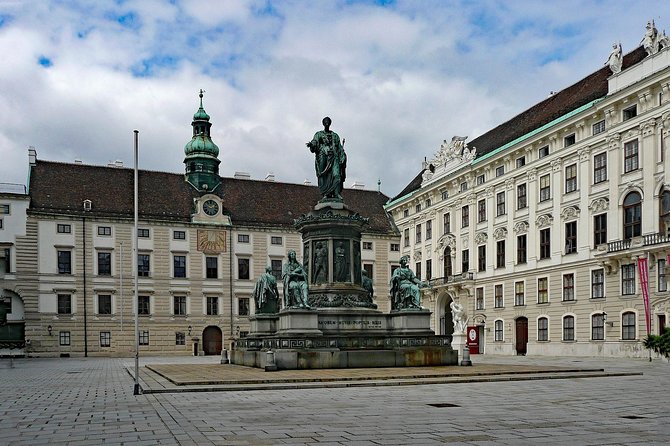
The route continues to Stephansplatz, the broad square around St. Stephen’s Cathedral. Here, a clue leads you to the square and gives you the next instruction. This is a good change of pace after the close inspection required on Bäckerstrasse.
You are then directed to Stock im Eisen, one of Vienna’s strangest public objects. The name refers to a section of a medieval tree trunk covered with hundreds of nails. For generations, people hammered nails into the tree for good luck. At one point, the object was even blamed on Satan.
Today, the trunk sits on a 1.5-meter pedestal at the corner of Kärntner Strasse. An iron ring and dummy lock surround it. It is easy to pass this spot while thinking about the grand cathedral nearby, so the puzzle earns its keep here.
You can spend as much time as you like at Stock im Eisen before following the next clue. That freedom matters if you want to take photographs, read nearby information, or simply get your bearings in the center.
More Escape Games in the world:
- Branson Murder Mystery- Branson’s Original #1 Murder Mystery
★ 5.0 · 1,513 reviews - Sofia Escape Room – Teorema Rooms
★ 5.0 · 895 reviews - Saw2 vs Squid Game – Escape Game Montpellier
★ 5.0 · 752 reviews - Prague Wizard Experience Magic School Escape Game
★ 5.0 · 746 reviews
St. Stephen’s Cathedral gives the route its grandest stop
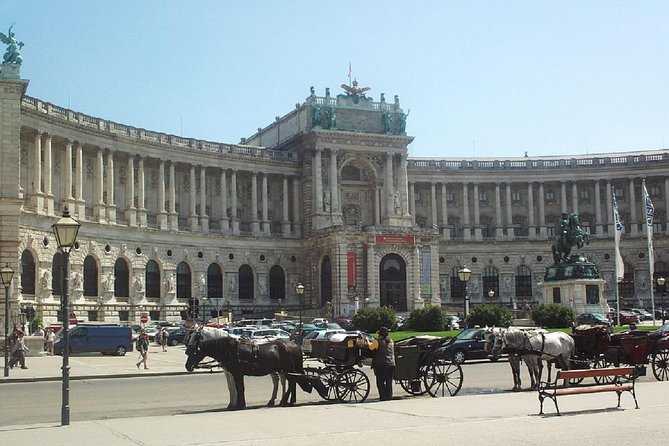
St. Stephen’s Cathedral is the largest and most famous building on the route. The cathedral dates from the 12th century and is one of Austria’s major Gothic landmarks. Its patterned roof uses about 230,000 glazed tiles, including designs with the double-headed eagle of the Habsburg Empire and coats of arms linked to Vienna and Austria.
The cathedral’s tower room has 13 bells and offers a view over Vienna. The game’s stop focuses on looking around and solving a challenge, but you should understand that admission is not included. If you want to enter the cathedral or climb for the view, plan to pay separately.
That distinction affects the value. At $7.23, the game is inexpensive even before you count the route planning, audio stories, and self-guided format. Still, it does not give you admission to every major sight along the way. Think of the game as a walking framework, not a sightseeing pass.
I would allow more than the listed 15 minutes if you want to explore the cathedral properly. The route can be finished in about 90 minutes, but the flexibility lets you turn it into a longer afternoon.
Café Frauenhuber offers a natural pause
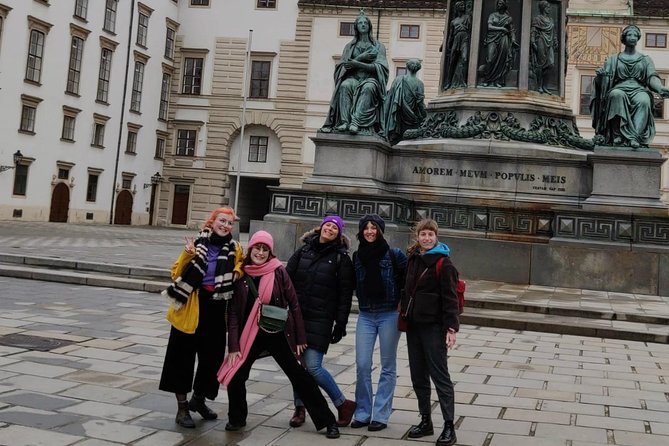
Café Frauenhuber on Rauhensteingasse is included as an additional point of interest near the route. It dates to 1746 and is described as Vienna’s oldest coffeehouse. Mozart and Beethoven reportedly played table music for diners there several times between 1782 and 1791.
This is a useful place to pause because the game does not force you to hurry. You can take a coffee break, continue later, and keep the activity from feeling like a race through the center.
Viennese coffeehouse culture is best understood through the atmosphere of a real café, not just a paragraph in an app. If Frauenhuber is open and fits your plans, it can give the walk a more local rhythm. The game itself does not include drinks or food, so budget for those separately.
The Albertina connects art with Habsburg Vienna
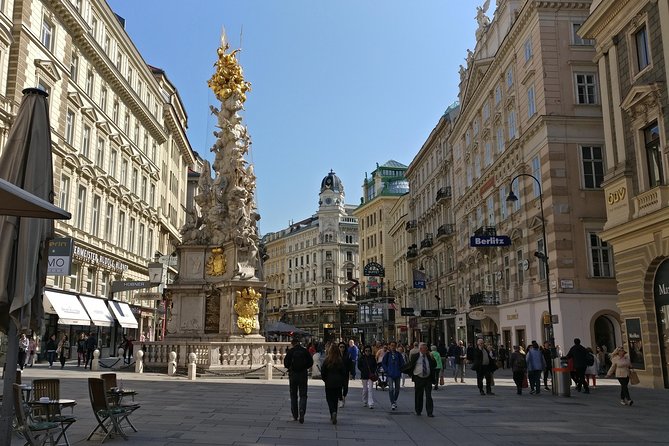
The Albertina is the route’s main art stop. The museum holds more than 50,000 drawings and over one million master prints, shown on a rotating basis. Its collections cover modern art, graphic art, architecture, and photography.
You may find works connected with Impressionism, Fauvism, German Expressionism, and the Russian avant-garde. Monet’s The Water Lily Pond is among the noted works. The museum also occupies part of a former Habsburg residential palace, so the building itself gives you another look at imperial Vienna.
The challenge asks you to observe the site and answer a question before moving on. Admission is not included. If you enter, the visit will take much longer than the game’s suggested 10 minutes, and that is perfectly fine if art interests you.
I see this as one of the route’s strongest choices because it widens the subject beyond plague stories and medieval objects. You get architecture, imperial life, and modern art in one stop. If you want a quick game, look at the exterior and continue. If you want a fuller Vienna visit, buy a ticket and stay longer.
The Hofburg closes the game in the center of power
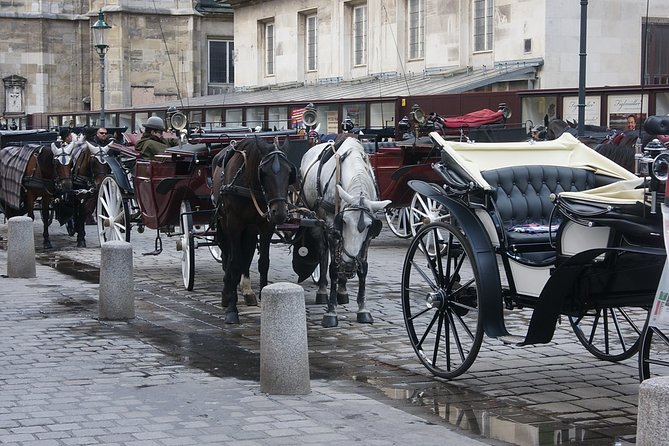
The final stop is the Hofburg, Vienna’s former Habsburg residence and present workplace of Austria’s president. The palace has been at the center of power since the 13th century and still contains the Imperial Apartments, the Sisi Museum, the Imperial Silver Collection, and the Austrian National Library.
The complex also includes the Hall of Ceremonies, which remains connected with Viennese balls. The game ends here after one last observation challenge, leaving you free to continue exploring.
Admission to the Hofburg attractions is not included. That is worth planning in advance because the palace complex contains several separate points of interest. If your group is tired, you can finish the game outside and return another day. If imperial Vienna is a main reason for visiting, use the end of the game as the start of a longer palace visit.
The route ending at the Hofburg is practical. You finish near major central sights and public transportation, rather than being left in a distant neighborhood with a long ride back.
How the app and clue system affect the experience
The format is simple in theory. You open the game on your smartphone, listen to audio stories, follow directions, inspect each stop, and enter answers to move forward.
In practice, the app is the part that needs the most care. One player abandoned the experience after the first point because the app was difficult to use. Another had trouble getting correct answers accepted because of capitalization and wording, including whether a connecting word was required.
That does not make the activity unusable, but it changes how you should approach it. Read the instructions exactly, enter names and phrases carefully, and allow a little patience when a correct idea is rejected. Customer support resolved one installation problem within about 15 minutes, so help is available if you need it.
The clues are generally designed to be solved by observation rather than specialist knowledge. Several players found the questions easy, while others found the visual details frustrating. Your experience will depend partly on how comfortable your group is with phone-based puzzles.
Who gets the best value from $7.23?
At about $7.23 per person, the price is low for a private activity covering this much central Vienna. You are paying for the story, route design, audio content, and the freedom to play with only your own group.
The price looks especially good for families because children play free. It also works well for friends who want a shared activity without hiring a guide. Groups larger than 15 can make multiple bookings, though the game remains most manageable when everyone can hear the discussion and agree on answers.
The value is less clear if you want detailed lectures about Vienna. The activity gives you short stories and prompts, but it is not built around long explanations from a historian. One player specifically wished for more factual background and later decided the description did not match what they wanted.
I would also compare the cost with your sightseeing plans. Since cathedral, Albertina, and Hofburg admission is extra, add those fees only if you intend to enter. The game remains inexpensive as an outdoor route, but it is not an all-inclusive ticket.
Timing, comfort, and planning details
The advertised duration is about one hour and 30 minutes. That is a reasonable target if you solve the clues steadily and do not spend much time inside the sights. You can also stretch the activity across a full afternoon by stopping for coffee, meals, photographs, or museum visits.
It can be played any time after booking during the stated operating window of 7:00 AM to 10:00 PM, Monday through Sunday. The experience is offered in English. It is near public transportation, and most people can participate.
You need your own smartphone. There is no physical guide, so make sure your group understands that the phone provides the directions, clues, and audio stories. Service animals are allowed.
The route is private to your party, which gives you room to solve at your own speed. It also means you do not get the energy or backup of a larger group if a clue causes trouble. For families, that privacy is often a plus. For solo players, the private format does not change the need to manage the app yourself.
Free cancellation is available up to 24 hours before the local start time. Cancellations inside that window are not refunded, and late changes are not accepted.
Should you book the Great Plague Exploration Game?
Book it if you want an inexpensive, flexible way to connect Vienna’s major sights with odd little details, old cafés, medieval objects, and back streets. It works best for families with easily distracted children, couples, and friends who enjoy solving clues more than listening to a formal guide.
Skip it if your main goal is a detailed account of Vienna’s plague years, Habsburg politics, or cathedral architecture. You will get a story and audio explanations, but the heart of the experience is observation and movement.
My practical choice would be to schedule it early in your Vienna stay. The route introduces central landmarks and can help you spot places to revisit, especially Bäckerstrasse, the cafés, St. Stephen’s Cathedral, and the Hofburg. Bring a charged phone, read answer instructions closely, and leave room for an unplanned coffee stop. At this price, the game is an easy add-on, as long as you want a playful walk rather than a traditional tour.
FAQ
How long does the Vienna Great Plague Exploration Game take?
The planned duration is approximately one hour and 30 minutes. You can take breaks, stop for coffee, and continue at your own pace, so the outing may take longer.
Is a physical guide included?
No. This is a self-guided activity played on your smartphone. It includes audio stories, directions, and puzzles, but no in-person guide.
Where does the game start?
It starts at St. Rupert’s Church, also called Ruprechtskirche, at Ruprechtsplatz 1, 1010 Vienna.
Where does the game end?
The game ends at the Hofburg in central Vienna.
Is the experience private?
Yes. Only your own party participates. Groups larger than 15 people should make multiple bookings.
Are children free?
Yes. The experience is free for children and is presented as a suitable choice for families.
Are entrance fees included?
No. Admission is not included for St. Stephen’s Cathedral, the Albertina, or the Hofburg. The outdoor route and puzzle activity are separate from any museum or attraction tickets.
Can I cancel for a refund?
Yes. You can cancel at least 24 hours before the experience start time for a full refund. Cancellations or changes made within 24 hours are not refunded or accepted.
Just added around the world
- Bordeaux: Outdoor Escape Game – Le Canelé d’Or★ 4.6 · 13 reviews
- Birmingham: City Walking Tour and Exploration Game★ 4.6 · 7 reviews
- Berlin: Outdoor Escape Game Mitte★ 3.2 · 4 reviews
- Berlin: Scavenger Hunt through Friedrichshain★ 4.8 · 9 reviews
- Bordeaux: Outdoor Escape Game – Braquage à la bordelaise★ 4.9 · 5 reviews
- Berlin Prenzlauer Berg: Scavenger Hunt Self-Guided Tour★ 4.6 · 14 reviews
- Maine: Belfast Family Treasure Hunt★ 4.0 · 4 reviews
- Berlin: EXIT Escape Room Games & Virtual Reality Adventures!★ 4.6 · 3 reviews
City Exploration Games, compared.
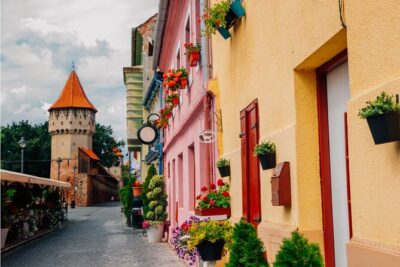
Sibiu Old Town Exploration Game and Self-Guided Tour
Read our review →
Glasgow Ghost Hunt: The Soul That Got Away Exploration Game
Read our review →
Rotterdam Highlights & Spies: Interactive City Game
Read our review →
Discover Utrecht with a self-guided Outside Escape city game tour
Read our review →
Bristol Street Art: Banksy Exploration Game and Tour
Read our review →
Frankfurt Old Town & Emperors: City Game & Walking Tour
Read our review →
Browse the lists this tour appears in