
Reviewed · NUREMBERG
Outdoor Escape Game with Mystery Backpack in Nuremberg: Dürer’s Legacy
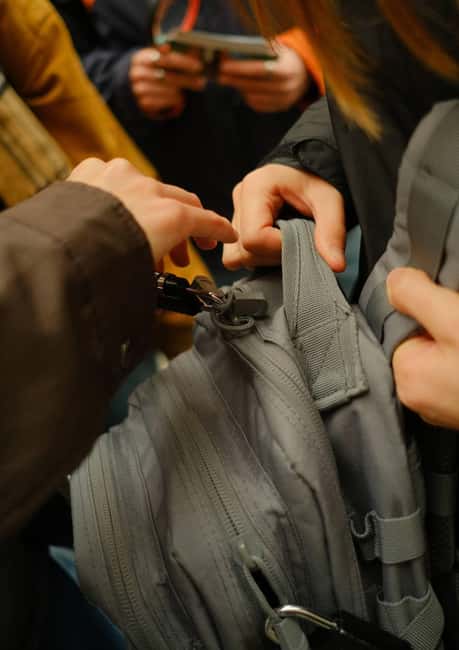
Nuremberg turns into your puzzle board on this outdoor mystery tour, where Albrecht Dürer’s old neighborhood provides the setting for 12 hands-on challenges and six locks. Instead of staring at a tablet, you work with physical clues, notes, and equipment packed into a rented backpack.
I like the fresh-air format and the fact that you can set your own pace. I also like the fair mix of history, walking, and teamwork, plus the small sweet surprise and final souvenir. The main caution is practical: the route covers about 2.5 kilometers over cobblestones and modest hills, and the puzzles are in German with a medium level of difficulty.
Key points at a glance
- Six real locks and 12 tactile puzzles: You handle physical materials rather than solving everything on a screen.
- A Dürer-themed route: The walk begins and ends in Nuremberg’s northwest old town, near Albrecht-Dürer-Platz.
- Self-guided and private: Your group works without a guide on the route and can stop to think, take notes, or pause for refreshments.
- About 150 minutes outdoors: Plan for two to three hours, including puzzle-solving, walking, and possible stops.
- Suitable for mixed-age groups: Children under 13 can join free, though younger children may need an adult’s help.
- Real walking conditions: Expect cobblestones and elevation changes of roughly 20 to 30 meters.
Starting beside Dürer’s statue
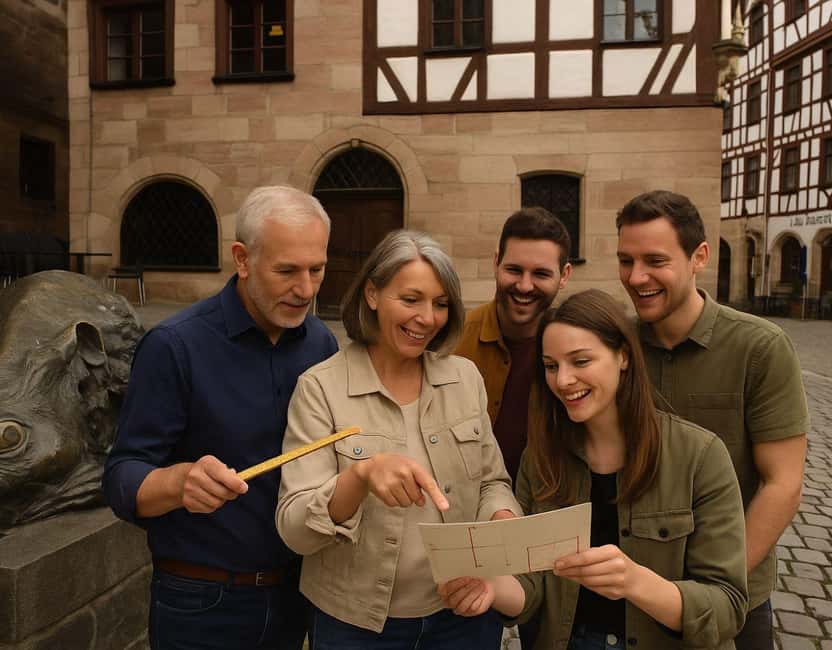
Your handover point is the Team Game cargo bike on Albrecht-Dürer-Platz, to the right and slightly above the statue of Albrecht Dürer. This is a useful starting location because you are already in the old town, close to the historic streets that give the activity its setting.
You receive the puzzle backpack, its locks, and the other materials you need. The backpack is on loan, so you return it at the end. The operator sends more detailed meeting information through WhatsApp before the activity, which makes it important to provide a mobile number and check your messages.
The exact route details are meant to unfold through the puzzles, so you should not expect a standard sightseeing walk with a guide explaining every building. The historical theme is there to shape the clues and give the route a sense of purpose. You are following Dürer’s legacy while also trying to work out what the backpack is asking you to do next.
The activity is listed with a live German guide, but the route itself is designed to be completed independently and at your own speed. In practical terms, you should expect an initial handover and instructions rather than a guide walking beside you for the full 150 minutes.
More Outdoor Escape Games in Germany
- Bamberg: Outdoor Escape Game with a Puzzle Backpack
★ 4.8 · 101 reviews - Bremen: Outdoor Escape Game in the Old Town
★ 4.4 · 41 reviews - Dresden: Krimi Outdoor Escape Game “Mord am Elbufer”
★ 4.9 · 29 reviews
How the mystery backpack works
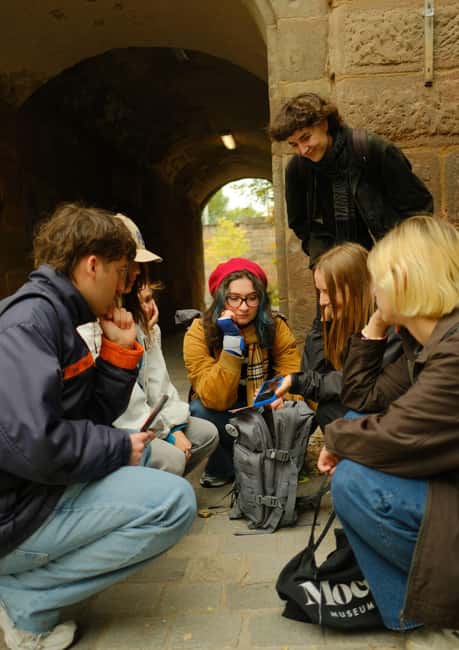
The backpack is the heart of the experience. It contains puzzle materials, helpful equipment, and six locks whose combinations you must work out. The appeal is physical and direct: you pick up the pieces, inspect them, compare notes, test ideas, and turn the locks yourself.
That matters if you have had enough of app-based city games. You do need a charged smartphone, but the supplied information describes the puzzles as tactile and interactive rather than tablet-based. Your phone is not meant to replace the backpack.
There are 12 puzzles in total. They are not described as a series of difficult brainteasers designed to stop the whole group for long periods. Instead, the difficulty can be adjusted, and you can take notes if you need help organizing the clues. A German review described the route as easy to solve with some combining of ideas, which is a useful guide to the level: you will need to think, but this is not presented as an expert-only escape room.
The six locks give the route a clear sense of progress. Each opened lock should reveal another piece of the activity, though the exact contents and sequence are part of the mystery. Keep the materials together as you move. Outdoor puzzle games are easier when one person handles the backpack, another records notes, and everyone has a clear look at each clue.
Walking through Nuremberg’s northwest old town
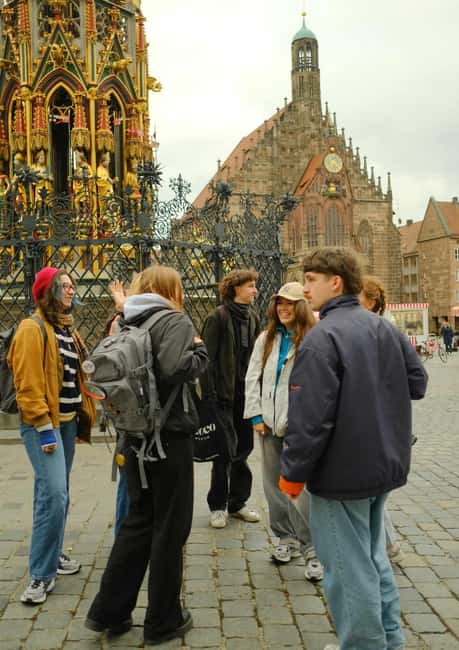
The walk covers around 2.5 kilometers in and around the northwest, or Sebald, side of Nuremberg’s old town. This is not a long hike, but the puzzles add time. You may stop in one place to examine a clue, compare possible answers, or wait while someone tries a lock.
The route includes long stretches of cobblestones. You also need to manage elevation changes of about 20 to 30 meters. That is not a major climb, but it does affect comfort, especially if you are wearing smooth-soled shoes or bringing a child who tires quickly.
I would wear comfortable walking shoes and clothing suited to the forecast. The activity remains outdoors for two to three hours, so rain, cold, heat, or strong sun can shape the experience more than the puzzle difficulty does. Bring water, and consider a small snack. There are opportunities to stop for food along the way, but you should not rely on finding a convenient café at the exact moment your group needs one.
The walking pace is flexible. That is one of the strongest features for families and private groups, since you can take a little longer at a clue without holding up strangers. It also means the total duration is not a hard stopwatch experience. The stated duration is 150 minutes, while the general description allows two to three hours.
What makes the Dürer theme useful
The Dürer connection gives the game more character than a generic code hunt. Albrecht Dürer is closely tied to Nuremberg, and beginning beside his statue makes the theme visible from the first minute. The old town is not simply a backdrop for unrelated locks. The route asks you to pay attention to the place around you.
That does not mean you should expect a full art-history lesson. The supplied information focuses on solving puzzles and following Dürer’s legacy rather than on a detailed lecture. If you want dates, paintings, and museum interpretation, pair this activity with a visit to a Dürer-related site or another conventional city tour.
For me, the value is in the way the theme encourages you to look up from the backpack. A good clue can make a street, detail, or historic setting feel relevant because you are searching with a purpose. You are not just walking from one attraction to the next.
The route also offers a change from a traditional guide-led visit. You decide how much time to spend reading the surroundings and how much to focus on the next combination. That freedom suits people who like discovery more than formal explanation.
Same streets, a different set of clues:
- Hamburg: Treasure Hunt Game through HafenCity
★ 4.7 · 364 reviews - Hamburg: Scavenger Hunt Self-Guided Tour for Children
★ 4.5 · 319 reviews - Treasure Hunt through Hamburg’s Hafencity
★ 5.0 · 234 reviews - Escape Room Adventure in Berlin Solve the Mystery
★ 5.0 · 222 reviews
A good fit for families and private groups
The activity is designed for private groups, with groups of up to 10 people possible. Four groups can be booked at the same time, allowing as many as 40 people to take part in parallel. That makes it useful for school outings, company groups, birthday parties, or a large family gathering, although each group will still need to work through its own backpack and puzzles.
For a smaller group, four people is a comfortable size because everyone can see the materials and take a role. With more than four, you may need to divide tasks. One person can read instructions, one can keep notes, one can inspect the equipment, and others can scan the surroundings for useful details.
Children under 13 can join free, while everyone aged 13 and older needs a ticket. The puzzles have a medium difficulty level, so younger children may not manage the activity alone. An adult can make the route workable for children, especially if the child enjoys codes, maps, and physical problem-solving.
The activity has an educational side without feeling like a lesson. A child can practice using a compass, for example. One January review specifically praised the compass task as something children could learn to handle. That is a nice detail for parents looking for an activity that asks children to think and participate rather than simply follow along.
Teenagers and adults who like escape rooms should find the format familiar, but the outdoor setting changes the rhythm. You are not confined to one room, and the city itself becomes part of the task. At the same time, people who dislike puzzles may feel less engaged, since solving is the main event rather than a small extra on a sightseeing walk.
The pace, difficulty, and seasonal trade-offs
The route is reported to be well judged in length. You have enough time for the puzzles without committing to a full day, and the outdoor setting keeps the activity moving. A German participant described the puzzles as not too hard, but requiring some combination of ideas. That is likely the sweet spot for a mixed group.
You can take notes, and the difficulty can be adjusted individually. This helps if one person quickly sees patterns while another needs more time. I would still avoid treating the activity as a race. The fun comes from discussing possibilities and making the final turn of a lock together.
Weather is the largest seasonal variable. On a dry, mild day, the open-air design is a major advantage. In poor weather, two to three hours on cobblestones with a backpack can feel demanding. Dress for the forecast and protect any paper materials from rain as best you can.
Crowds can also affect the route. A December visit was completed successfully even though the Christmas market caused some disruption. That suggests the game can function during busy periods, but you should expect slower movement and more distractions when seasonal events fill the old town.
The route is in German. Some content may appear in its original language, so this is not the best choice for a group that cannot comfortably work with German instructions. The language point matters more here than on a standard walk because a single word or phrase may affect a puzzle answer.
The small extras at the finish
The sweet surprise along the way is a simple touch, but it breaks up a long sequence of clues. It gives the group a brief reward before the final lock and keeps the experience from feeling like one continuous test.
A small souvenir is included for successful puzzle-solving. Do not book this expecting a large gift or a major meal. The extras are modest, but they add warmth to an activity that could otherwise feel purely mechanical.
The strongest pleasure comes from the physical process: carrying the backpack, making a guess, checking the equipment, and finally opening a lock. The treats work best as accents rather than the reason to book.
Price and what you receive
The supplied price is $88 for a group of up to four, but the booking information also says the price is calculated per person and that each participant should buy a ticket. Those details do not match perfectly, so check the final booking screen carefully before paying. The operator explains that pricing is intended to avoid disadvantaging either very small or very large groups, but you should confirm how the total applies to your party.
Value depends on group size. A small private group gets a two-and-a-half-hour activity, a backpack with equipment and materials, a themed route, a sweet surprise, and a souvenir. Compared with a standard guided walk, you are paying for an interactive activity rather than just commentary.
A group of four can also share the social cost of the experience, provided the checkout price reflects the stated group rate. Larger groups may benefit from parallel booking, but each person still needs the correct ticket according to the booking terms.
Free cancellation up to 24 hours before the start and the option to reserve now and pay later make it easier to fit into a changing Nuremberg schedule. Those policies are useful, but they do not remove the need to plan around weather and language.
Who should book this Nuremberg puzzle walk?
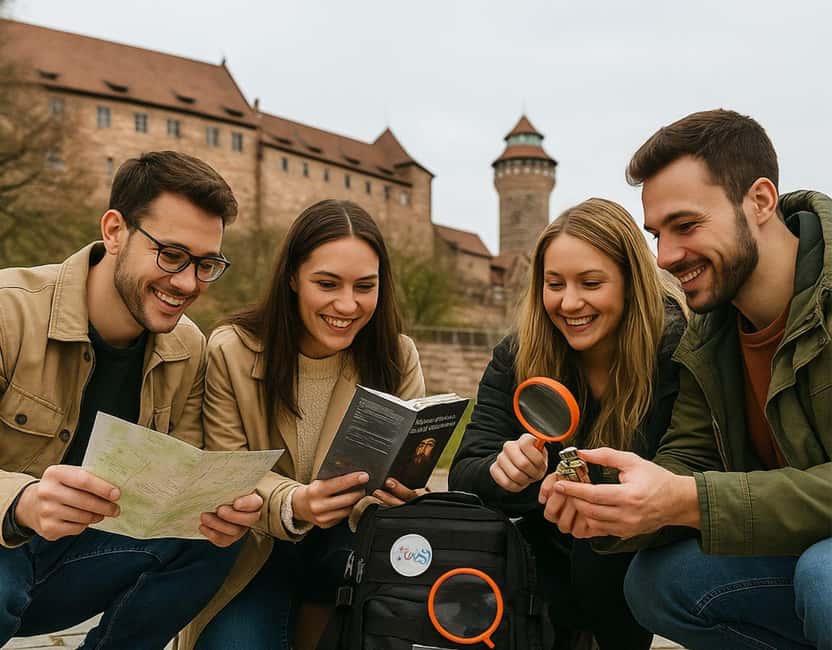
I would choose this for a private group that wants to see the old town while doing something active. It is particularly suitable for families with older children, couples who like escape rooms, groups of friends, and company outings that need a shared task rather than a formal lecture.
You should also book it if you prefer physical objects to phone screens. The six locks, equipment, and hidden backpack contents give the activity a hands-on feel that many city games lack.
I would think twice if you want a detailed guided history tour, dislike walking on cobblestones, or need an English-language experience. I would also avoid it on a day when your group is not prepared to spend up to three hours outside.
Should you book Dürer’s Legacy?
Book it if the idea of combining Nuremberg’s old town with 12 manageable puzzles sounds better than following a guide in a group. The Dürer theme gives the walk a clear identity, while the private format lets you solve at your own pace.
Skip it if your main goal is art history, architectural commentary, or a fully guided route. For families and puzzle fans who can manage German instructions, comfortable shoes, and outdoor weather, this is a smart way to give a familiar city walk a practical challenge.
FAQ
Where does the activity start and finish?
The handover takes place at the Team Game cargo bike on Albrecht-Dürer-Platz, to the right above the Albrecht Dürer statue. The activity starts and ends in Nuremberg’s northwest old town, in the Sebald area.
How long does the tour take?
The stated duration is 150 minutes. The general guidance allows two to three hours, depending on your pace and how quickly your group solves the puzzles.
How far do you walk?
The route covers about 2.5 kilometers. It includes long stretches of cobblestones and elevation changes of approximately 20 to 30 meters.
How many puzzles and locks are included?
You solve 12 puzzles and work with six locks in the puzzle backpack.
Is the activity guided?
The activity includes a German-speaking live tour guide listing, but the route is designed to be completed independently and at your own pace. The supplied information describes a backpack-based puzzle tour rather than a guide walking with you throughout.
What language is used?
The activity is in German. Some content is shown in its original language.
Can children take part?
Yes. Children under 13 can join free, while everyone aged 13 and older needs a ticket. The difficulty is medium, so younger children are best accompanied by an adult.
What should I bring?
Bring a charged smartphone, drinks, weather-appropriate clothing, and comfortable walking shoes. Snacks are also sensible for a tour lasting up to three hours, although there are opportunities to stop for food along the route.
Just added around Germany
- Berlin: Outdoor Escape Game Mitte★ 3.2 · 4 reviews
- Berlin: Scavenger Hunt through Friedrichshain★ 4.8 · 9 reviews
- Berlin Prenzlauer Berg: Scavenger Hunt Self-Guided Tour★ 4.6 · 14 reviews
- Berlin: EXIT Escape Room Games & Virtual Reality Adventures!★ 4.6 · 3 reviews
- Bautzen: Scavenger Hunt Self-Guided Walking Tour★ 4.9 · 16 reviews
- Bamberg: Mystical Puzzle Tour with Puzzle Backpack and Culinary Delights★ 4.5 · 4 reviews
- Frankfurt: Old Town Crime Mystery Game★ 4.3 · 14 reviews
- Freiburg Self Guided Sherlock Holmes Murder Mystery Game★ 4.0 · 7 reviews
Outdoor Escape Games, compared.
Game of Thrones Private Outdoor Escape Game in Dubrovnik
Read our review →
Discover Utrecht with a self-guided Outside Escape city game tour
Read our review →
Outdoor Escape Game Dubrovnik – The Spy And The Traitor (History theme)
Read our review →
Discover Amerfoort’s city center in this Outside Escape game tour
Read our review →Browse the lists this tour appears in