
Reviewed · LONDON
London Charles Dickens Puzzle Questo and Self-Guided Tour
Charles Dickens’s London comes alive through clues rather than a guide’s lecture. This self-guided puzzle begins at the author’s former home on Doughty Street and leads you toward Fleet Street, mixing Dickens sites with old pubs, theatres, libraries, churches, and literary landmarks.
I like the freedom to start at any hour and take breaks whenever you please. I also like the low price, about $8.33 per person, and the offline play option, which keeps the game useful when your phone signal is poor. The catch is simple: no human guide comes along, so you need to read carefully, look around, and keep your group moving.
Key points at a glance
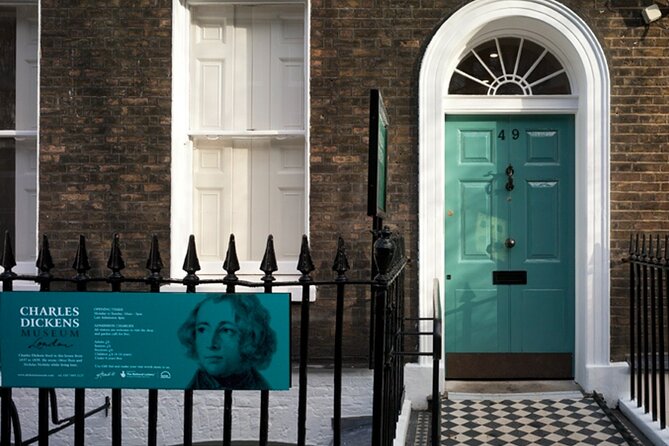
- Start at Dickens’s former home: Begin at 48 Doughty Street, now the Charles Dickens Museum, where he lived from 1837 to 1839.
- Solve clues at 11 stops: Each location gives you a challenge to answer before the next place is revealed.
- Follow a literary route to Fleet Street: The finish at 145 Fleet Street links Dickens with Samuel Johnson, old newspapers, theatres, pubs, and London institutions.
- Play on your own schedule: The activity is available 24 hours a day, and you can pause and resume whenever you wish.
- Expect about one hour of play time: Stops, pub breaks, photos, and wandering can make your outing longer.
- Bring curiosity, not a tour guide: This is a private activity for your group, with no physical guide and no contact with other participants.
Dickens begins at 48 Doughty Street
The opening stop is the Charles Dickens Museum at 48 Doughty Street in Holborn. Dickens lived in this Georgian terraced house from March 1837 until December 1839, a period soon after his marriage and an important early chapter in his writing life.
You do not simply walk up, read a plaque, and move on. The puzzle asks you to look around for an answer. That small change matters. Instead of receiving every fact in a prepared speech, you and your companions must pay attention to the building and its surroundings.
The museum itself is a separate attraction, so check what you want from the visit before setting out. The puzzle uses the location as its starting point, but the supplied tour details do not include museum admission. If you plan to go inside, allow extra time and check opening arrangements independently.
This is a good starting place for families and friends who enjoy a shared task. A traditional guide could tell you Dickens’s story more quickly, but the clues give you a reason to inspect the setting instead of walking past it.
More Self-Guided Games in London
- London’s Crown Secret: Self-Guided Royal Puzzle Quest
★ 4.5 · 8 reviews - London (Covent Garden) Scavenger Hunt and Sights Self-Guided Tour
★ 5.0 · 7 reviews - London Scavenger Hunt and Highlights Self-Guided Tour
★ 4.0 · 4 reviews
From Dickens to Vine Street
The route then moves to Vine Street, a place laid out around 1686. Older maps show it running from Piccadilly toward Warwick Street, and in the early eighteenth century its main properties included a brewery and a carpenter’s yard.
This stop helps broaden the outing beyond Dickens alone. London’s literary stories are tied to ordinary streets, trades, workshops, and drinking places. The clue format lets you notice the present-day setting while learning how the street once functioned.
You should expect some mental work here. The game does not hand you a long explanation before asking you to continue. You must find the answer on location, so read signs and inspect the surroundings carefully. If your group rushes, you may miss the detail that makes the clue solvable.
The pub behind Bill Sykes
One of the most memorable stops is the stylish inn dating from 1759. Dickens gave it the name the Three Cripples in 1838 and used it as Bill Sykes’s preferred watering hole in Oliver Twist.
This is exactly the kind of stop that suits the game. You get a real London pub, a literary connection, and a bit of Dickens’s darker world in one place. It also gives you a natural chance to stop for a drink or meal if the timing works.
The activity does not require you to enter every venue, and no admission or meal is included. Still, this stop shows why the flexible format is useful. You can pause the game, look around, and continue later instead of squeezing the whole route into a strict guided schedule.
A previous booking described stopping at several pubs during a sunny day out. That is a practical hint, not a requirement. If you want a quick one-hour puzzle, keep walking. If you want a relaxed literary afternoon, build in breaks.
Staple Inn and London’s working past
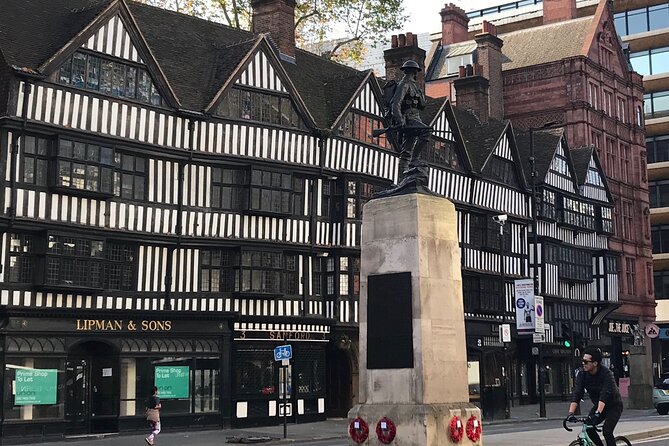
Staple Inn dates from 1585. The building once served as a wool staple, where wool was weighed and taxed. It survived the Great Fire of London, suffered major damage from a Luftwaffe bomb in 1944, and was later restored.
This stop gives the route some architectural weight without turning the outing into a formal lecture. You are looking at a building that links medieval trade, the Great Fire, wartime damage, and modern preservation.
The clue encourages you to examine the place rather than simply photograph it. That is one of the strongest parts of this activity. You are not collecting a list of sights. You are using each location to solve the next stage.
Do keep your expectations in check. A self-guided puzzle gives you a short piece of context, not a full architectural tour. If you want detailed information about the building’s construction or restoration, you will need to do extra reading on your own.
More Self-Guided Games in the UK
- Houdini’s Golden Handcuffs Leeds Self-Guided Treasure Hunt
★ 5.0 · 29 reviews - Liverpool Ghost Hunt: Paranormal Detective Self-Guided Game
★ 4.5 · 26 reviews - Scholars & Secrets of Cambridge: Self-Guided Puzzle Adventure
★ 3.5 · 19 reviews
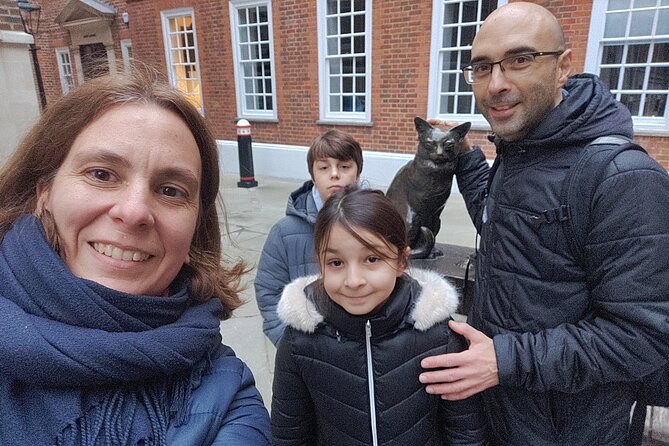
Theatre ghosts at Lincoln’s Inn Fields
Lincoln’s Inn Fields once held a theatre that operated from 1661 until its demolition in 1848. The building began as the Duke’s Theatre, created by converting Lisle’s Tennis Court in 1695.
Today, the important point is what has vanished. The puzzle brings your attention to a former performance site, encouraging you to picture London’s theatre life in a place that no longer functions as that theatre.
This is a good example of the route’s wider theme. Dickens is the main thread, but the walk also touches older entertainment, literature, religion, scholarship, and public institutions. You get a more varied sense of central London than you would from a narrow author-only tour.
Because the theatre is gone, this stop may feel less immediate than the pub or Dickens’s house. The value comes from the story and the act of locating its traces. Readers who prefer visible interiors and preserved rooms may find this part less satisfying.
The Maughan Library’s grand change of use
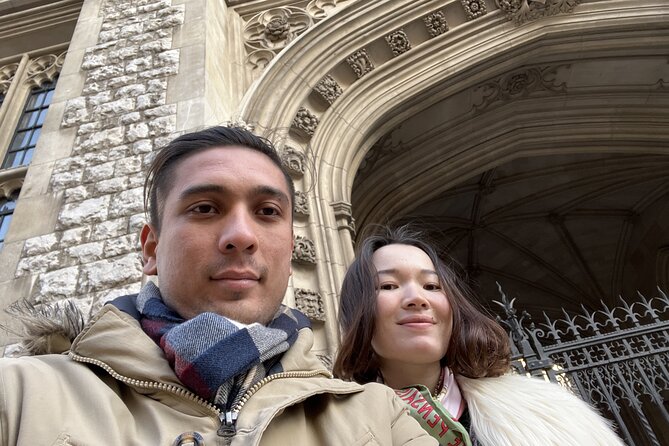
The Maughan Library occupies a Grade II* listed building designed by Sir James Pennethorne. It was constructed in 1851, expanded between 1868 and 1900, and later renovated in a £35 million project by Gaunt Francis Architects.
The building now serves as the largest new university library in the United Kingdom since the Second World War. That contrast makes it a useful stop: a nineteenth-century structure has taken on a modern academic role while keeping its architectural importance.
You should treat this as an exterior puzzle stop unless the activity tells you otherwise. The supplied details do not promise entry to the library, so do not plan your schedule around an interior visit.
The Maughan also reinforces the literary character of the route. Even when Dickens is not the direct subject, books, writing, scholarship, and London’s institutions remain close at hand.
Samuel Johnson’s former home
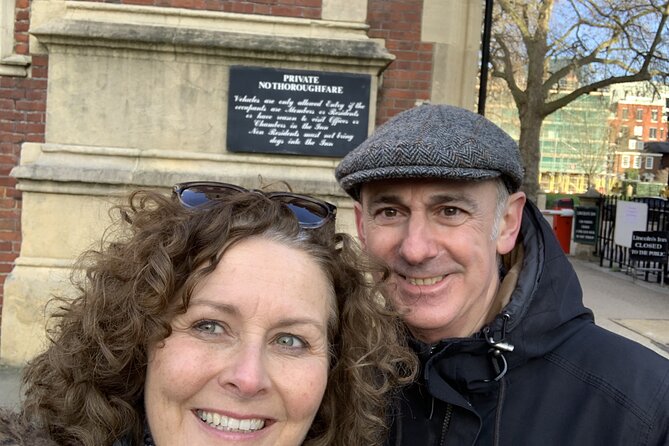
Dr Johnson’s House was probably built for a City merchant. Samuel Johnson, one of the best-known figures in English literary life, rented it from 1748 to 1759.
This is a strong literary companion to the Dickens Museum. Johnson and Dickens belonged to different eras, yet both are connected to London houses where writing and conversation shaped English culture.
The puzzle format gives you a reason to compare these places. Dickens’s home is tied to the author’s family life and early success, while Johnson’s house points to another period of literary London. The route quietly shifts from one writer to another without needing a separate lecture.
As with the other locations, the activity details do not include admission to Dr Johnson’s House. If you want an indoor museum visit, account for that separately and expect the overall outing to last longer than the advertised one-hour play time.
Ye Olde Cheshire Cheese after the Great Fire
Ye Olde Cheshire Cheese was first built in the 1530s, but that pub disappeared in the Great Fire of London in 1666. The current building dates from 1667 and was among the first London buildings reconstructed after the fire.
This is one of the route’s most atmospheric stops. A pub rebuilt after the Great Fire gives you a direct connection between London’s disaster and its recovery. It also fits Dickens’s world, where public houses often serve as meeting places, story settings, and windows into social life.
You can make this a useful pause if you are not trying to finish in exactly an hour. The previous booking experience included several pub stops, and the flexible schedule makes that possible. Just remember that food and drinks are not included in the price.
Churches, surgeons, and a Romanian chapel
The route continues through several less obvious places. One church was consecrated in 1863 as the Church of St Peter of All Nations and was described at the time as the only basilica-style church in the United Kingdom. Its organ was built in 1886 by Belgian organ builder Anneesen, and Irish Pallottines used the church during the Second World War when Italian immigrants were interned.
Another stop is the Royal College of Surgeons. Its beginnings reach back to the 1540s, when the Company of Barbers and the Fellowship of Surgeons joined to form the Company of Barber-Surgeons. By the eighteenth century, medicine had become more academic and surgeons sought greater recognition for their work.
The final stop is St Dunstan-in-the-West, which shares its building with the Romanian Orthodox community. The chapel beside the main altar has an iconostasis that came from Antim Monastery in Bucharest and was dedicated in 1966.
These stops show the route’s broad reach. This is not only a Dickens trail. It is also a walk through London’s religious, medical, immigrant, and institutional stories. If your interests are limited to Dickens’s novels, some of these places may feel like side trips. If you enjoy unexpected connections, they add welcome variety.
Finishing near Fleet Street
The tour ends at 145 Fleet Street. The finish gives the walk a fitting literary setting, since Fleet Street is closely linked with London publishing and newspapers, even though the supplied route details do not promise a newspaper-themed commentary at the final point.
The start and finish are in different parts of central London, so plan on a one-way outing rather than a loop. The start is at 47 Doughty Street, close to the Dickens Museum, and the finish is on Fleet Street. Public transport is nearby, and the activity is listed as suitable for most participants.
The approximate duration is one hour. That likely refers to the core puzzle, not a leisurely day with pub stops, museum visits, long photo breaks, or time spent solving a difficult clue. I would reserve more time if you want to enjoy the places rather than simply complete the game.
What the $8.33 price really gives you
At about $8.33 per person, this is priced well below a conventional guided walking tour. You are paying for access to the digital game and its clues, not for a guide who explains every stop in person.
That makes the value strongest for a small group that enjoys solving puzzles together. You can share one outing without paying a full private-guide rate, and group discounts may make it still cheaper for larger parties.
The low price also reflects the trade-off. You do not get a named guide, live answers, personal stories, or a person who can adjust the route to your interests. If your group gets stuck, you must work through the clue yourselves.
The ability to play offline improves the value. You do not need an internet connection while playing, and you can start at any hour, pause at any point, and resume later. It is also a private activity, so only your group participates and you avoid the crowding of a shared tour.
Who should choose this puzzle tour
I would choose this for friends, couples, families with older children, and independent visitors who like a bit of competition. It works best when everyone is willing to look closely and discuss possible answers.
It is also a smart add-on for a flexible London day. You can start after breakfast, stop at a pub, visit another site, and return to the game later. The 24-hour availability gives you far more control than a fixed departure time.
I would not choose it if you want a polished lecture about Dickens, a deep explanation at every building, or guaranteed access inside the museums and institutions along the route. A traditional walking tour is better for that.
Service animals are allowed, and most participants can take part. The activity is offered in English, and confirmation is sent when you book. Free cancellation is available up to 24 hours before the scheduled start time. Inside the final 24 hours, refunds are not available and changes are not accepted.
Should you book it?
Book this if you want a low-cost, flexible London walk with Dickens at its core and a wider mix of historic places along the way. The best feature is the freedom: start whenever you like, pause for a pub, and play offline with only your own group.
Skip it if you need a live guide or want every stop explained in detail. For about $8.33, though, it offers a clever way to turn central London into a shared puzzle, especially if your group enjoys finding clues and does not mind doing some of the interpretation itself.
FAQ
How long does the London Charles Dickens puzzle tour take?
The advertised duration is approximately one hour. You can make it longer by taking breaks, visiting pubs, stopping for photos, or allowing extra time at museums and other sites.
Where does the tour start and finish?
It starts at 47 Doughty Street, London WC1N 2LW, near the Charles Dickens Museum. It ends at 145 Fleet Street, London EC4A 2BU.
Is a physical guide included?
No. This is a self-guided activity played through a mobile device. You solve challenges at each location without a human guide.
Do I need an internet connection during the game?
No. The tour can be played offline, so an internet connection is not required while completing the city game.
Can I start the tour at any time?
Yes. It is available every day, 24 hours a day. You can start at any hour, pause when you like, and resume later.
What is the cancellation policy?
You can cancel at least 24 hours before the scheduled start time for a full refund. Cancellations or changes made within 24 hours are not accepted and are not refundable.
Just added around London
- Immersive London Treasure Hunt Adventure – Outdoor Escape Room★ 5.0 · 11 reviews
- London’s Crown Secret: Self-Guided Royal Puzzle Quest★ 4.5 · 8 reviews
- London Scavenger Hunt and Highlights Self-Guided Tour★ 4.0 · 4 reviews
- London (Covent Garden) Scavenger Hunt and Sights Self-Guided Tour★ 5.0 · 7 reviews
- London: Murder Mystery Cruise With 3-Course Dinner★ 4.5 · 18 reviews
- Wizarding London: Interactive Game & Magical Walking Tour★ 4.0 · 26 reviews
- Private Bespoke Scavenger Hunts★ 5.0 · 26 reviews
- Little Venice London: Journey Through Lost Memories Quest★ 4.5 · 29 reviews
Self-Guided Games, compared.







Browse the lists this tour appears in