Reviewed · EUREKA SPRINGS
Enchanting Eureka Springs Scavenger Hunt
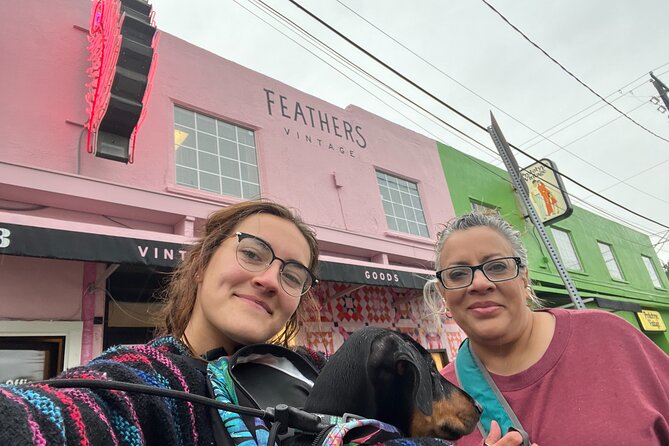
Eureka Springs becomes your game board on this playful, self-guided hunt. A remote host sends clues to your phone, then you walk or drive around town, solve puzzles, take on silly challenges, and ask local people for help. Meeting locals is one of the best parts, since a simple clue can turn into a friendly exchange.
I like the flexible format and the mix of indoor and outdoor stops. I also like that your team can include children and dogs, and that the host stays involved by text instead of leaving you to figure everything out alone. The main consideration is technical: you need a working domestic phone number, a fully charged smartphone, GPS, and mobile data.
Key points to know before you book

- A remote host guides the game: Your live host sends the quest, follows your progress, cheers you on, and helps when a clue gives you trouble.
- Two named stops anchor the route: You visit Gazebo Books and The Birdcage, with other checkpoints and bonus challenges along the way.
- Local interaction is part of the fun: Some clues may require you to approach people in town and ask for help.
- Families and dogs can join: The game moves between indoor and outdoor settings and allows service animals.
- Bring the right phone: At least one team member needs a charged smartphone that can send texts, photos, videos, and data.
- You finish where you start: Meet at Eureka Daily Roast on 27 Spring Street, and return there when the roughly two-hour activity ends.
Turning Eureka Springs into a playful game board
This is not a standard guided walk with a guide standing beside you. It is a phone-led scavenger hunt with a live person working from a distance. That difference shapes the whole outing.
You begin at Eureka Daily Roast, 27 Spring Street, in Eureka Springs. From there, your host sends the first digital instructions. You are then free to move at your own pace, on foot or by car, as you find checkpoints and work through clues.
The setup gives you more independence than a conventional tour. You are not following a flag through town or waiting for a large group to gather. Instead, your team decides how to approach each task, who should take the lead, and how much energy to put into the bonus challenges.
That freedom can be a real advantage in Eureka Springs. You can pause, look around, talk with people, or take a moment to regroup without holding up a guide. The tradeoff is that you need to stay organized. If your phone battery is low or your team misses a message, the game becomes harder than it needs to be.
More Scavenger Hunts in the USA
- An Epic Scavenger Hunt: New York City Central Park Adventure
★ 4.5 · 244 reviews - Creative Soul Scavenger Hunt of Santa Fe
★ 5.0 · 62 reviews - Keep Austin Weird Scavenger Hunt
★ 4.0 · 51 reviews
Starting at Eureka Daily Roast

The meeting point is Eureka Daily Roast, a practical place to gather your team before the hunt begins. You should arrive with your phone charged, your group ready, and your contact details correct in the booking information.
Your host is remote, so the start depends on reliable communication. At least one person on each team must have a smartphone with GPS and the ability to send and receive data, text messages, photos, and videos. This is not a minor detail. The phone is your clue sheet, scorecard, camera, and link to the host.
The host sends your digital quest and explains what to do next. Since the game is interactive, your team can send questions and receive assistance during play. That support helps keep the hunt moving if a clue seems unclear or your group takes an unexpected turn.
You should also decide who will carry the phone. A single person can manage the messages, but sharing the role can keep everyone involved. If the phone holder is busy taking photos or navigating, another team member may need to read the next clue aloud.
Gazebo Books and the first clues
Gazebo Books is listed as the first stop. The name gives you a clear sense of the kind of town setting involved: local businesses and public places become part of the challenge rather than scenery you simply pass.
You will likely use the location to solve a clue or complete a task, but the supplied details do not specify the exact puzzle. That is part of the point of this format. The hunt gives you a reason to pay attention to details you might otherwise miss, and the challenge may ask you to notice, photograph, or interpret something around the stop.
A bookstore also fits the social nature of the game. You may need to examine the setting, communicate with your teammates, or ask someone nearby for information. One especially useful feature of this hunt is the invitation to interact with local people. You are not limited to searching your phone for every answer.
Approaching strangers can feel awkward at first, especially if your team is shy. The game handles that discomfort by making the conversation part of a shared task. You are not simply making small talk. You have a reason to ask a question, and your team can decide who feels most comfortable doing it.
The social element is also where the outing becomes more memorable than a basic list of landmarks. You are not only collecting answers. You are making a few short, unexpected connections as you work through the route.
The Birdcage and the changing pace
The Birdcage is the second named stop. By this point, your group should understand the rhythm of the hunt: receive an instruction, move to a location, solve a clue, complete a challenge, and send proof back to the host.
The activity alternates between indoor and outdoor settings. That matters in Eureka Springs, where a two-hour outing can feel very different depending on weather, footwear, and how comfortable your group is with walking. The indoor stops offer a change of pace, while outdoor checkpoints give the game a more active feel.
You may walk between some places, but the instructions also allow you to drive to checkpoints. That makes the format useful for groups with mixed mobility or for teams that prefer not to walk the entire time. The exact amount of walking is not provided, so you should not treat this as a fixed walking tour.
The flexibility also means your team must make decisions. Do you walk to the next point, or use a car? Do you spend extra time on a funny challenge, or move quickly to the next clue? There is no single correct style of play. A family with young children may prefer a slower pace, while a group of friends may enjoy chasing every bonus task.
Same streets, a different set of clues:
- Branson Murder Mystery- Branson’s Original #1 Murder Mystery
★ 5.0 · 1,513 reviews - The Escape Game Orlando: Epic 60-Minute Adventures on I-Drive
★ 5.0 · 730 reviews - The Escape Game Pigeon Forge: 60-Minute Adventures on The Island
★ 5.0 · 646 reviews - The Escape Game Cincinnati: 60-Minute Adventures at The Banks
★ 5.0 · 546 reviews
What the bonus challenges add
The hunt includes bonus challenges beyond the main clues. These tasks are designed to push you outside your usual routine, which may mean performing something unusual, taking a creative photo, or completing a playful request. The precise challenges are not disclosed, so you should expect some surprises.
That uncertainty is useful for the right group. If you like taking photos, joking around, and trying activities that feel a little silly, the bonus tasks can make the outing. They give everyone something to do, even when one person is better at solving word clues.
The same feature may not suit every group. People who want a quiet, tightly structured history tour may find the challenges too loose or too playful. This activity is about participation, not a polished lecture. You should book it for shared laughs and discovery rather than detailed historical instruction.
Your host helps shape the mood. You send photos and updates by text, and the host responds with encouragement and assistance. That live connection keeps the game from feeling like a worksheet downloaded to your phone.
Why local interaction matters

The strongest social feature is the chance to involve people around town. One account of the activity describes local people helping with tasks and nobody turning the team away. That gives you a useful expectation: asking for help is not an unwanted interruption built into the game. It is part of the design.
Still, good manners matter. Ask politely, explain that you are completing a scavenger hunt, and accept a no if someone is busy. You should not assume every person wants to appear in a photo or video. The activity asks you to send material to the host, so your team should use common sense and respect privacy.
This interaction can also make the hunt work well for groups who already know Eureka Springs. Instead of repeating familiar sightseeing stops, you are given a new reason to look at the town differently. Locals may point you toward an answer, offer a quick comment, or simply add a human moment to the game.
I would consider this one of the better reasons to choose the hunt over a self-guided phone app. An app can give you information, but a live host can react to your progress and encourage you when your team is stuck or hesitant.
Family, dog, and group suitability
The activity is family-friendly and dog-friendly, which gives it a broad audience. Children can help spot clues, suggest answers, take photos, or complete some of the lighter challenges. The mix of movement and short tasks may hold their attention better than a long talk.
You should still judge the format against your own group. The hunt lasts about two hours, and the amount of walking is not fixed. Young children may need breaks, and anyone who dislikes public challenges may prefer a more traditional sightseeing option.
Service animals are allowed. The information also says most people can participate, but it does not provide a detailed accessibility plan or a guaranteed step-free route. If your group has specific mobility needs, ask the provider before booking so you can clarify the route and the amount of walking.
Groups of up to 30 people can take part. That is a useful limit for corporate outings, birthday groups, bachelor or bachelorette parties, friend trips, and family gatherings. A group of 30 will not play exactly like a pair, though. Larger teams may want to split into smaller units so everyone has a role.
For a large group, assign simple jobs: one person handles the phone, another watches the route, another manages photos, and others work on clues or approach local people. That keeps the activity from becoming one person’s game while everyone else follows along.
Phone requirements and communication tips

The most important preparation is technical. Your reservation must include a correct, working domestic phone number because the host communicates with you remotely.
Bring at least one fully charged smartphone with GPS and mobile data. It must send and receive texts, photos, videos, and other data. A portable battery is a sensible extra, though it is not listed as a required item. The official requirement is simply a charged, data-ready phone.
International numbers can create a complication. If you use one, or if technical problems arise, you must complete the game through WhatsApp or email. You can provide that contact information to the provider in advance.
I would check your phone before leaving your accommodation. Confirm that location services work, mobile data is active, and your camera can send images. These few minutes of preparation are more valuable here than arriving early with no working connection.
Value, timing, and cancellation
The activity lasts about two hours. That is long enough to make a proper outing of it without taking up an entire day. You can fit it into a morning or afternoon and still have time for other Eureka Springs plans.
A price is not provided in the available details, so I cannot judge the exact dollar value. The value depends on how much your group uses the live host, bonus tasks, and social challenges. For a group that would otherwise pay for several separate activities, the mix of sightseeing, games, and remote support may make sense.
For two people who prefer quiet sightseeing, the value may be less clear. You are paying for a shared activity and a playful structure, not a detailed guided lesson about every place you visit.
Cancellation is free if you cancel at least 24 hours before the start time. Cancellations or changes made within 24 hours are not accepted for a refund. Keep the local time in mind when making changes.
Who should book the Eureka Springs hunt?
I would recommend this for families, friend groups, corporate teams, birthday gatherings, and anyone who likes a little performance mixed with sightseeing. It is especially suitable if you enjoy taking photos, asking questions, and laughing at challenges that may feel slightly outside your comfort zone.
It is also a good choice for repeat visitors who want a fresh way to move around town. The route gives you a reason to notice places such as Gazebo Books and The Birdcage while adding social tasks that a regular walk does not provide.
I would be more cautious if you want a quiet, expert-led history tour, a fixed walking route, or a fully offline activity. The remote host and smartphone are central to the format, and the game depends on your group being willing to participate.
Should you book it?
Book the Enchanting Eureka Springs Scavenger Hunt if your group wants an active, social two hours with flexible movement and plenty of room for humor. The best parts are the live host, the chance to ask local people for help, and the way the game turns ordinary town stops into shared challenges.
Skip it if your phone connection is unreliable or if your group dislikes public tasks. For everyone else, bring a charged phone, arrive ready to talk to strangers politely, and expect the fun to come from participation rather than passive sightseeing.
FAQ
Where does the scavenger hunt start?
It starts at Eureka Daily Roast, 27 Spring Street, Eureka Springs, Arkansas.
Where does the activity end?
The activity ends back at the meeting point at Eureka Daily Roast.
How long does the scavenger hunt last?
The activity takes approximately two hours.
Is the host with the group in person?
No. A live remote host sends the digital quest, communicates with your team, provides assistance, and responds to your photos and messages.
What phone does my team need?
Each team must bring at least one fully charged smartphone with GPS and the ability to send and receive data, texts, photos, and videos.
Can I participate with an international phone number?
Yes, but you must use WhatsApp or email if you have an international phone number or encounter technical problems. You can provide those contact details before the hunt.
Are children and dogs allowed?
The hunt is family-friendly and dog-friendly. Service animals are allowed.
Can I cancel for a full refund?
Yes, if you cancel at least 24 hours before the experience start time. Cancellations or changes made less than 24 hours before the start time are not refunded or accepted.
Just added around the USA
- Vail Venture Scavenger Hunt★ 3.5 · 8 reviews
- Save the Mountain Escape Room Adventure★ 5.0 · 4 reviews
- Tybee Island, Georgia Scavenger Hunt★ 4.0 · 7 reviews
- Tucson Scavenger Hunt by Wacky Walks★ 4.5 · 2 reviews
- A Spectacular Scavenger Hunt: Center of the Universe★ 4.0 · 4 reviews
- Amazing Scavenger Hunt: Desert Oasis★ 3.5 · 3 reviews
- Thrilling Traverse City Scavenger Hunt★ 4.0 · 7 reviews
- Murder Mystery Detective Experience in Sierra Vista AZ★ 4.5 · 4 reviews
Scavenger Hunts, compared.


Amazing Cozumel Race: Small-Group Tour and Scavenger Hunt
Read our review →
An Epic Scavenger Hunt: New York City Central Park Adventure
Read our review →

Escaping and spying on the Berlin Wall Scavenger hunt
Read our review →