
Reviewed · BARCELONA
Barcelona: “The Secret of Cerdà” Treasure Hunt Walking Tour
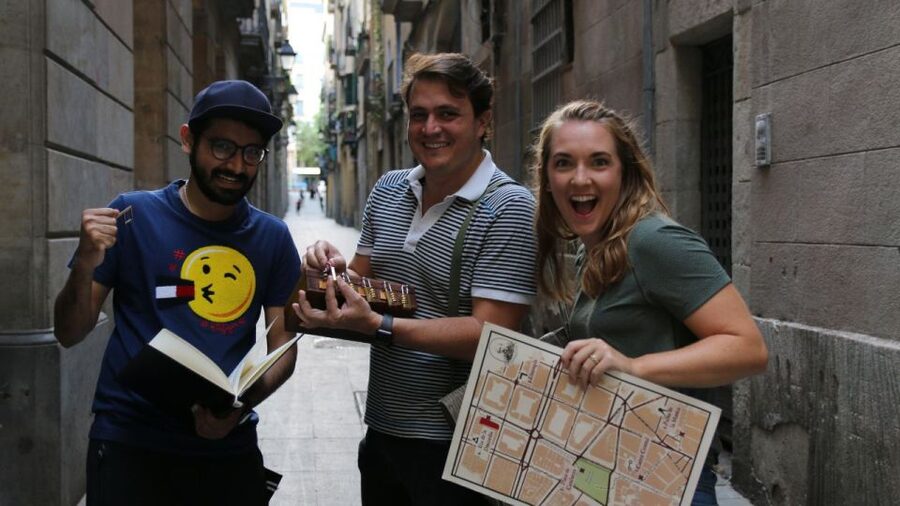
Barcelona’s city center becomes your game board on The Secret of Cerdà, a private walking puzzle that links five major sights with a map, an old book, and a locked treasure box. You follow clues tied to an eccentric Barcelona architect, then solve a challenge at each stop to open another lock.
I like the outdoor escape-room format, which gives you a reason to notice small details instead of simply passing famous buildings. I also like the freedom to pause for photos, food, shopping, or a closer look at the streets. The main drawback is time: the advertised two-hour game can run longer, especially if your group stops often or needs extra time with the puzzles.
Key points to know
- The route begins near Plaça Urquinaona, at Carrer de Trafalgar 17, a handy central starting point.
- Five city-center stops combine major sights with challenges based on Barcelona stories.
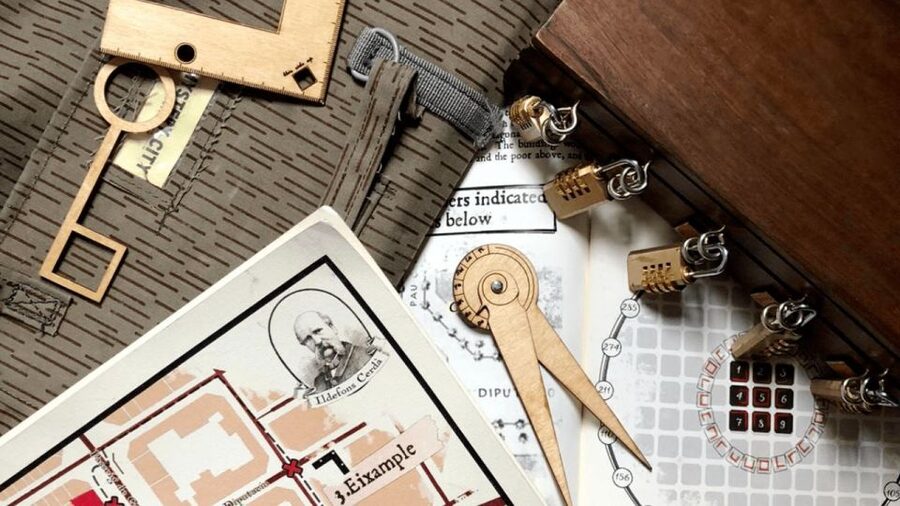
- The backpack supplies the game, including a treasure map, challenge book, treasure box, and magical tools.
- The game is private, so your group plays on its own rather than joining strangers.
- The puzzles are challenging but supported, with QR codes available when your group gets stuck.
- Families with children seven and older can play, though the puzzles were designed mainly with adults in mind.
A Barcelona city walk with a locked treasure box
This is not a standard guided sightseeing tour. You receive a backpack and set off on your own, following a route through the center while trying to solve a mystery connected with Barcelona’s past.
The story centers on an eccentric architect who hid clues in his plans for the city. The map and ancient book guide you from one stop to the next. At each place, you learn part of the story and work out a challenge that gives you the information needed to open one of the treasure box’s locks.
That structure changes the pace of sightseeing. Instead of walking from one attraction to another while listening to a long explanation, you stop, inspect, discuss, and try an answer. I like that this gives your group a shared task. It also means you will not simply rush through the Gothic Quarter or glance at a famous façade before moving on.
The experience lasts about 2.5 hours overall, with the game itself expected to take around two hours. That extra half-hour is useful. You may need it for photos, a snack, a wrong turn, or a puzzle that refuses to cooperate.
More Treasure Hunts in Spain
- Málaga: Private Sightseeing Treasure Hunt
★ 4.8 · 297 reviews - Málaga: Private Sightseeing Treasure Hunt
★ 5.0 · 144 reviews - Cala Millor: real treasure hunt in natural reserve, fun walk
★ 3.8 · 39 reviews
Starting at Carrer de Trafalgar 17
The adventure begins at Carrer de Trafalgar 17, near Plaça Urquinaona. This is a practical place to start because it puts you close to several central neighborhoods and sights.
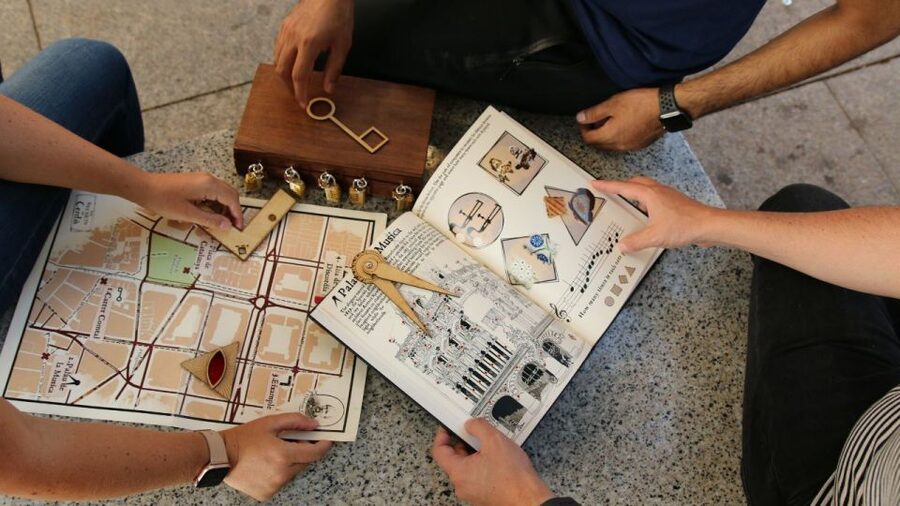
You pick up the backpack before setting out. Inside are the main objects needed for the game: a treasure map, a treasure box, a book of challenges, and special tools used during the route. The materials matter because the activity is self-guided. You are not depending on a guide to carry the story or point out every answer.
Take a few minutes at the beginning to understand the system. Assign one person to hold the map, another to keep track of the book, and let everyone examine the clues. With children or a larger group, sharing these jobs helps keep the game from becoming a one-person puzzle.
The booking is private. If other groups are playing at the same time, they play separately, so your group can move at its own speed. I would not choose this for a solo activity. The puzzles are designed for discussion, and the experience is more enjoyable when several people compare ideas.
Illa de la Discòrdia: Barcelona’s famous architectural rivalry
The first listed sightseeing stop is Illa de la Discòrdia, the famous stretch of Passeig de Gràcia known for its striking modernist façades. The name refers to the unusual collection of competing designs gathered along one block.
This is a strong opening stop for the game because the buildings offer plenty to inspect. You are asked to connect what you see with the challenge in your book, rather than simply taking a quick photograph and leaving. Look carefully at the building details and compare your observations with the clue materials.
The stop is scheduled for about 20 minutes. That gives you enough time to work through the challenge and appreciate the architecture, but not enough for a full architectural study. If you already plan to see this stretch of Passeig de Gràcia, the game adds purpose to a familiar sightseeing stop.
The drawback is the usual one with a city-center puzzle: the street can be busy, and your group may need to pause somewhere that does not offer much room. Keep the map and other materials together, especially when stopping near crowded sidewalks.
The Gothic Quarter: clues among old streets
From the modernist showpieces of Eixample, the route continues toward the Gothic Quarter. The contrast is one of the walk’s best features. You move from broad avenues and elaborate façades into older, narrower streets where the city’s layers are harder to read at a glance.
The Gothic Quarter works well for a clue-based walk because the route encourages you to slow down. You may find yourself looking above eye level, checking street details, or searching for a feature you would normally miss. The challenge is not just a code exercise. It gives you a reason to pay attention to the setting.
Plan for about 20 minutes here. That is enough for the designated game task, but you may want additional time if this is your first visit to the quarter. The route is meant to help you notice the area, not replace a longer visit to its lanes and squares.
You should also expect the walking to feel less direct than a normal point-to-point tour. A puzzle route sometimes asks you to stop, reconsider, or retrace a short section. That is part of the format, but it can frustrate anyone who prefers a quick, efficient walk.
Same streets, a different set of clues:
- Malaga city game: Operation Mindfall
★ 5.0 · 111 reviews - Cala Millor: Escape Room “The millionaire’s villa”, fun game
★ 4.6 · 78 reviews - Escape game Madrid, chase the killer
★ 4.5 · 37 reviews - Malaga: Bachelorette Party Treasure Hunt
★ 4.7 · 35 reviews
Eixample and the plans of Cerdà
Eixample is central to the story because Barcelona’s urban plan is tied to Ildefons Cerdà, the architect and planner referenced by the experience. The district is known for its broad streets and distinctive block design, giving the game a useful connection between the clues and the city around you.
Here, the activity asks you to think about Barcelona as a planned city rather than just a collection of attractions. The streets and blocks become part of the mystery. You are not only searching for a physical object. You are using the shape and character of the city to make sense of the clues.
This stop is listed at about 20 minutes. It is a good point to take a breath and check your progress before moving on. If your group has opened earlier locks quickly, you may have momentum. If not, the QR code support can help with the trickier sections.
One practical note: the route includes a fair amount of walking between stops. A verified booking described the distance as challenging enough, so comfortable shoes are sensible. The game is not a strenuous hike, but it is more active than a short stop-by-stop sightseeing visit.
Plaça de Catalunya: a useful central pause
Plaça de Catalunya is one of Barcelona’s main meeting points, linking the older center with the Eixample. It is a natural place for the route to pass through because it connects several parts of the city and gives the group a broad open area after narrower streets.
The square itself may feel less intimate than the Gothic Quarter, but it offers a change of pace. This is a good location to gather your group, review the book, and make sure nobody has missed a clue.
The planned sightseeing time is about 20 minutes. You can use part of that time for the challenge and part for a short pause. The organizers encourage you to stop for food, shopping, and photographs along the way, so you do not have to treat every minute as a race toward the next lock.
This flexibility is one of the activity’s better ideas. You can fit a coffee or small meal into the walk without giving up the game. Still, remember that extra stops may push the experience beyond the stated two hours.
Palau de la Música Catalana: a grand final setting
The route also includes the Palau de la Música Catalana, one of Barcelona’s best-known concert halls and a major example of Catalan modernist design. Even from outside, its ornate character gives the stop a strong visual payoff.
The activity uses the building as another place to connect Barcelona’s artistic identity with the story and puzzles. You will have about 20 minutes for sightseeing and the related challenge. If you have never seen the Palau, this is a useful introduction, though the activity should not be mistaken for a full interior visit or concert experience.
Pay attention to the distinction between seeing a landmark as part of a puzzle and touring it on its own. The treasure hunt gives you a reason to include the building in your route, but it does not provide a detailed architectural visit beyond the game’s needs.
After the five main stops, you return to the starting point. Once all the locks are open and the mystery is solved, you claim the prize. That return gives the experience a clear finish rather than leaving you at the last attraction with no sense of closure.
How difficult are the puzzles?
The challenges are designed for adults, but children seven and older can take part with their parents. That age guidance feels sensible. Younger children may enjoy the treasure-box idea, but the reading, codes, and historical details could be more engaging for older children.
The puzzles are not described as extremely difficult. A useful feature is QR code help for the harder parts. You can try to solve each challenge on your own, then use the support if your group reaches a dead end.
That balance is important. A puzzle that is too easy becomes a walk with decoration. A puzzle that is too hard can turn a pleasant afternoon into an argument. The available help lets you keep moving without removing the satisfaction of working things out.
A group of adults or teenagers will probably get the most from the activity. For families, I would put the strongest puzzle solver and the most observant child on the same team. Let children handle the map or search for visual details, while adults help with longer clues when needed.
Private play, languages, and accessibility
Because every booking is private, you do not have to match your pace or puzzle-solving style with another group. That is a real advantage for families and friends. You can pause when someone wants a photograph, take a food break, or spend longer at a favorite stop.
The activity is available in English, Spanish, Catalan, and French. Choose the language that lets your group read the clues most comfortably. Since the book and map are central to the experience, language comfort matters more here than it might on a standard sightseeing walk.
The activity is listed as wheelchair accessible. The route passes through central Barcelona, including busy public areas and historic streets, so individual comfort may still depend on the group’s needs and pace. The supplied information does not give details about every surface or route adjustment, so ask the provider if you need specific access information.
No individual guide name is provided. You receive the equipment from the host or greeter, then complete the main game without a guide walking beside you.
Is $26 a fair price?
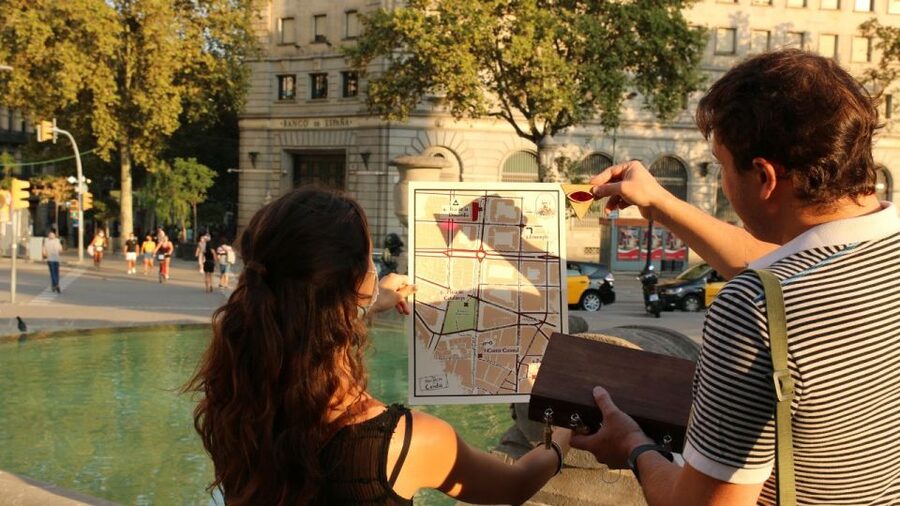
At $26 per person, the value depends on what you want from a city tour. You are not paying for a traditional guide delivering several hours of live commentary. You are paying for the private format, the prepared puzzle materials, the backpack, the treasure box, and a structured route through five important sights.
For a group that enjoys escape rooms, this can be a good use of an afternoon. One Australian participant described it as an outdoor escape room, with puzzles that were challenging enough and a distance that felt substantial without being excessive. That is a helpful way to think about the activity.
The price is less compelling if you mainly want detailed architectural or historical explanation. In that case, a conventional guided walk may give you more spoken context. Here, the stories are delivered through the book and challenges, and your attention is split between sightseeing and solving.
I also think the private booking improves the value. Your group gets its own game rather than sharing materials or waiting for strangers. Families and friends who enjoy working together will likely make better use of the format than solo sightseers.
Timing, food, and practical planning
Allow the full 2.5 hours, even though the puzzle portion is expected to take about two hours. One French booking took longer than the suggested time despite not stopping along the way, so do not schedule a train, museum entry, or restaurant reservation immediately after the finish.
Wear comfortable shoes and keep your hands free for the backpack and puzzle materials. The walk crosses several central districts, and the route can feel more demanding if you are already tired from a full day of sightseeing.
The organizers encourage you to take your time, shop, eat, and take photographs. I would schedule the activity earlier in the day if you want to explore the route at leisure. If you need to finish quickly, treat it as a focused game and save longer visits to the sights for another time.
Cancellation is free up to 24 hours before the start, and you can reserve now and pay later. Those options are useful if your Barcelona schedule is still changing. Check available starting times before booking, since the duration makes this more than a quick spare-hour activity.
Who should book The Secret of Cerdà?
I would choose this for adults, couples, families with older children, and friends who like puzzles. It works especially well for people who have already seen Barcelona’s major sights and want a different reason to walk through them, but it can also serve as an engaging first look at the center.
You should think twice if you dislike maps, codes, or making decisions as a group. The experience is self-guided, so you do not get a guide who can fill every quiet moment with facts or keep you moving when the group stalls.
I would also avoid booking it alone. The activity is built around discussion, shared searching, and teamwork. With two or more people, even a difficult clue becomes part of the fun rather than a private test of patience.
Should you book it?
Book The Secret of Cerdà if you want a private Barcelona walk with a clear mission, not just a list of landmarks. The best parts are the outdoor escape-room format, the five central stops, the freedom to pause, and the final treasure-box payoff.
Skip it if your priority is a detailed guided lecture, a fast route, or a fully planned visit inside each landmark. At $26, it offers solid value for puzzle fans and families, especially when you use the whole 2.5-hour window. Give yourself extra time, wear good shoes, and expect the occasional stubborn lock.
FAQ
Where does the Barcelona treasure hunt start?
It starts at Carrer de Trafalgar 17, near Plaça Urquinaona in central Barcelona.
How long does the experience take?
The activity lasts about 2.5 hours. The game itself is expected to take around two hours, with extra time available for photos, food, shopping, and sightseeing.
Which places are included on the route?
The route includes Illa de la Discòrdia, the Gothic Quarter, Eixample, Plaça de Catalunya, and the Palau de la Música Catalana. You also return to Barcelona’s starting point after completing the game.
Is the activity guided?
You pick up the backpack from a host or greeter, then complete the main activity as a self-guided game. No individual guide name is provided.
What is included?
The booking includes a backpack with a treasure map, treasure box, book of challenges, and magical tools.
Can children take part?
Children seven and older can take part with their parents. The game was designed for adults, and children under six are not suitable for the activity.
What languages are available?
The experience is available in English, Spanish, Catalan, and French.
Just added around Spain
- Barcelona: Escape Room Experience and Sailing Cruise★ 4.5 · 2 reviews
- Barcelona: The Search for the Snake Stone City Treasure Hunt★ 4.6 · 12 reviews
- Escape room “The gratest show on earth” at Holidayworld★ 3.9 · 3 reviews
- e-Scavenger hunt Seville: Explore the city at your own pace★ 3.5 · 4 reviews
- Seville: The Inheritance Exploration Game★ 4.0 · 8 reviews
- Seville Scavenger Hunt and Highlights Self Guided Audio Tour★ 5.0 · 5 reviews
- Secrets of Casco Viejo: Self-Guided Puzzle Adventure in Bilbao★ 5.0 · 3 reviews
- Year of Love in Bilbao: Self-Guided Romantic Puzzle Quest★ 4.5 · 4 reviews
Treasure Hunts, compared.
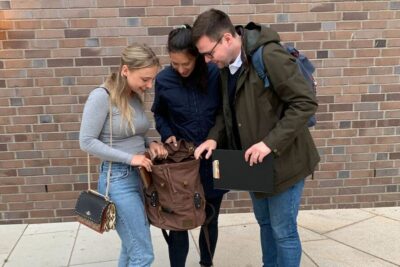

St. Augustine: Treasure Hunt Cruise with Onboard Show
Read our review →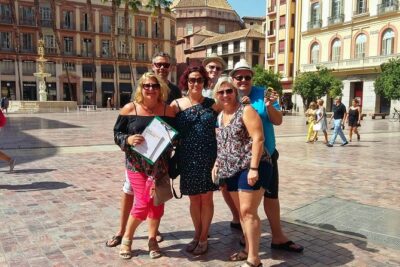

Fun, Flexible Treasure Hunt Around Manchester with Cryptic Clues & Hidden Gems
Read our review →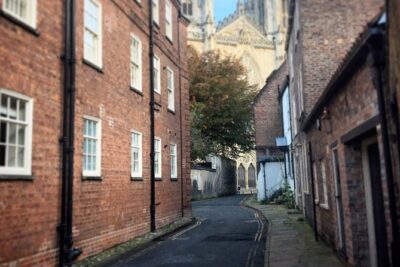
Fun, Flexible Treasure Hunt Around York with Cryptic Clues & Hidden Gems
Read our review →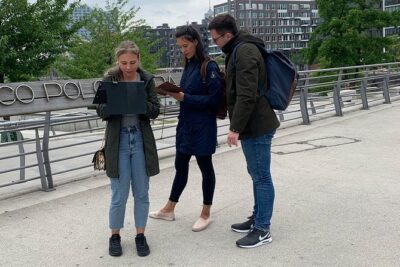
Fun, Flexible Treasure Hunt Around Bath with Cryptic Clues & Hidden Gems
Read our review →York Treasure Hunt Adventure: The Mystery of The Gunpowder Snitch
Read our review →Browse the lists this tour appears in