
Reviewed · SYRACUSE
Groovy Geneva Scavenger Hunt
The most unusual part of Groovy Geneva Scavenger Hunt is its mix of self-guided freedom and live remote support. You explore Geneva on your own, but a host stays in touch by text, sends clues, reacts to your photos, and helps when your team hits a snag.
I like the chance to find new local businesses and places instead of following a fixed sightseeing script. I also like the easygoing format: families, dogs, small friend groups, birthday parties, and company teams can all play together. The main thing to consider is the phone requirement. Without a charged smartphone, GPS, mobile data, and a working domestic number, the hunt cannot run smoothly.
I also like that the game gets you talking with local people. A few clues may call for help from someone in town, which turns a simple walk into a social challenge. Still, the two-hour time limit and remote format may feel less satisfying if you prefer a traditional guide walking beside you and explaining every stop.
Key points at a glance

- Start at Tim Hortons on Hamilton Street: The hunt begins at 451 Hamilton St in Geneva, NY, and ends back at the same meeting point.
- A live host guides you remotely: Your host sends the quest, follows your progress, cheers you on, and responds to photos and messages.
- Indoor and outdoor checkpoints: You may walk or drive between locations, with the route mixing town exploration and indoor stops.
- Clues come with silly challenges: Expect puzzles, photo tasks, bonus challenges, and prompts designed to push you beyond your usual comfort zone.
- Family and dog-friendly format: Service animals are allowed, and the experience is designed for families and groups with dogs.
- Your phone is part of the equipment: Bring at least one fully charged smartphone with GPS, data, photo, video, and text capability.
Starting at Tim Hortons on Hamilton Street

Your outing begins at Tim Hortons, 451 Hamilton St, Geneva, New York. This gives your group a clear, easy-to-find meeting place before the game starts. The activity also finishes there, so you do not need to arrange a separate pickup point at the end.
At the start, your remote host sends the digital quest. The host is not physically present in Geneva, so your team must be ready to read instructions, solve clues, and send updates from your own phone. That setup gives you freedom, but it also means one person in the group should take responsibility for messages and battery life.
The starting point is practical rather than ceremonial. You are not gathering for a long briefing or waiting for a walking guide. Once your team has the quest, you can get moving and begin working through the challenges.
More Scavenger Hunts in the USA
- An Epic Scavenger Hunt: New York City Central Park Adventure
★ 4.5 · 244 reviews - Creative Soul Scavenger Hunt of Santa Fe
★ 5.0 · 62 reviews - Keep Austin Weird Scavenger Hunt
★ 4.0 · 51 reviews
Solving clues across Geneva
The hunt takes you to a series of checkpoints around town. The exact stops are not listed in advance, which is part of the fun. You may walk or drive between them, depending on the clues, your group’s pace, and how far apart the tasks send you.
You can expect a mixture of indoor and outdoor locations. That variety matters. An entirely outdoor hunt could become tiring in poor weather, while an indoor-only game would miss the pleasure of seeing Geneva on foot. Here, the format gives your team a changing rhythm, though you should still dress for the day and be ready to spend time outside.
The clues are intended to show you parts of Geneva you might otherwise pass without noticing. The activity is not built around a formal lecture about local history. Instead, you learn by moving through town, paying attention, asking questions, and completing tasks tied to the places around you.
That makes the hunt a good choice for people who want to explore without committing to a traditional city tour. You get structure, but not a rigid route. You get prompts, but you still have to make decisions as a team.
The remote host keeps the game moving

Your host is the link between the digital game and the real town. You receive instructions remotely, then send photos, videos, and text messages as you complete tasks. The host can encourage your team, help with questions, and react to what you send.
This is one of the strongest features of the experience. A purely self-guided scavenger hunt can lose momentum when a clue is unclear or the group gets distracted. Here, a live person is available to keep the game lively.
The tradeoff is that your experience depends on communication. Your phone must be fully charged and able to use GPS, send and receive data, and handle photos, videos, and text messages. You must also provide a correct, working domestic phone number when booking.
If you have an international number or run into technical trouble, you can use WhatsApp or email instead, but you need to provide that contact information ahead of time. I would sort this out before the day of the hunt, not while standing at the meeting point with a group waiting.
Wacky challenges and bonus tasks
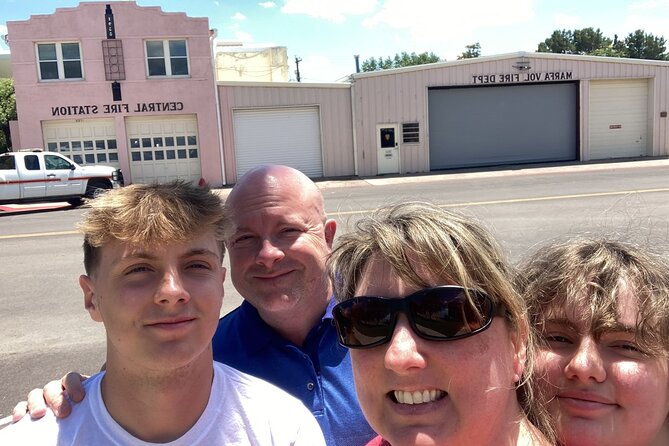
The clues are only part of the activity. You will also face oddball challenges designed to make your group laugh and take a few harmless risks. Some tasks may ask you to photograph something, perform an action, solve a puzzle, or interact with your surroundings.
The point is not simply to reach the next location. Your team earns its fun by working together, thinking quickly, and being willing to look a little silly. That can be especially useful for groups that already know one another but need an activity with more energy than dinner or drinks.
Bonus challenges add flexibility. If your group is moving quickly, they give you more to do. If you are having a great time with one particular task, you can enjoy the social side rather than rushing from checkpoint to checkpoint.
The phrase outside your comfort zone should be taken in the lighthearted sense. This is not a physically demanding expedition. The challenge is more social and creative than athletic. Still, shy participants may want to know that the game can involve photos, public tasks, and conversations with people in town.
Same streets, a different set of clues:
- Branson Murder Mystery- Branson’s Original #1 Murder Mystery
★ 5.0 · 1,513 reviews - The Escape Game Orlando: Epic 60-Minute Adventures on I-Drive
★ 5.0 · 730 reviews - The Escape Game Pigeon Forge: 60-Minute Adventures on The Island
★ 5.0 · 646 reviews - The Escape Game Cincinnati: 60-Minute Adventures at The Banks
★ 5.0 · 546 reviews
Meeting local people along the way
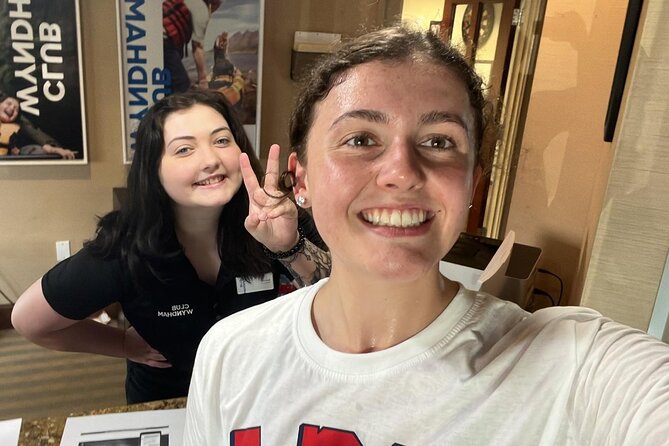
Some clues may require you to interact with locals. That is a useful change from the usual phone-based game, where the screen becomes the whole experience. You are encouraged to look up, ask questions, and use the people around you as part of the puzzle.
This can lead to small, unscripted moments that a standard tour cannot promise. You might learn about a place by speaking with someone who knows it, or simply enjoy the surprise of involving another person in your team’s challenge.
There is also a limit to this style of play. Not everyone wants to approach strangers, and not every passerby will be in the mood to participate. If your group is reserved, you may prefer the clues that can be solved through observation, photos, or teamwork alone.
The remote host can help keep this balanced. If a task is unclear, your team can send a message and ask for guidance. The host is not there to replace local interaction, but to help the game continue when a challenge does not go as planned.
What the two-hour format means
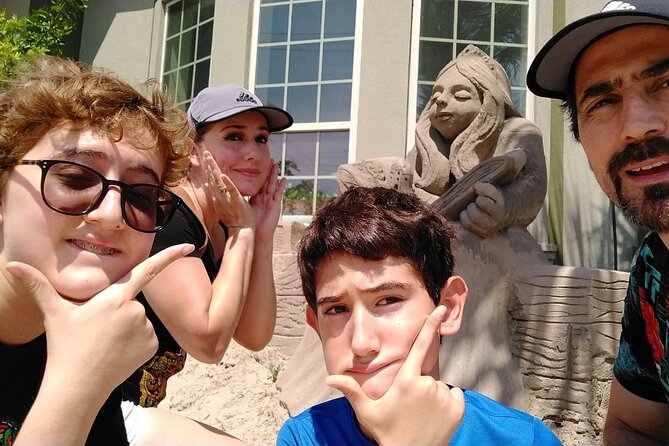
The hunt lasts about two hours. That is long enough to feel like a real outing, but short enough to fit into a day of sightseeing, a birthday schedule, or a company event.
A two-hour limit also creates a useful sense of purpose. Your group cannot spend forever debating every clue. You will need to divide tasks, make quick choices, and keep moving.
At the same time, you should not expect a full historical tour of Geneva in two hours. The experience is about playful discovery rather than detailed interpretation of every landmark. You may find new places and businesses, but the depth of information will depend on the clues and the conversations your team has along the way.
That distinction matters when you compare this activity with a conventional guided walk. Choose this hunt for participation, humor, and surprise. Choose another type of tour if your main goal is a structured account of Geneva’s past or a guide’s detailed explanation at each stop.
Is the hunt good for families and dogs?

The activity is family-friendly and dog-friendly, which makes it useful for groups with mixed interests. A family can work on clues together, while a dog can accompany the outdoor portions of the route. Service animals are allowed.
You should still think about your own group’s needs. The activity alternates between indoor and outdoor settings, and you may walk or drive between checkpoints. Young children may need help with the phone, clues, and waiting during conversations with locals.
The format also works well for birthdays, bachelor and bachelorette groups, friend trips, and corporate teams. The shared tasks give people something to talk about, while the remote host adds a little structure without forcing everyone into a formal group lesson.
For a work group, this can be a better fit than a passive meal because people must cooperate. For a family, it offers a reason to explore Geneva together rather than letting each person follow a separate interest.
Value for the money
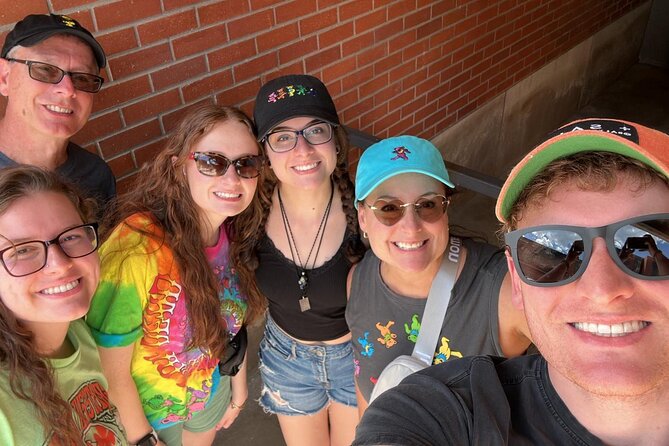
No tour price is provided here, so I cannot judge the exact cost or compare it fairly with other Geneva activities. The value depends on how many people join your team and how much you enjoy interactive games.
You are paying for more than a list of clues. The experience includes a live remote host, an organized two-hour activity, photo and message interaction, and a route that sends you to different parts of town. For a small group splitting the cost, that may be good value, especially for a birthday or special outing.
The value is weaker if your group does not like public challenges, phone-based games, or making its own way between stops. You may also prefer a standard tour if you want a guide physically present and a set itinerary with known sights.
I would compare the cost with other group entertainment, not only with walking tours. A meal or escape room gives you a fixed setting. This hunt gives you movement, local contact, and the chance to discover businesses or places you did not plan to visit.
Group size and the best way to organize your team
The maximum group size is 30 people. That makes the activity suitable for a larger gathering, though a very large group may work best when divided into smaller teams.
Each team needs at least one fully charged smartphone. In practice, I would bring a second charged phone if possible, even though only one is required. That gives you a backup if the main device loses power or develops a connection problem.
Before starting, choose one person to manage messages with the host. Another person can handle photos, while someone else keeps track of clues. Clear jobs prevent the common problem of everyone looking at the same screen while nobody watches the time.
A smaller group may move faster and make decisions more easily. A larger group can bring more ideas and more comic energy, but it may also take longer to agree. The best size depends on your group’s personality, not just the official maximum.
The strongest part: discovering places you did not plan to see
The most appealing detail about this hunt is its ability to redirect your attention. Instead of ticking off a famous attraction, you are asked to notice local businesses, streets, people, and small details.
That does not guarantee a specific landmark or a particular type of stop. The exact experience can vary with the route and the clues. But the format is designed to help you find parts of Geneva that are easy to miss when you follow a standard sightseeing plan.
The activity can also introduce you to places worth returning to later. A clue may bring you to a business you had not considered, or prompt you to note a location for another visit. That makes the hunt useful at the start of a stay, when you still have time to explore further.
If you live nearby, the same benefit applies. You may know Geneva’s main streets but still lack a reason to try a new business or explore a different block. The game gives you that reason.
Practical details before you book
Confirmation is provided when you book. Bring a fully charged smartphone with GPS, mobile data, and the ability to send photos, videos, and text messages.
Make sure the phone number on your reservation works in the United States. If you will use WhatsApp or email because you have an international number, send those details before the hunt.
The experience is near public transportation, and most people can participate. Since you may walk or drive between checkpoints, check the day’s weather and choose comfortable clothing and shoes.
Free cancellation is available if you cancel at least 24 hours before the start time. Cancellations within 24 hours are not refunded, and changes inside that window are not accepted. The cut-off follows local time in Geneva.
Should you book Groovy Geneva Scavenger Hunt?
Book it if you want an active group outing with puzzles, photos, local interaction, and a little harmless silliness. It is especially well suited to families, friend groups, birthdays, company teams, and curious locals who want to see Geneva in a less formal way.
I would also recommend it for people who like a loose plan with live support. You are free to explore on your own, but the remote host keeps the activity from becoming an aimless walk.
Think twice if you want a traditional guide, detailed historical commentary, or a fixed list of famous sights. Also confirm your phone, data connection, and contact details before booking. If those pieces are in place, this is a cheerful way to spend two hours discovering Geneva through teamwork rather than simply looking at it.
FAQ
Where does the Groovy Geneva Scavenger Hunt begin?
The hunt begins at Tim Hortons, 451 Hamilton St, Geneva, NY 14456, USA.
Where does the activity end?
The activity ends back at the starting meeting point.
How long does the scavenger hunt last?
The hunt lasts approximately two hours.
Is the activity guided in person?
No. A live remote host sends your digital quest, stays in contact by phone, responds to your messages, and helps with the challenges.
What phone equipment does each team need?
Each team must bring at least one fully charged smartphone with GPS and the ability to send and receive data, photos, videos, and text messages.
Can I cancel for a full refund?
Yes. You can receive a full refund if you cancel at least 24 hours before the experience start time. Cancellations made within 24 hours are not refunded.
Just added around the USA
- Vail Venture Scavenger Hunt★ 3.5 · 8 reviews
- Save the Mountain Escape Room Adventure★ 5.0 · 4 reviews
- Tybee Island, Georgia Scavenger Hunt★ 4.0 · 7 reviews
- Tucson Scavenger Hunt by Wacky Walks★ 4.5 · 2 reviews
- A Spectacular Scavenger Hunt: Center of the Universe★ 4.0 · 4 reviews
- Amazing Scavenger Hunt: Desert Oasis★ 3.5 · 3 reviews
- Thrilling Traverse City Scavenger Hunt★ 4.0 · 7 reviews
- Murder Mystery Detective Experience in Sierra Vista AZ★ 4.5 · 4 reviews
Scavenger Hunts, compared.


Amazing Cozumel Race: Small-Group Tour and Scavenger Hunt
Read our review →
An Epic Scavenger Hunt: New York City Central Park Adventure
Read our review →

Escaping and spying on the Berlin Wall Scavenger hunt
Read our review →