

Reviewed · STAVANGER
e-Scavenger hunt Stavanger: Explore the city at your own pace
Stavanger’s best feature is its mix of old wooden streets, oil-era identity, harbor life, and compact city sights. This self-guided phone hunt links them into one outing, letting you explore at your own pace rather than follow a guide’s fixed route.
I like the low group price, especially for up to six people, and the range of questions, which includes multiple choice and information-finding tasks. I also like that the route reaches places you might skip on a short city walk. The main drawback is that the clues are not always in a neat order, so you may walk back and forth and tire before finishing.
Quick facts for planning your Stavanger outing

- Three to four hours on foot: Allow a good part of your day, with extra time if you enter museums or linger at the sights.
- One price for up to six people: At $37.49 per group, the cost can be very reasonable when shared by family or friends.
- A broad mix of Stavanger sights: Expect wooden houses, the harbor, Stavanger Cathedral, museums, gardens, a tower, and cultural spaces.
- You control the order: The questions can be completed in the order you choose, which gives you freedom but can also create extra walking.
- Bring your own phone and data: A mobile ticket is supplied, but smartphone use and mobile data are not included.
- Private and English-language: Only your group participates, and the activity is offered in English.
Starting at Nedre Strandgate 62
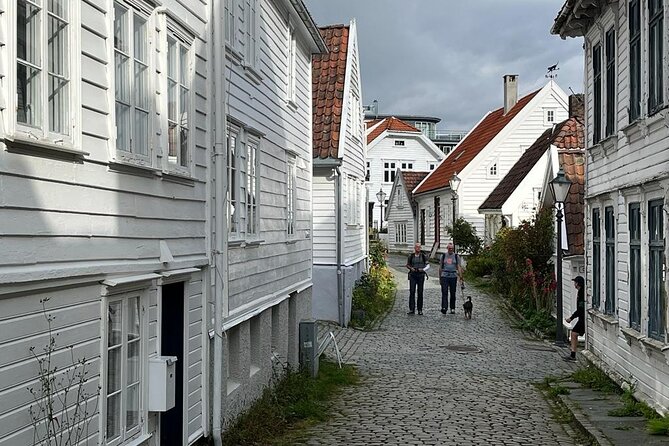
The hunt begins at Nedre Strandgate 62, 4005 Stavanger, and returns to the same meeting point. That makes the practical side simple, especially if you are fitting this into a day in the city.
You receive confirmation when booking and use your phone to access the game. There is no guide waiting to lead you from stop to stop, so you need to be comfortable reading directions, answering questions, and keeping your group moving.
The activity is available from noon to midnight every day during the stated operating period, April 26, 2022 through December 8, 2026. The wide time window is useful if you arrive late, prefer an evening walk, or want to avoid the middle of the day.
I would begin with a charged phone and a clear data connection. Since the phone and data are your responsibility, check roaming costs before you start. Service animals are allowed, public transportation is nearby, and most people can take part.
More Scavenger Hunts in the world:
- Hamburg: Scavenger Hunt Self-Guided Tour for Children
★ 4.5 · 319 reviews - Amazing Cozumel Race: Small-Group Tour and Scavenger Hunt
★ 5.0 · 291 reviews - 3hr Seaside Scavenger hunt
★ 5.0 · 250 reviews
Gamle Stavanger and the city’s wooden past
Gamle Stavanger is one of the most appealing early stops. This historic quarter is made up largely of restored wooden buildings from the 18th century and early 19th century.
The value here is visual and immediate. You get narrow streets, painted wooden homes, and a clear sense of how different Stavanger looked before modern office blocks and petroleum money changed the city. The hunt gives you a reason to slow down and look closely instead of simply passing through.
One nearby stop is a preserved house that remains almost exactly as it was several hundred years ago after its resident died. Its garden is worth seeing in any season. The description is intentionally simple, so the question may ask you to notice details on site rather than absorb a long lecture.
That is part of the appeal of this format. You are not just ticking off a street name. You are looking at doors, gardens, building details, and small clues that can make old Stavanger feel more personal.
The Petroleum Museum and Stavanger’s modern identity
The Norwegian Petroleum Museum gives the route a useful change of tone. Stavanger is not only a city of old houses and church towers. Oil shaped its economy and its place in modern Norway, and this museum explains that story through original objects, films, and interactive exhibitions.
If you are interested in industry, engineering, or how a city changes, this is an important stop. It also helps balance the older sights. The wooden quarter shows Stavanger’s earlier character, while the petroleum museum points to the forces that made the city internationally known.
The scavenger hunt may direct your attention to a particular display or answer. Still, you should allow extra time if the museum interests you. A three-hour pace may work for a quick run through the city, but stopping properly at indoor sights can stretch the outing toward four hours or beyond.
Skagenkaien and the harbor edge
Skagenkaien is famous for its old boathouses and Norwegian architectural character. This waterfront section offers a different view of Stavanger, with the harbor setting adding open space after the tighter streets of Gamle Stavanger.
I like this part of the route because it connects the city’s buildings with its maritime life. The old houses are not isolated museum pieces. They face the water and help explain why Stavanger developed as a port.
The harbor is also a natural place to pause. You can work through a question, look across the waterfront, and let the pace become your own. The downside is that the route may send you away and back toward the same area later. If you are trying to finish quickly, keep an eye on the map and question order.
More Escape Games in the world:
- Branson Murder Mystery- Branson’s Original #1 Murder Mystery
★ 5.0 · 1,513 reviews - Sofia Escape Room – Teorema Rooms
★ 5.0 · 895 reviews - Saw2 vs Squid Game – Escape Game Montpellier
★ 5.0 · 752 reviews - Prague Wizard Experience Magic School Escape Game
★ 5.0 · 746 reviews
Stavanger Cathedral and Valberg Tower

Stavanger Cathedral is described as the only medieval cathedral in Norway that has kept its original architecture. That gives the stop unusual weight in a city visit. You are seeing a building whose form has survived across centuries, rather than a modern reconstruction or a church that has been completely remade.
The cathedral is one of the route’s strongest historical points. Even if you are not especially interested in religious buildings, its age and original design make it worth attention.
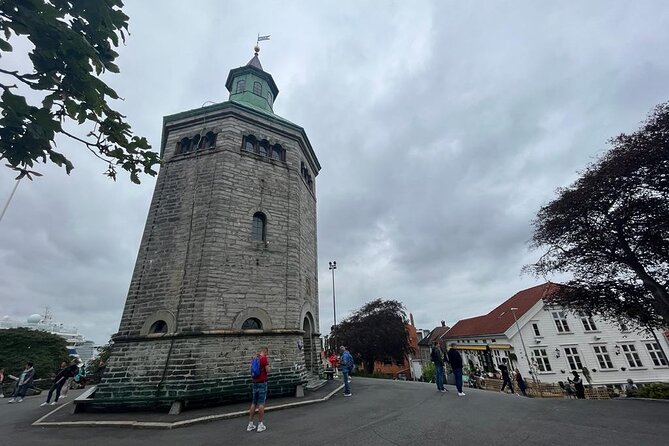
Valberg Tower, or Valbergtårnet, offers a different kind of perspective. Built between 1850 and 1853, it was once Stavanger’s observation tower. The view over the city is the reason to make the climb or visit the site.
This is one place where the hunt’s walking demands may be worthwhile. The tower gives you a chance to understand the layout of the streets, waterfront, and older quarters. It may also help you make sense of the route if the clues have taken you in a less direct order.
Canning, shipping, and everyday work

The canning museum explains how sardines were processed, smoked, and canned about a hundred years ago. Original equipment and tools make this more than a general account of food production.
I find this kind of stop valuable because it deals with ordinary work. Big landmarks tell you about power and religion, but a canning factory shows the routines that supported local families and trade. It is a more grounded look at Stavanger’s past.
The maritime museum adds another piece. Its exhibitions are housed in some of the city’s best-preserved merchants’ buildings and cover the last 200 years of maritime history.
Together, the two museums give you a practical sense of Stavanger as a working port. One focuses on a particular industry, while the other takes a wider look at ships, merchants, and life connected to the sea. If you want to see every indoor stop properly, do not treat the advertised three to four hours as a strict limit.
Art, books, cinema, and public life

The route includes a free place aimed at photography and contemporary art. The name is not provided in the activity details, but the stop is clearly suited to anyone who wants a short cultural break without another admission fee.
That free entry matters when you are watching the cost of a day out. It also gives the hunt some variety. After old houses, museums, and historic buildings, contemporary art can reset your attention.
Another stop is a cultural center with events and activities, a cinema, and a library for books and media. It sits near a pleasant square with terraces. This is a good place to see Stavanger as a living city rather than only a collection of preserved sites.
The square may be useful for a rest, but do not assume every activity or event is running during your visit. The supplied information confirms the center’s role, not a particular schedule.
Kielland, Ledaal, and Stavanger’s grander homes
Alexander Kielland came from a wealthy Stavanger family. His father, Jens Zetlitz Kielland, was a banker and vice-consul of Portugal, and he also had artistic interests, including writing novels.
This stop adds a personal story to the city walk. Instead of seeing only buildings, you get a link to a local family whose social position and creative life reflect Stavanger’s prosperous merchant culture.
Ledaal offers another look at wealth and status. It is a manor house that serves as the official residence of the King of Norway in Stavanger. The garden is free to explore, which gives you a pleasant outdoor stop without another admission charge.
I would pay attention to how different Ledaal feels from the modest wooden homes in Gamle Stavanger. The contrast is useful. One shows everyday urban life, while the other reflects the city’s more privileged side and its connection to national public life.
Stavanger Theater and the old-style street
Stavanger Theater first held a performance on April 15, 1883, with Olaus Olsen as director. The building is still used today.
That detail gives the theater a strong sense of continuity. It is not simply an old facade for photographs. It remains tied to performance and public culture, which makes it a worthwhile stop even if you do not attend a show.
The final area is described as a small place in the heart of Stavanger, with a distinctive row of old Norwegian-style buildings. The wording calls it Paseo por la calle. Whatever question the game asks here, look carefully at the arrangement of the buildings and the way the old style survives in the center.
This is the kind of stop that can be easy to miss on a hurried walk. The game’s questions give you a reason to pause and inspect it.
How the game format affects the experience
The activity is designed for a maximum of six people, and only your group takes part. That makes it a good fit for families, friends, or a small private party that wants something more active than a standard sightseeing walk.
The questions vary. Some are multiple choice, while others ask you to find information at the location. That variety keeps the game from becoming one long list of facts.
The biggest strength is freedom. You can complete questions in the order you choose, stop for food, spend longer in a museum, or adjust the pace for the least energetic person in your group.
The weakness is also freedom. Because the clues are spread around the center and are not always arranged in a clean sequence, you may walk back and forth. One participant found the repeated crossings too tiring and stopped before finishing. I would use a map, group the nearby stops mentally, and accept that the most efficient route may not follow the question order.
Is $37.49 good value for up to six people?
At $37.49 per group, the price is strongest when you have several people sharing it. A group of six pays only a small amount per person for three to four hours of activity. Even a couple may find it fair if they want a private, flexible way to see many parts of Stavanger.
The price does not include your smartphone or data. It also does not state that museum admission is included, so budget separately for any indoor entry fees that apply. Some stops, such as the garden at Ledaal and the contemporary art venue, are free according to the supplied details.
The value depends on how you like to sightsee. You are paying for the game structure and access to a self-guided city activity, not for a personal guide’s commentary. If you prefer facts delivered in order with no navigation work, this may feel less polished. If you enjoy solving clues and choosing your pace, the cost is attractive.
The experience has a 3.9 rating from seven reviews, so I would treat it as a promising but not flawless product. The strongest point is the chance to find places you might skip on a larger group tour. The clearest concern is the walking pattern.
Who should book this Stavanger game?
I would recommend it to people who enjoy independent exploring, short challenges, and a full look at the city’s different sides. Families and small groups can split the questions and make the outing social.
It also suits anyone with only a few hours who wants more structure than a random walk. The route covers old Stavanger, the harbor, the cathedral, the oil museum, maritime culture, local industry, gardens, art, and theater.
I would be more cautious if you have limited mobility, dislike smartphone activities, or want a carefully ordered route. The activity is open to most people, but the walking may be tiring when the clues send you back and forth.
Weather deserves attention, too. A cruise arrival can be disrupted by heavy rain or docking problems, and the cancellation terms are firm inside 24 hours. You can cancel for a full refund up to 24 hours before the start time, but cancellations or changes within that window are not refunded or accepted.
Should you book the Stavanger e-scavenger hunt?
Book it if you want a private, low-cost city game that reaches far beyond the postcard streets. The mix of wooden houses, oil history, maritime museums, gardens, art, and city views gives you a broad introduction to Stavanger.
Skip it if you need a straight-line route, a live guide, or guaranteed indoor museum time. For the best experience, bring a charged phone, confirm your data access, wear comfortable shoes, and plan to treat the route as a flexible city walk rather than a tightly timed tour.
FAQ
Where does the Stavanger e-scavenger hunt start and finish?
It starts at Nedre Strandgate 62, 4005 Stavanger, Norway, and ends back at the same meeting point.
How long does the activity take?
The estimated duration is three to four hours.
How many people can join one booking?
Up to six people can participate in one private group.
Is the activity guided?
No. It is a self-guided e-scavenger hunt that you use on your phone.
Is the activity available in English?
Yes. English is the stated language.
Do I need to bring a smartphone and mobile data?
Yes. Smartphone use and data are not included, so you need to provide both.
What is the cancellation policy?
You can cancel at least 24 hours before the start time for a full refund. Cancellations or changes made less than 24 hours before the start time are not accepted, and the amount paid is not refunded.
Just added around the world
- Valencia City Tour: A Treasure Hunt Experience★ 5.0 · 15 reviews
- Valencia Iconic Sights Scavenger Hunt★ 4.5 · 10 reviews
- Vail Venture Scavenger Hunt★ 3.5 · 8 reviews
- e-Scavenger hunt Valencia: Explore the city at your own pace★ 4.5 · 6 reviews
- Utrecht Scavenger Hunt and Highlights Self Guided Audio Tour★ 4.0 · 10 reviews
- Save the Mountain Escape Room Adventure★ 5.0 · 4 reviews
- Uppsala Scavenger Hunt and Sights Self Guided Tour★ 5.0 · 2 reviews
- Uppsala Self Guided Sherlock Holmes Murder Mystery Game★ 4.0 · 4 reviews
Scavenger Hunts, compared.


Amazing Cozumel Race: Small-Group Tour and Scavenger Hunt
Read our review →
An Epic Scavenger Hunt: New York City Central Park Adventure
Read our review →


Escaping and spying on the Berlin Wall Scavenger hunt
Read our review →
Browse the lists this tour appears in