
Reviewed · SETUBAL DISTRICT
Secrets of Setúbal: Exploration Game and Tour
Setúbal’s best sights are spread through its old streets, waterfront, squares, and side lanes. This phone-based city game links them with clues, directions, and small challenges, giving you a reason to look up from your screen and pay attention to the details around you.
I like the very low price, especially for a private activity, and I like the route’s range. You move from a hilltop viewpoint to a medieval arch, a cathedral, a monastery, local shops, a fishing dock, and a major market. The route also leads you away from the main streets at times, which gives you a more local feel.
The main catch is simple: this is a game, not a narrated walking tour. You cannot use it as a normal audio guide while ignoring the puzzles. If you want facts delivered by a guide, choose another format. If you enjoy solving clues as you go, this offers good value.
Key points to know before you book
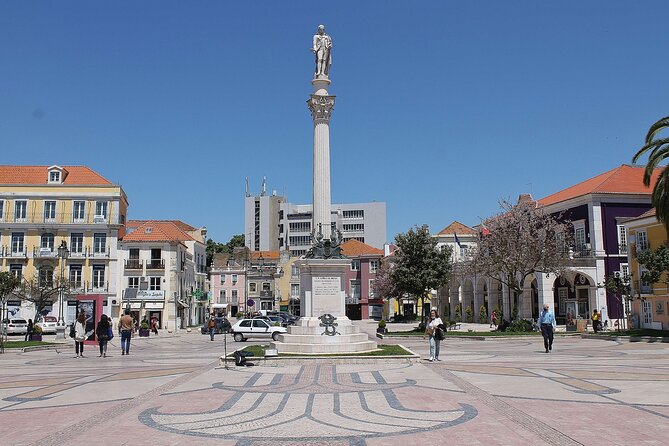
- Fifteen Setúbal stops cover viewpoints, churches, civic buildings, fountains, markets, and the waterfront.
- Clues and challenges control the route, so the experience is not a conventional self-guided walking tour.
- The $7.25 price is hard to beat for a private activity, though the low fee does not include a live guide.
- The route lasts about 1 hour 15 minutes to 1 hour 45 minutes, depending on your pace and how long you pause at each place.
- You start at Miradouro de São Sebastião and the stated endpoint is Fishermen’s Dock.
- Small streets and less obvious corners are part of the appeal, giving you a broader look at Setúbal than a direct walk between major sights.
What kind of Setúbal experience is this?
Secrets of Setúbal is built around exploration. You receive directions through an app, then solve a clue or challenge to move on. At each stop, you can look around and decide when to continue.
That format changes the rhythm. You are not following a guide who gives a steady stream of dates and architectural details. Instead, you notice a doorway, stone carving, fountain, square, or view because the game sends you there. The information is tied to the act of finding the place.
For me, that works best when you want a light introduction to Setúbal rather than a full history lesson. The route touches many parts of the city, and the clues give your walk a clear purpose. You will also need to be comfortable using your phone and solving the tasks as intended.
The private format is useful for couples, families, or friends. Only your group takes part, so you can work through the clues together without being rushed by strangers. Group discounts are available, although the supplied details do not specify the discount amount.
More City Exploration Games in Portugal:
- Mysteries of Alfama: Lisbon Exploration Game and Tour
★ 4.0 · 12 reviews - Lisbon Secrets of the Freemasons: Exploration Game and Tour
★ 5.0 · 9 reviews - Romantic Faro: Whisper of Love Exploration Game and Tour
★ 3.0 · 3 reviews
Starting above the city at Miradouro de São Sebastião
The activity begins at Miradouro de São Sebastião on Rua Forte. This viewpoint gives you a useful first look at Setúbal and its setting before you head into the streets.
The stop is free, and the planned visit is about seven minutes. That is enough time for a few photographs and a quick sense of direction. I would not expect a long scenic pause here, so arrive ready to begin rather than treating the start as a separate sightseeing visit.
Starting at a viewpoint is a smart choice. You get a sense of the city’s geography before the route becomes more enclosed. It also gives the game an easy opening: look out, get your bearings, and prepare to follow the first clue.
Finding the Arco de São Sebastião
The next stop takes you to Travessa da Porta do Sol and the Arco de São Sebastião. The stone arch is an early example of the route’s approach. It is not simply placed on a list of sights. You reach it by following directions, reading a clue, and solving the challenge.
That matters because small features can be easy to miss when you walk without a goal. The arch’s stonework and historic role give you something concrete to look for, while the surrounding lane helps show how Setúbal’s older streets fit together.
You can stay longer once you arrive, then start the next set of directions when ready. The planned time is seven minutes, but the stop is flexible in practice. If you enjoy photographing architectural details, allow more time here.
Coastal defenses at Baluarte de Nossa Senhora da Conceição
At Tv. do Postigo do Cais 17, the game points you toward Baluarte de Nossa Senhora da Conceição. This fortification had a practical purpose: it helped monitor and defend the coastal area when maritime activity was more intense.
This is one of the route’s useful shifts in subject. You move from an archway in the old city to a site connected with Setúbal’s relationship to the sea. That connection continues later at the fishing dock and the market.
The stop is free, and the stated visit time is about seven minutes. You may find that the fortification is more rewarding as part of the route than as a long standalone visit. The clue adds context and gives you a reason to examine the site rather than simply pass by.
More Escape Games in Portugal:
- The 7 Seas – Epic Escape Game in Carvoeiro
★ 5.0 · 93 reviews - Queer Lisbon – A Treasure Hunt in LGBT History
★ 5.0 · 71 reviews - The Bank Heist – Epic Escape Game in Carvoeiro
★ 5.0 · 64 reviews - Lisbon: Old Town Immersive Escape Game with Live Actors
★ 5.0 · 31 reviews
Setúbal Cathedral and the city’s religious past
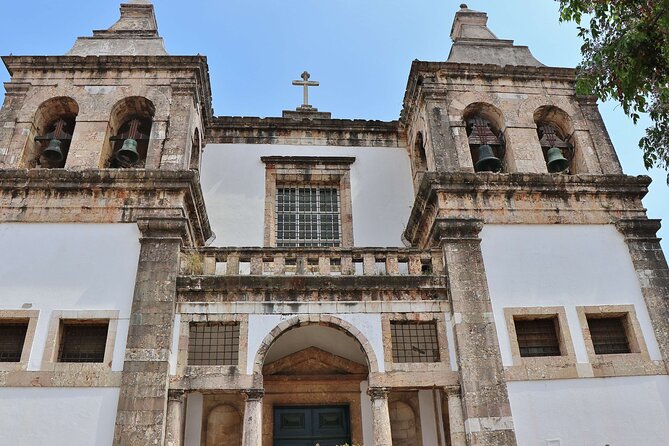
The Catedral de Santa Maria da Graça, also called Setúbal Cathedral, is the fourth stop. Construction began in the 15th century, and the building brings together Gothic, Renaissance, and Manueline influences.
That mix gives you several details to notice instead of one single style. The cathedral is also a good place to slow down after the first few clue-based stops. The planned time remains around seven minutes, but you can choose to spend longer before continuing.
The route description presents the cathedral as a place to explore rather than promising an included interior tour or special access. Keep that distinction in mind. You are being directed to the building and given a challenge connected with the stop, not led inside by a local guide.
Civic Setúbal at Paços do Concelho
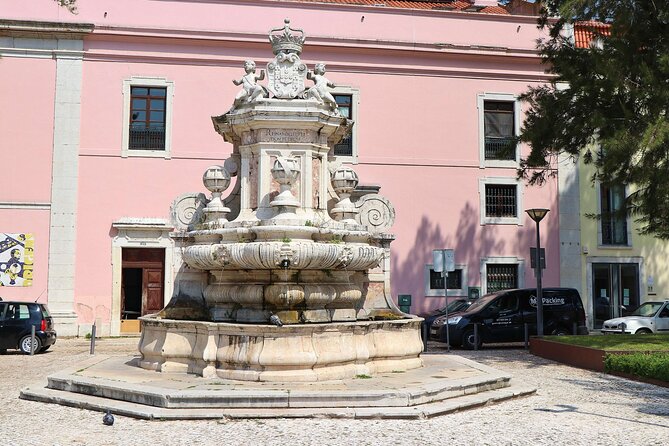
The route then reaches Paços do Concelho on Rua do Concelho. This is Setúbal’s City Hall and the center of municipal government.
A civic building may seem less dramatic than a cathedral or waterfront, but it helps round out the picture of the town. The game does not focus only on monuments. It also shows you places connected with everyday public life and local administration.
This stop is another example of the route’s broad coverage. You are not simply walking between major attractions. You are being asked to notice how the city works, including its public squares, official buildings, and information services.
Two tourism stops with different uses
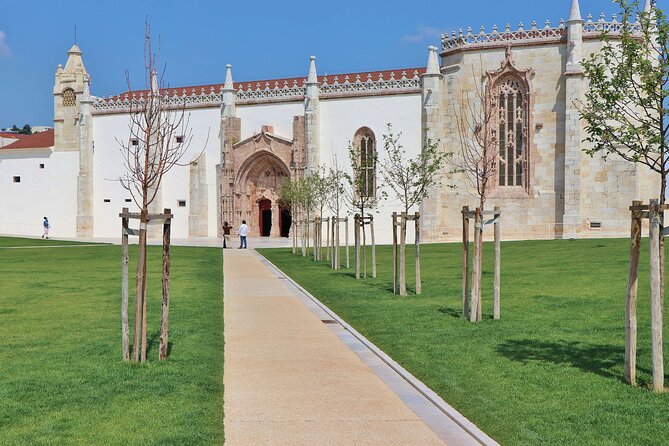
Casa do Turismo Setúbal is the next stop. It is the official tourist information center, so it can be useful beyond the game itself. If you want extra ideas for the rest of your day, this is a sensible place to note down.
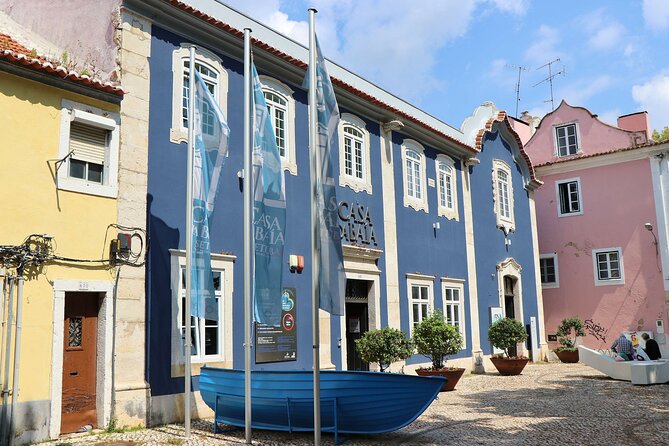
The route also includes Casa da Baía later on. That center focuses on Setúbal and the bay area, with cultural and tourism information. Having both locations in the route gives you two points where you can learn about the city beyond the immediate clues.
The practical point is that the activity can help you plan after it ends. You may pass attractions or areas you want to revisit, and these information centers can help you decide what deserves more time.
Praça de Bocage and Setúbal’s literary link
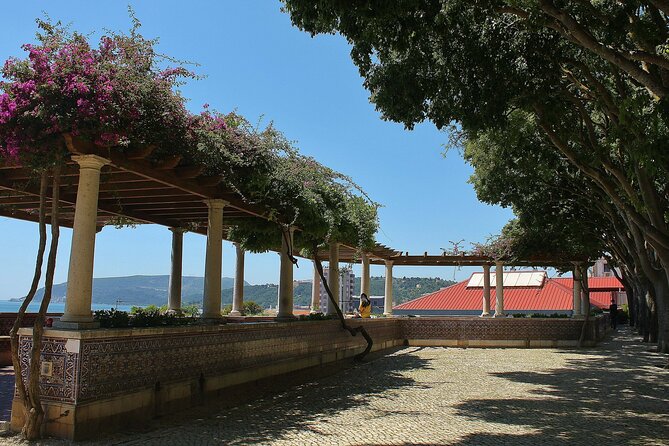
Praça de Bocage is named for Manuel Maria Barbosa du Bocage, a well-known Portuguese poet. The square is a central meeting place and one of the route’s more public, open stops.
This is the sort of place where you can pause for a drink or simply watch city life, though the supplied details do not promise any included refreshment stop. The stated time is about seven minutes, so a longer break would add to the total duration.
I like this stop because it connects a physical place with a local cultural figure. The game gives you a reason to learn the name, see the square, and place it within Setúbal’s civic center.
The former Monastery of Jesus
The Church of the former Monastery of Jesus, or Mosteiro de Jesus, is among the most significant stops on the route. The complex is known for its cloisters, carved stonework, and Portuguese azulejos.
The monastery also connects with Manueline design, a style strongly associated with Portugal’s late 15th and early 16th centuries. You get a look at the religious and architectural side of Setúbal in one place.
Allow extra time if decorative details interest you. The planned stop is seven minutes, but that can pass quickly around carved stone and tilework. The activity does not include a specialist guide, so use the clues as a starting point and examine the building at your own pace.
Casa das Quatro Cabeças
On Rua de Fran Paxeco, the game sends you to Casa das Quatro Cabeças, or House of Four Heads. Four carved stone heads decorate the facade, and they are associated with important figures from Setúbal’s past.
This is exactly the kind of stop that suits a clue game. A distinctive detail on a building becomes the answer you need to find, and the act of searching makes the facade easier to remember.
Do not expect a large attraction with a long visit. The value is in noticing the unusual feature and understanding that Setúbal’s character is also found in modest buildings and side streets.
Fountains and squares at Chafariz Sapal
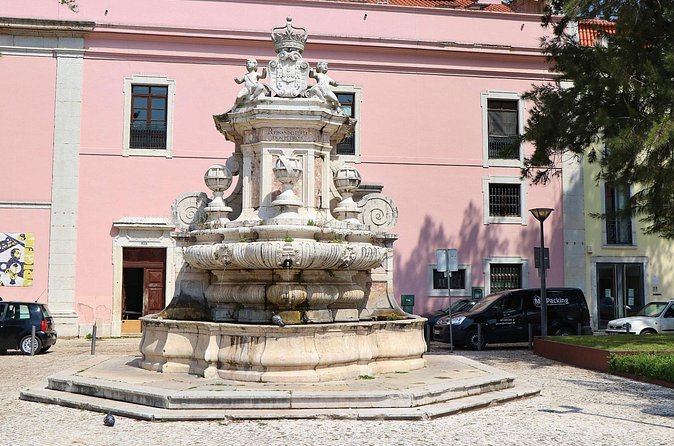
The route continues to Chafariz Sapal and Praça Teófilo Braga. Chafariz Sapal is a historic fountain, while the square is a local gathering point.
Together, they offer a short look at public spaces shaped by water, movement, and daily life. The stop is free, and the suggested time is seven minutes. It is another place where the game encourages you to look closely instead of rushing along a main road.
The route’s French-language feedback praised this kind of discovery, especially the chance to leave the main streets and find fountains, monuments, small lanes, and views. That is the strongest reason to choose this activity over a basic map walk.
The Pelourinho and old civic power
The Pelourinho de Setúbal, or Pillory of Setúbal, is the next historical marker. Pillories are tied to older systems of public authority and justice, making this a compact but meaningful stop for anyone interested in Portugal’s civic past.
The activity gives you a seven-minute target and a clue to solve. You may want to pause longer if you are studying the monument, but the design of the experience keeps the visit moving.
This stop also shows why the route works better as a sequence than as a collection of isolated sights. The pillory, City Hall, cathedral, monastery, and squares each reveal a different part of Setúbal’s development.
Mercearia Confiança de Troino
Mercearia Confiança de Troino is a historic grocery store and one of the route’s most human stops. Instead of focusing on a grand monument, the game brings you to a place linked with local shopping, memory, and community life.
For me, this is the kind of inclusion that gives the walk more character. A grocery store can tell you something about ordinary life that a church or fortress cannot. You get a glimpse of Setúbal as a lived-in town, not just a collection of sights for a day trip.
The stop is listed as free and takes about seven minutes. Be respectful if the shop is operating when you arrive. The activity gives you the location, but it does not promise a private visit or a tasting.
Casa da Baía and the route toward the water
Casa da Baía celebrates Setúbal and the bay area and also functions as a cultural center and tourism information point. This stop brings together local nature, culture, and practical visitor information.
It is a useful bridge between the inland streets and the maritime part of the route. After spending time around civic buildings, religious sites, fountains, and shops, you begin moving toward the water.
The center can also help you understand why the waterfront matters to Setúbal. The activity does not include a separate bay excursion, so think of this as an introduction rather than a full coastal outing.
Fishermen’s Dock and the maritime finish
Doca dos Pescadores, or Fishermen’s Dock, offers a direct look at Setúbal’s fishing traditions. It is a fitting place to end because the route has already introduced coastal defenses and the bay.
The dock is not presented as a polished attraction with a formal performance or guided demonstration. Its appeal is the working maritime setting and the chance to see a part of local life connected with fishing.
The stated endpoint is Fishermen’s Dock on Avenida José Mourinho. Follow the app’s directions for the final approach. The route information also places Mercado do Livramento among the stops, with the market listed after the dock in the sequence provided, so confirm the order shown in your app before starting.
Mercado do Livramento and the strongest food stop
Mercado do Livramento is described as a major local market and one of Setúbal’s key places for food and daily trade. It is likely to be one of the most rewarding stops for anyone who enjoys seeing how a city shops and eats.
The market gives the game a lively final note, with a very different mood from the cathedral, pillory, or monastery. You can look at the displays, notice the activity around the stalls, and decide if you want to return later with more time.
Do not assume food tastings or purchases are included. They are not specified. Treat the market as a place to explore, then budget extra time if you want to shop or eat.
Timing, price, and the phone-based format
The advertised duration is about 1 hour 15 minutes to 1 hour 45 minutes. Fifteen stops at roughly seven minutes each already account for about 105 minutes, so the longer estimate makes sense. Your actual time will depend on how quickly you solve each challenge and how long you pause.
At $7.25 per person, the price is excellent if you want a structured way to see Setúbal without paying for a private guide. You are paying for the game route and app-based experience, not live commentary from a guide.
The activity is offered in English and runs daily from 8:00 AM to 8:00 PM during the stated operating period, July 26, 2023 through February 7, 2027. Confirmation arrives at booking, and free cancellation is available up to 24 hours before the start time. Cancellations inside that window are not refundable.
Service animals are allowed, public transportation is nearby, and most people can participate. No special physical requirements are stated, but you should be ready to walk through city streets while using a phone and following directions.
Who should book Secrets of Setúbal?
Book it if you like puzzles, independent exploring, and a route that mixes famous buildings with smaller local sights. It is especially suitable for a private group that wants a shared activity rather than a lecture.
It also works well if you have limited time and want an organized first look at Setúbal. The route covers enough ground to help you decide which places deserve a second visit.
Skip it if you want a traditional guide, detailed spoken history, or the freedom to wander without solving clues. The first available rating was only 3.5 from two ratings, and the reason is clear: someone expecting a self-paced narrated walk can feel misled. Read the format carefully before booking.
Should you book it?
At $7.25, I would book Secrets of Setúbal if the game format appeals to you. The route reaches viewpoints, churches, civic buildings, fountains, a historic shop, the fishing dock, and the market, while the private setup keeps the experience flexible for your own group.
Choose a traditional guided walk instead if facts and interpretation matter more than discovery. This experience is at its best when you want to find Setúbal’s details for yourself, solve a few clues, and see more than the main street.
FAQ
How much does Secrets of Setúbal cost?
The price is $7.25 per person. Group discounts are available, but the discount amount is not specified.
How long does the activity take?
The estimated duration is about 1 hour 15 minutes to 1 hour 45 minutes.
Is this a traditional guided walking tour?
No. It is a game-based activity using directions, clues, and challenges through an app. It does not operate as a narrated walking tour with a live guide.
What language is the activity offered in?
The experience is offered in English.
Where does the activity begin?
It begins at Miradouro de São Sebastião, on Rua Forte in Setúbal.
Where does the activity end?
The stated endpoint is Fishermen’s Dock at Avenida José Mourinho 32, Setúbal. The app provides directions to the final stop.
Can I cancel for a refund?
Yes. You can cancel at least 24 hours before the start time for a full refund. Cancellations or changes made less than 24 hours before the start time are not refunded or accepted.
Just added around Portugal
- Treasure Hunt and Walking Tour in Sintra★ 5.0 · 5 reviews
- Évora Scavenger Hunt and Sights Self-Guided Tour★ 5.0 · 2 reviews
- Self-Guided Scavenger Hunt and Tour in Porto★ 5.0 · 3 reviews
- Love in Porto: Self-Guided Romantic Puzzle Walk★ 4.0 · 5 reviews
- Porto by the Ocean: Self-Guided Puzzle Adventure★ 5.0 · 2 reviews
- Amazing Secrets of Porto: Self-Guided Puzzle Adventure★ 4.5 · 5 reviews
- Self Guided Puzzle Adventure in Portimao★ 4.5 · 5 reviews
- Lisbon Old Town: Exploration Game and Tour★ 3.5 · 2 reviews
City Exploration Games, compared.
Sibiu Old Town Exploration Game and Self-Guided Tour
Read our review →
Glasgow Ghost Hunt: The Soul That Got Away Exploration Game
Read our review →
Rotterdam Highlights & Spies: Interactive City Game
Read our review →
Discover Utrecht with a self-guided Outside Escape city game tour
Read our review →
Bristol Street Art: Banksy Exploration Game and Tour
Read our review →
Frankfurt Old Town & Emperors: City Game & Walking Tour
Read our review →
Browse the lists this tour appears in