
Reviewed · SAN DIEGO
Mysteries on the Move: Scavenger Hunt in San Diego
The unusual hook here is a murder mystery set in San Diego in 1926. You investigate the death of silent-film director Rex King while walking through the Gaslamp Quarter, including streets that once formed the city’s red light district. The clues are tied to real historical markers, so you are not simply following a fictional script from one postcard view to the next.
I like the self-led format and the short, one-mile route. You can move at your own pace, pause to read the markers, and work with family or friends instead of following a guide’s timetable. The activity is also a smart way to give a familiar downtown area a fresh purpose.
The main caution is that the puzzle design may feel repetitive, and one clue has proved difficult when a plaque or hint did not match the expected answer. The activity is advertised at about three hours, but some groups may finish much sooner.
Key points to know
- A 1926 murder case: Work to solve the death of silent-film director Rex King, who was in San Diego filming on location.
- Ten historical stops: The route covers one mile and uses free, publicly accessible historical markers for clues.
- A self-guided Gaslamp walk: You receive instructions and a login code, then direct yourself from stop to stop.
- A smartphone is essential: You need a working phone and enough comfort with a web browser to enter passcodes and submit answers.
- Best with a small group: The activity allows up to 10 people, but the clues may work best with a few engaged problem-solvers.
- Some puzzle risk: A missing plaque, an unclear hint, or a difficult final clue could slow you down.
Solving Rex King’s 1926 murder
The story gives your walk a clear mission. Rex King, a silent-movie director visiting San Diego during a location shoot, has been murdered. Your job is to collect enough evidence to identify the solution.
That setup matters because it changes how you look at downtown. Instead of strolling past old buildings and plaques as background scenery, you have a reason to stop and inspect them. A date, name, occupation, or public event may become part of the case.
The mystery is designed for the street, not for a theater or escape-room interior. You gather clues outdoors and on the move. At each stop, you search for a passcode, use it to open the next set of clues, and continue through the route.
I like this approach because it gives a modest amount of history a practical purpose. You are not expected to memorize a lecture. You read what the city has already made available, then decide what matters to the case.
Still, keep your expectations in check. This is a light puzzle activity, not a full theatrical performance with actors, costumes, or a live detective guide. The main entertainment comes from connecting the information yourself.
More Scavenger Hunts in the USA
- An Epic Scavenger Hunt: New York City Central Park Adventure
★ 4.5 · 244 reviews - Creative Soul Scavenger Hunt of Santa Fe
★ 5.0 · 62 reviews - Keep Austin Weird Scavenger Hunt
★ 4.0 · 51 reviews
Ten stops across one mile of the Gaslamp Quarter

The route begins at 822 Fifth Ave, San Diego, CA 92101, and returns to the same meeting point. The total walking distance is about one mile, with 10 stops of historical significance along the way.
The exact details of each stop are not provided in advance, so you should think of the route as a progressive case file rather than a sightseeing checklist. You will reach a marker, read it carefully, find the requested information, and use that answer to move forward.
The area is especially fitting for this type of activity. The walk passes through what was once San Diego’s famous red light district, giving the fictional murder a setting with plenty of historical character. The subject matter may suit adults and older children better than very young kids, since much of the activity depends on reading and interpreting text.
The one-mile distance is manageable for most people with a moderate level of physical fitness. The bigger issue is not stamina. It is attention. You need to notice small details, keep track of clues, and stay patient if one answer does not appear obvious.
Because the route ends where it begins, you do not need to arrange a ride from a distant finish point. You can also stop at the end without having to navigate across downtown to recover a parked car or meet a driver.
How the passcode system works
After booking, you receive an email with a login code. Check your junk folder if the message does not appear in your main inbox. The first link is an instruction page, not the actual game screen, so read the instructions before you begin.
You use your smartphone and a web browser to play. At each stop, the historical marker provides the information needed to locate the next passcode. Enter the code online, receive the next clue, and continue.
This system keeps the activity flexible. You do not need to arrive at a fixed departure time within the listed opening period, and you can work at the pace of your group. The hours are listed as Monday through Sunday, from midnight to 11:30 p.m., during the published availability period.
That flexibility is useful in San Diego, where you may want to fit the walk around meals, museums, shopping, or another downtown plan. It also means you are responsible for getting started correctly. If you skim the instruction page, misplace the login email, or have a weak phone connection, the opening minutes could become needlessly confusing.
Bring a charged phone. The activity depends on the browser, the login code, and online clue access. A phone is not simply helpful here. It is part of the equipment.
What makes the historic markers worthwhile
The best idea in the format is the use of free historical markers. You do not have to buy a booklet or depend on a guide standing at every corner. The city’s own public information becomes the source material for the case.
That also gives you a more grounded look at the Gaslamp Quarter. The story may be fictional, but the places and historical references are connected to the actual district. The former red light district adds a darker edge to the walk without requiring a separate history tour.
You may find that the markers are the most valuable part of the experience, especially if you enjoy local history but prefer discovering it in small pieces. The mystery encourages you to read closely instead of glancing at a plaque and moving on.
There is a trade-off. Public markers can be weathered, missing, hard to spot, or worded in a way that does not fit the puzzle as neatly as intended. One stop has been reported as particularly troublesome because the plaque and the hint did not point clearly to the expected answer. A group eventually had to search online for the solution.
That kind of problem can break the spell. If your group enjoys solving everything without outside help, you may find the unclear clue frustrating. If you are comfortable treating the game as a loose framework and checking an answer when necessary, it may be less of a concern.
Same streets, a different set of clues:
- Branson Murder Mystery- Branson’s Original #1 Murder Mystery
★ 5.0 · 1,513 reviews - The Escape Game Orlando: Epic 60-Minute Adventures on I-Drive
★ 5.0 · 730 reviews - The Escape Game Pigeon Forge: 60-Minute Adventures on The Island
★ 5.0 · 646 reviews - The Escape Game Nashville Berry Hill
★ 5.0 · 546 reviews
The puzzle style and its weak spot
The clues follow a similar basic pattern. You reach a stop, inspect the marker, find the requested information, and enter a passcode. The repetition makes the rules easy to understand after the first few stops.
It also seems to be the biggest creative limitation. If you want every clue to use a different style of reasoning, you may find the riddles too alike. The mystery concept promises a case to solve, but the actual task is often closer to extracting answers from signs and entering them online.
I would approach it as a historical scavenger hunt with a murder-story wrapper. That is not necessarily a bad thing. Families and casual groups often benefit from simple rules. You do not need puzzle expertise to participate, and one person can handle the phone while others search the marker for useful details.
The difficulty is uneven. Most clues may move along at a steady pace, while one late clue can become a bottleneck. Give yourself permission to use the available hint, and do not let a single stubborn answer consume the entire afternoon.
You should also know that the advertised three-hour duration is approximate. The route itself is only one mile, and a confident group may complete it in considerably less time. If you are booking it as a major half-day event, you may feel shortchanged. If you want a compact activity between other plans, the shorter finish could work in your favor.
Is it right for children and family groups?

The activity allows friends and family members to participate together, and the group limit is 10 people. That makes it easy to include a small family party or a few friends without splitting up.
The family label needs a little care. The walk is not physically demanding, but the content requires reading, patience, and sustained attention. A young child may enjoy the murder premise at first, then lose interest after several similar clue stops.
Older children who like mysteries can contribute by searching for names, dates, and other details on the markers. Younger children may need an adult to explain the clues or give them a separate job, such as keeping track of the passcodes.
For the smoothest experience, I would choose a small group with mixed strengths. One person can manage the phone, another can read the marker, and another can test possible answers. Ten is the maximum, not necessarily the ideal number. A large group may crowd around a sign and make it harder for everyone to take part.
Couples and small groups of friends may find the format easier to manage. You can discuss each clue without waiting for less interested members of the party, and you are less likely to lose track of who has entered which answer.
Timing, meeting point, and practical preparation
The start and finish are both at 822 Fifth Ave. That simple out-and-back arrangement is useful if you are already spending time in the Gaslamp Quarter. You can reach the starting point, complete the walk, and finish in the same general area.
The activity is offered daily during the stated opening hours, from 12:00 a.m. to 11:30 p.m. The broad time window gives you plenty of freedom, though your own comfort may make daylight preferable when reading outdoor markers and moving through downtown.
Plan on a moderate level of walking fitness. The route is approximately one mile, but you will also spend time standing, reading, discussing clues, and possibly retracing a short stretch if an answer does not make sense.
Before leaving, I would do four simple things:
- Confirm that the login email arrived, including the junk folder.
- Read the instruction page before reaching the first stop.
- Charge your phone and make sure you can use its browser.
- Bring the whole group together at the start so nobody misses the first clue.
Service animals are allowed, and the location is near public transportation. The activity has a maximum of 10 participants, which helps keep the group size manageable.
The experience is non-refundable and cannot be changed after booking. That policy makes it important to confirm your date, group size, and plans before paying. You should also avoid booking it as a last-minute gamble if a schedule change is likely.
The value of a self-led city mystery
Since no live guide is provided, the price is paying for the game structure, the story, the route, and the digital clue system rather than personal commentary. I would judge the value by how much your group enjoys solving puzzles and exploring on its own.
For a group that wants a scheduled walking tour with expert explanation at every stop, this may feel thin. You will not have a guide to answer questions about San Diego, explain the district’s past, or rescue you immediately when a clue goes wrong.
For a group that likes independent activities, the format has real advantages. You set the pace, choose how long to discuss each stop, and avoid being tied to a larger public tour. The walk also gives you a reason to examine public history that you might otherwise ignore.
The low-mileage route means you are not paying with a full day of energy. That can be a plus if you are traveling with a mixed-age group or building a busy downtown itinerary. Just do not assume the three-hour estimate guarantees three hours of constant entertainment.
Who should book this experience?
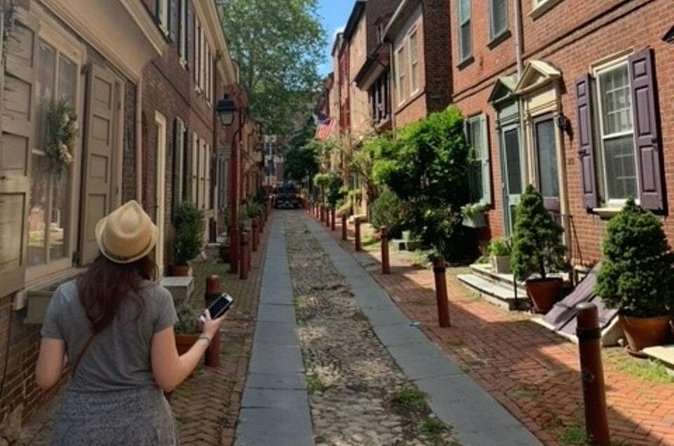
I would recommend it to adults, couples, and older children who like light mysteries, local history, and self-guided walks. It is a good fit if you want to explore the Gaslamp Quarter with a clear goal rather than simply wander.
I would be more cautious if your group needs polished clues, a live host, or a guaranteed three-hour program. The repeated riddle style and the possibility of an inaccurate marker or hint can test your patience.
The activity is also not ideal for anyone who dislikes using a phone during a sightseeing experience. The browser is central to the game, and your group needs to keep the login and passcodes organized.
Should you book the Gaslamp mystery walk?
Book it if you want a flexible, one-mile city puzzle tied to San Diego’s history, and if your group can tolerate an occasional unclear clue. The Rex King story, the former red light district, and the 10 historic stops give the walk more character than a generic phone-based scavenger hunt.
Skip it if you expect a live detective show, a long guided tour, or highly varied riddles. The safest way to see its value is as a compact, self-led history walk with a murder mystery layered on top. Bring a charged phone, read the instructions first, and keep your expectations closer to a two-hour puzzle outing than a guaranteed three-hour event.
FAQ
Where does the activity start?
It starts at 822 Fifth Ave, San Diego, California 92101.
Where does the activity end?
The activity ends back at the starting meeting point.
How long is the walking route?
The route is approximately one mile.
How many stops are included?
The hunt includes 10 stops of historical significance.
What mystery do I solve?
You investigate the murder of silent-film director Rex King, who was visiting San Diego while filming on location in 1926.
Do I need a smartphone?
Yes. A smartphone and the ability to use a web browser are required to play.
How do I receive access to the game?
You receive an email with a login code after booking. The first link is an instruction page, so you should read the instructions before beginning.
Can I take part without a guide?
Yes. This is a self-led activity, so you direct yourself between the stops and work through the clues with your group.
How many people can join?
The activity has a maximum of 10 participants.
Can I cancel or change my booking?
No. The experience is non-refundable and cannot be changed for any reason.
Just added around the USA
- Vail Venture Scavenger Hunt★ 3.5 · 8 reviews
- Save the Mountain Escape Room Adventure★ 5.0 · 4 reviews
- Tybee Island, Georgia Scavenger Hunt★ 4.0 · 7 reviews
- Tucson Scavenger Hunt by Wacky Walks★ 4.5 · 2 reviews
- A Spectacular Scavenger Hunt: Center of the Universe★ 4.0 · 4 reviews
- Amazing Scavenger Hunt: Desert Oasis★ 3.5 · 3 reviews
- Thrilling Traverse City Scavenger Hunt★ 4.0 · 7 reviews
- Murder Mystery Detective Experience in Sierra Vista AZ★ 4.5 · 4 reviews
Scavenger Hunts, compared.

Amazing Cozumel Race: Small-Group Tour and Scavenger Hunt
Read our review →
An Epic Scavenger Hunt: New York City Central Park Adventure
Read our review →

Escaping and spying on the Berlin Wall Scavenger hunt
Read our review →
Browse the lists this tour appears in