
Reviewed · OSAKA
Osaka Food Quest: Self-Guided Culinary & History Adventure
Osaka’s food culture is the star here, but the real treat is the way each puzzle sends you into the city itself. You follow clues through Dotonbori, Hozenji, Kuromon Market, and nearby landmarks while learning why Osaka earned its nickname as the Nation’s Kitchen. I especially like the blend of street food and local history, plus the freedom to stop for takoyaki or another snack when something smells too good to pass.
The low price is another strong point, at $7.85 per person, and the private format works well for couples, families, or solo visitors. The main caution is that this is a phone-based game, not a guided walk. One user found the app slow and gave up, while another enjoyed the route but needed about two hours despite the listed one-hour estimate.
Key points to know before you go
- Ten puzzles lead you through real Osaka neighborhoods, rather than keeping you inside a standard sightseeing script.
- Food and history share equal billing, from takoyaki and horumon to temples, bunraku, and Osaka folklore.
- You control the pace, with the option to pause, resume, snack, or linger at a stop.
- The route is private and self-guided, so there is no physical guide to answer questions or redirect you.
- The $7.85 price is excellent value if you want a playful introduction to central Osaka without booking a full food tour.
- Plan for more than one hour if you stop to eat, take photos, or spend time exploring the markets and shrines.
A phone-led route through Osaka’s food story
This experience treats central Osaka as a puzzle board. You receive a mobile access code and solve 10 challenges as you walk from the Dotonbori area toward Namba Yasaka Shrine. Each answer sends you to the next location and adds a piece of the city’s food or cultural story.
That format matters. You are not simply being led from one photo stop to another. You have to look around, notice signs and details, and connect each place with the clue on your screen. It gives the walk a clear purpose, especially if you have only one day in Osaka and want an activity that combines sightseeing with a little play.
The route also leaves room for ordinary Osaka life. A food tour with a fixed guide often keeps you moving on someone else’s schedule. Here, you can pause when you find a stall or restaurant worth trying. The tradeoff is simple: you gain freedom but lose live explanation and personal advice.
The advertised duration is about one hour. In practice, allow more time if you want to eat, browse Kuromon Market, visit the temple grounds, or take photographs. One participant completed it in about two hours while pressed for time and suggested allowing three hours for a fuller outing. That is a useful planning guide, even though the official estimate is shorter.
More Self-Guided Games in the world:
- Hamburg: Scavenger Hunt Self-Guided Tour for Children
★ 4.5 · 319 reviews - Dresden: Old Town Self-Guided Scavenger Hunt Tour
★ 4.5 · 151 reviews - Berlin: Self-Guided Family and School Class Scavenger Hunt
★ 4.6 · 128 reviews
Ebisu Bridge and the bright heart of Dotonbori
The starting point is at 1 Chome-6 Dotonbori, near Ebisu Bridge. This is a practical place to begin because the bridge links the Shinsaibashi-suji and Ebisubashi-suji shopping districts. You are immediately in one of Osaka’s most recognizable central areas, with plenty of shops, signs, and food stops nearby.
Ebisu Bridge was originally built to provide access to Ebisu Shrine. It also carries one of Osaka’s favorite sports legends: the curse said to affect the Hanshin Tigers baseball team. The puzzle asks you to look around the area for the answer, turning a familiar landmark into an observation exercise.
I like this opening because it gets you into the middle of Osaka quickly. You do not begin with a long explanation or a distant meeting point. You start in a place where the city’s shopping, food, sports, and entertainment traditions meet.
The drawback is crowding. Dotonbori is a busy district, and you may need patience while reading the challenge or checking your phone. Keep your attention on the route and your belongings, and avoid stopping in the middle of pedestrian traffic.
Konamon Museum and Osaka’s takoyaki connection
The next food-focused stop is Konamon Museum, a place connected with eating, learning about, and making takoyaki. Takoyaki, the small octopus-filled batter balls cooked in special molded pans, is one of Osaka’s best-known foods. Here, the quest uses the setting to explain why this dish has such a strong place in the city’s identity.
The clue requires you to inspect the area before moving on. That may be more interesting than simply receiving a short paragraph about takoyaki, since the puzzle makes you pay attention to the building and its surroundings.
This is also the point where you should consider buying food. The activity does not include any tastings, and food purchases are your responsibility. The low booking price leaves room in your budget for a few snacks, but do not mistake the quest for a hosted food tour with included dishes.
For families, this stop can help keep younger participants interested. A food puzzle is easier to connect with than a long historical talk. Couples and solo visitors may enjoy the same change of pace, especially if they are happy to make their own choices about what to taste.
Horumon, Osaka’s bolder side
Showa Taishu Horumon Dotonbori introduces horumon, a style of cooking that specializes in beef offal. This gives the route a broader view of Osaka food. The city’s food culture is not limited to famous dishes that appear on postcards. It also includes hearty, informal foods and ingredients that may be unfamiliar to some visitors.
You do not need to book a meal at this stop to complete the challenge. The task is to look around and find the answer. Still, the restaurant setting may prompt you to consider trying horumon if it appeals to you.
I appreciate this stop because it avoids presenting Osaka food as one narrow list of easy favorites. Takoyaki is approachable, but horumon asks you to think about how local eating traditions include stronger flavors and less familiar cuts.
If you are a picky eater, this may be more useful as a cultural stop than a dining recommendation. The activity does not promise a tasting, and no meal is included. You can learn what the restaurant represents without ordering anything.
Food and drink tours to book in the world:
- London: Food Treasure Hunt and Walking Tour
★ 5.0 · 92 reviews - Fort Worth Stockyards History, Food, and Puzzle Tour
★ 5.0 · 38 reviews - Beer Tasting and Scavenger Hunt in Brussels – About 3 Hours
★ 4.5 · 35 reviews - Lille: Scavenger hunt and beer tasting in Old Lille
★ 4.5 · 23 reviews
Hozenji Temple, moss-covered memory, and ritual
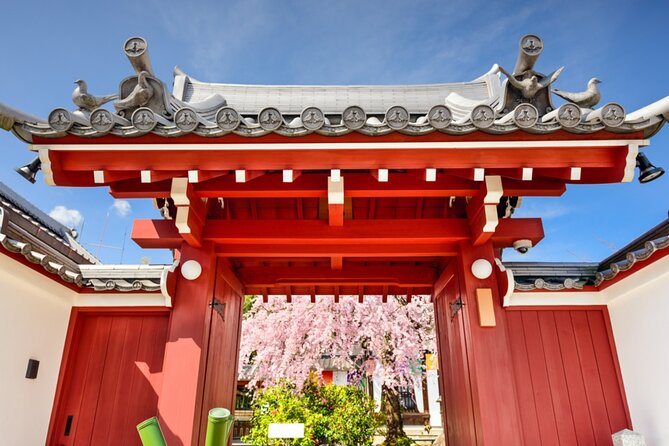
Hozenji Temple was built in 1637 and is dedicated to Fudo Myoo, one of Buddhism’s five guardians. Its setting connects the food and entertainment districts with Osaka’s religious life.
The temple also links back to the 1600s, when Namba and the Dotonbori area were growing as places for kabuki and bunraku performances. That connection gives the route a useful shift. You move from restaurants and markets to a quiet religious site, then see how entertainment, commerce, and worship developed close together.
The challenge here asks you to observe the temple area. Please treat the location with respect. This is a place of worship, not just a puzzle station, so keep voices low and follow any posted instructions.
Hozenji is likely to be one of the more memorable stops because it changes the mood of the walk. The route is not only about finding the next snack. It shows how food districts sit within a much older cultural setting.
National Bunraku Theater and Osaka performance culture
The National Bunraku Theater was established in 1984 as the Kansai home of bunraku, Japan’s traditional puppet theater. Its main hall seats 753 people, while the smaller hall seats 159. The main hall is used mainly for bunraku, along with traditional Japanese dance and other drama.
You will not attend a performance as part of this quest. Instead, the theater serves as a clue location and a reminder that Osaka’s culture includes serious stage traditions alongside its casual dining scene.
This is a good example of the route’s wider goal. Food is the hook, but the walk also brings in performance, religion, architecture, and local stories. If you already know Dotonbori mainly for its signs and restaurants, the theater adds another layer to the district.
The practical note is timing. The theater may be closed or quiet when you pass by, but the quest still uses the location for its story and puzzle. Do not plan on this activity providing theater admission.
Kuromon Market and the city’s marketplace tradition
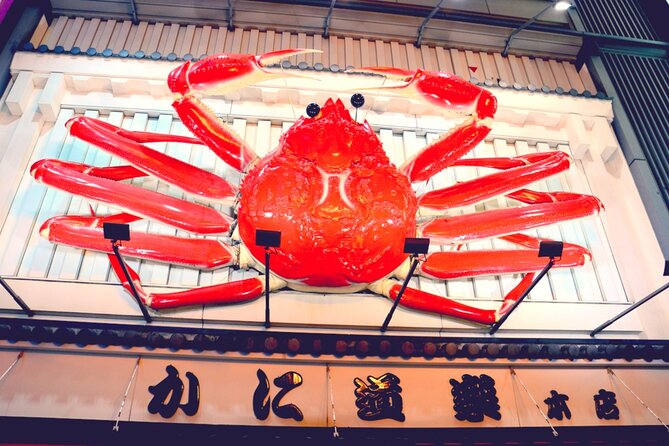
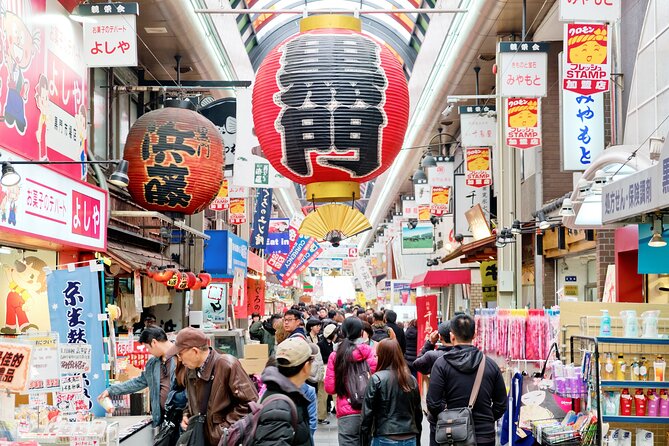
Kuromon Market is one of the major stops, and you should give it more than the listed 10 minutes if your schedule allows. Its name means black gate, a reference to the black gate of Enmyo Temple, which stood in the area until 1912, the final year of the Meiji Period.
The market began as a fish market around 1822 and became an official market in 1902. That background helps explain why Kuromon feels like more than a modern food strip. It grew from a place tied to seafood and local trade.
The puzzle asks you to search the market area for the answer. This works well because Kuromon gives you plenty to notice, though it can also be distracting. You may arrive intending to solve one clue and end up studying food displays or comparing prices.
The quest does not include food here, so budget separately for anything you want to buy. I would treat Kuromon as one of the best places to turn the self-guided format into your own food crawl. You can keep moving if time is tight, or pause and make the market a larger part of your day.
Namba Yasaka Shrine and the finish near Motomachi
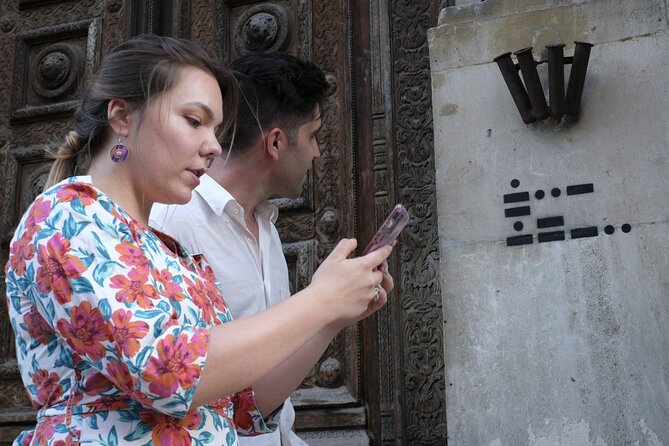
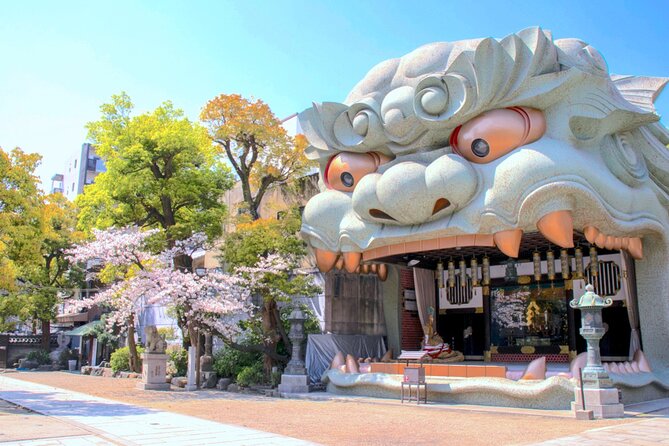
The route ends at Namba Yasaka Shrine, with the finish point at 2-chome-9-19 Motomachi, Naniwa Ward. The shrine is said to have been commissioned by Emperor Hanzei in honor of his father, Emperor Nintoku. Its original site was in what is now Kawachi Matsubara City, and it was moved after Toyotomi Hideyoshi began construction of Osaka Castle.
That gives the final stop a strong historical connection to Osaka’s political past. The shrine is not just a convenient endpoint. It helps close the route with a place tied to imperial tradition, relocation, and the city’s changing shape.
By ending here, the activity moves you beyond the most concentrated Dotonbori sights. You finish in a different part of central Osaka rather than circling back to the starting point. Plan your next train ride or meal from the end location, not the beginning.
The route is near public transportation, and the activity is open every day at any time according to the listed hours. Since this is a self-guided mobile experience, you can start at a time that suits your day.
What the $7.85 price really buys you
At $7.85 per person, this is inexpensive for an activity covering several central Osaka landmarks. You are paying for the digital quest, the 10 puzzles, and the written storyline. You are not paying for food, entrance tickets, transportation, or a guide.
That distinction makes the value easy to judge. If you want a hosted food walk with tastings and expert conversation, this is not a substitute. If you want a cheap way to organize your own route and add structure to a free afternoon, it is a strong option.
Group discounts are available, and the private format means only your party participates. That can be useful for families or couples who do not want to keep pace with strangers. It also means you are responsible for solving problems if the phone connection or app gives you trouble.
One major technical complaint involved a slow app and difficulty figuring out the direction. The same user believed the activity used 3GB of data, though the response from the operator stated that the quest itself is 2.5MB and could not account for that amount. The practical lesson is to keep your phone charged, close unnecessary apps, and make sure your connection is working before you start.
Who will enjoy this Osaka quest most?
I would recommend it most to people who like independent exploring with a clear goal. It suits solo visitors, couples, families, food fans, and anyone with a limited schedule who wants to cover several central sights without joining a fixed group.
It also works for repeat visitors who have already seen Dotonbori’s obvious sights. The clues encourage you to notice details you might otherwise walk past, and the food-and-history theme gives the route more shape than a casual stroll.
You may want another option if you need a guide, have limited phone access, or prefer a carefully timed tasting menu. The activity depends on your device and your willingness to read, search, and navigate. It does not include a person who can explain every question on the spot.
The open-ended timing is helpful. You can pause and resume whenever you like, and the activity is available Monday through Sunday throughout the listed operating period. Free cancellation is allowed up to 24 hours before the start time. Inside that window, changes and refunds are not accepted.
Should you book the Osaka Food Quest?
Book it if you want a low-cost, playful way to connect Osaka food with temples, markets, theater, and local stories. The route has good variety, the private format is flexible, and $7.85 is a small risk for a self-guided activity in central Osaka.
Go in with the right expectations. This is not a guided food tasting, and the one-hour estimate may be short once you add meals, market browsing, photos, and wrong turns. Bring a charged phone, allow two to three hours if you want to enjoy the stops, and treat the puzzles as a framework for your own Osaka walk.
FAQ
How long does the Osaka Food Quest take?
The listed duration is approximately one hour. You can take longer because the quest can be paused and resumed, and time spent eating or exploring the stops is not included.
How many puzzles are included?
The activity includes 10 puzzle-based challenges.
Is a physical tour guide included?
No. This is a self-guided activity using a mobile access code. No physical guide is provided.
Where does the quest start?
It starts at 1 Chome-6 Dotonbori, Chuo Ward, Osaka, 542-0071, Japan, near Ebisu Bridge.
Where does the quest end?
It ends at 2-chōme-9-19 Motomachi, Naniwa Ward, Osaka, 556-0016, Japan, near Namba Yasaka Shrine.
What locations are included?
The route includes Ebisu Bridge, Konamon Museum, Showa Taishu Horumon Dotonbori, Hozenji Temple, the National Bunraku Theater, Kuromon Market, and Namba Yasaka Shrine.
Can I pause the activity?
Yes. You can pause and resume the quest at any time.
What is the cancellation policy?
You can cancel for a full refund up to 24 hours before the experience start time. Cancellations or changes made within 24 hours are not refunded or accepted.
History tours to book in the world
- The Anatomist – Award Winning Historical Escape Room Experience
★ 5.0 · 151 reviews - Private city discovery tour – A Historical Treasure Hunt
★ 5.0 · 146 reviews - Queer Lisbon – A Treasure Hunt in LGBT History
★ 5.0 · 71 reviews - Outdoor Escape Game Dubrovnik – The Spy And The Traitor (History theme)
★ 5.0 · 32 reviews
Food tours to book in the world
- Chicago Murder Mystery Food Tour
★ 5.0 · 17 reviews - Athens Urban Treasure Hunt w Food Stop
★ 5.0 · 16 reviews - Athens Family Mythology Treasure Hunt and Tour w Food Stop
★ 5.0 · 15 reviews - Mystery Puzzle Food Tour in Golden, CO
★ 4.5 · 15 reviews
Just added around the world
- Valencia City Tour: A Treasure Hunt Experience★ 5.0 · 15 reviews
- Valencia Iconic Sights Scavenger Hunt★ 4.5 · 10 reviews
- e-Scavenger hunt Valencia: Explore the city at your own pace★ 4.5 · 6 reviews
- Vail Venture Scavenger Hunt★ 3.5 · 8 reviews
- Utrecht Scavenger Hunt and Highlights Self Guided Audio Tour★ 4.0 · 10 reviews
- Save the Mountain Escape Room Adventure★ 5.0 · 4 reviews
- Uppsala Scavenger Hunt and Sights Self Guided Tour★ 5.0 · 2 reviews
- Uppsala Self Guided Sherlock Holmes Murder Mystery Game★ 4.0 · 4 reviews
Self-Guided Games, compared.






Browse the lists this tour appears in