
Reviewed · LONDON
Interactive Treasure Hunt Experience of Greenwich’s Secrets
Greenwich is at its best when you connect its grand sights with the small oddities between them. This self-guided treasure hunt sends you from the Greenwich Foot Tunnel toward the observatory and Queen’s House, using cryptic clues to turn a familiar London district into a puzzle.
I like the freedom to stop for photos, food, or a closer look at the Cutty Sark without waiting for a guide. I also like the mix of maritime history and trivia, which gives children and adults different ways to stay involved. The main drawback is that you need to keep yourselves moving and may need a hint if a clue sends you off track.
Key points at a glance
- Start at the Greenwich Foot Tunnel: Begin at a clear riverside meeting point and finish back there.
- Solve clues about Greenwich: Expect questions and cryptic directions tied to local places, stories, architecture, and timekeeping.
- See the Cutty Sark and maritime Greenwich: The route connects the area’s seafaring past with its famous sights.
- Reach the observatory: Follow the trail uphill for city views and clues about how Greenwich keeps time.
- Explore Queen’s House from outside: Work through puzzles around the grounds and art installations without needing a museum tour.
- Plan for two to three hours: The $20.80 price is good value for a private activity that lets your group set the pace.
Why a treasure hunt suits Greenwich

Greenwich can feel like several London experiences packed into one district. You have the river, naval stories, the Cutty Sark, royal architecture, art, and the observatory’s connection to world timekeeping. A standard walk can tell you what you are seeing, but a treasure hunt gives you a reason to look closely.
The format is simple. You receive the clues on your mobile and follow them from one point to the next. The activity is self-guided, so there is no scheduled group pace and no guide waiting for late arrivals. You solve each prompt together, read the facts and trivia connected with the locations, and carry on when you are ready.
That setup works especially well for families and friends. One person may spot a detail in a building while another works out the wordplay. The clues vary in difficulty, so the activity is not limited to expert puzzle solvers. Still, you should expect a few moments of confusion. One participant needed only a single hint after getting lost, which suggests the route is manageable but not entirely effortless.
More Treasure Hunts in London
- London: Food Treasure Hunt and Walking Tour
★ 5.0 · 92 reviews - Interactive Treasure Hunt Experience – Central London’s Secrets
★ 4.5 · 43 reviews - Immersive Treasure Hunt Adventure – City of London’s Secrets
★ 4.5 · 41 reviews
Starting at the Greenwich Foot Tunnel
Your meeting point is the Greenwich Foot Tunnel, London SE10 9HT. It is a practical place to begin because the route starts with a local story rather than a long introduction. One early clue asks you to work out how witches and tea are related, right where you set off inland.
That is a good sign of the tone. This is not a straight list of dates and monuments. You will use odd connections, wordplay, and observation to make sense of the area. The clue gives you a reason to pay attention to the starting point instead of simply walking past it.
The foot tunnel also places you close to the river and Greenwich’s maritime setting. From here, the activity leads into a district shaped by ships, naval power, royal interest, and the movement of people and goods. You are not just following arrows between attractions. You are piecing together how the parts of Greenwich relate to one another.
Bring a charged phone and be ready to read carefully. The mobile format is central to the experience, since the clues and supporting facts are delivered digitally. There is no printed route to carry, and no guide to repeat a clue if you skim it too quickly.
Maritime Greenwich and the Cutty Sark
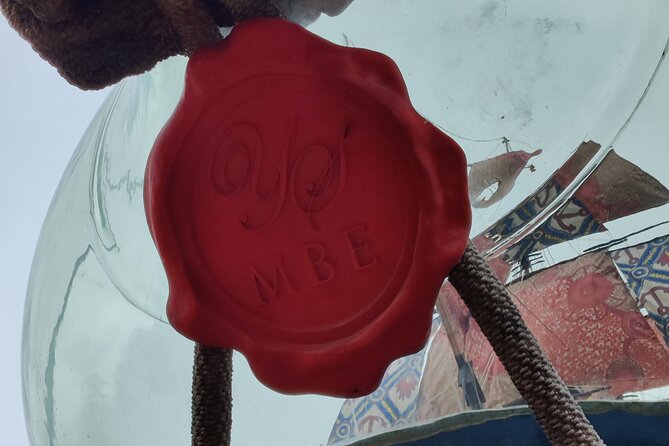
Greenwich’s maritime side gives the hunt much of its character. The Cutty Sark is one of the key sights connected with the route, and its presence helps place the puzzles in a real working story of sailing, trade, and long-distance travel.
The value here is not only seeing a famous ship. The activity encourages you to consider why the ship belongs in Greenwich and how the river shaped the district. Clues tied to maritime themes can make the setting easier to remember, especially for younger participants who might not want a formal museum explanation.
You should note that this is not presented as a guided interior tour of the Cutty Sark. The supplied details describe a walking hunt that includes learning about Greenwich’s maritime past and visiting the Cutty Sark as part of the area explored. If you want detailed ship interpretation, allow separate time for the attraction itself.
That distinction matters for planning. The treasure hunt gives you a lively route and a set of questions. It does not replace every museum visit in Greenwich. I would treat it as a framework for seeing the district, then decide if you want to spend extra time at the ship or other sights along the way.
Clues, trivia, and the freedom to pause
The best part of a self-guided hunt is control. You can stop when a view catches your eye, take a break, or let one member of the group wrestle with a clue while everyone else looks around. Since the activity is private, only your group takes part.
That privacy makes the $20.80 per person cost easier to assess. You are not paying only for transport or entry to a single attraction. You are paying for a structured activity that occupies roughly two to three hours and gives your group a shared task. For a family or small group that enjoys puzzles, this can be a sound use of an afternoon.
The value is weaker if you dislike solving clues or prefer a guide who explains every stop. A self-guided route asks you to read, interpret, and make decisions. If your group wants a relaxed stroll with no mental work, a regular walking route may suit you better.
The clue design appears to be one of the strongest parts of the experience. The route uses cryptic directions and questions rather than simple instructions. Facts and trivia accompany the locations, so even a wrong turn can lead to a useful bit of local context.
If you get stuck, use the hint system rather than spending too long in one place. The point is to keep exploring, not to prove that nobody in your group ever needs help. One hint can save a lot of time, especially when several nearby streets or entrances look similar.
More Treasure Hunts in the UK
- Immersive London Treasure Hunt Adventure – Outdoor Escape Room
★ 5.0 · 11 reviews - Interactive Treasure Hunt London – City of London/Southwark
★ 3.5 · 5 reviews - London: British Food Treasure Hunt With Gourmaze
★ 5.0 · 4 reviews - Cluefall – Immersive Treasure Hunt in London’s South Bank
★ 5.0 · 3 reviews
Climbing toward the observatory

The route eventually takes you toward the observatory, where Greenwich’s role in timekeeping comes into focus. You will follow clues to reach the site, then look out across the city while working out how Greenwich keeps time.
This is one of the most satisfying changes in the route. The lower part of Greenwich connects you with the river and ships. The observatory adds a scientific and global dimension. Greenwich is not only a place where Britain’s maritime story played out. It is also linked with the system people use to measure time and position around the world.
The view gives the clue solving a welcome pause. You can look across London, then return to the puzzle with a better sense of place. The activity does not require you to sit through a lecture about astronomy or time zones. Instead, it gives you enough context to understand why the observatory matters.
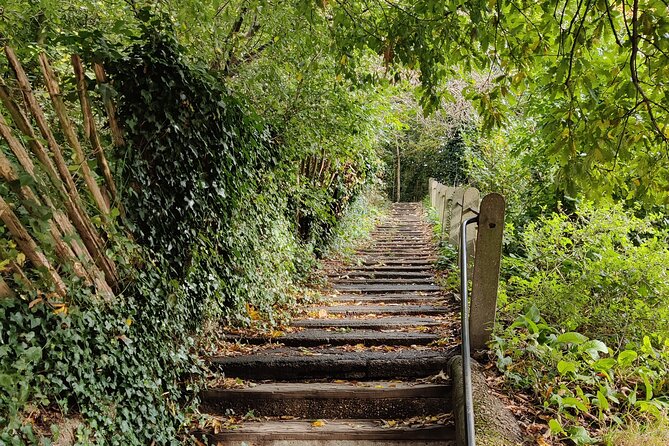
There is one practical point to keep in mind: the route involves reaching the observatory, so you should be comfortable with a walk that includes this change in elevation. The supplied details do not give a precise distance or specify the exact walking surface. If someone in your group has mobility concerns, check the route before booking rather than assuming every section will be easy.
Queen’s House and its outdoor clues
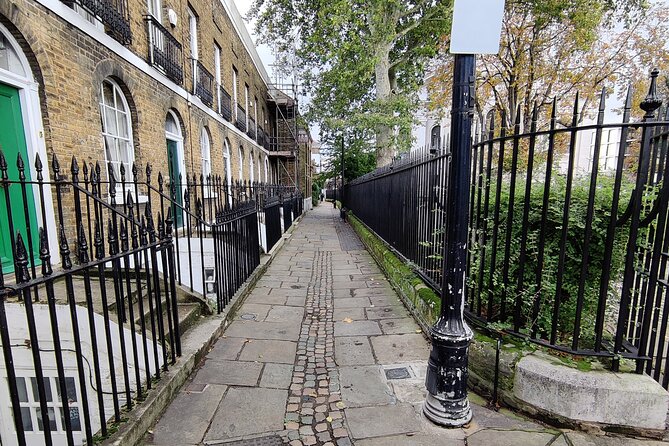
Queen’s House provides a different mood. The activity takes you around its grounds, where you can see art installations connected with the museum while solving cryptic directions and clues outside the building.
This section works well because it shifts attention from ships and clocks to architecture and art. You are asked to look at the setting, not just pass through it. The clues can draw your eye to details you might otherwise miss, including the way the grounds and buildings fit together.
The outdoor focus is also useful for families. You can engage with the setting without committing the whole group to a long indoor museum visit. If someone wants a quick look at the art installations and another person is more interested in the puzzle, both interests can fit into the same stop.
Do not assume the treasure hunt includes a full museum entry experience. The information provided specifically describes solving clues outside the museum and seeing the various art installations around the grounds. If Queen’s House is a major reason for your visit, confirm what you want to see and allow extra time beyond the two to three hours.
How difficult is the trail?
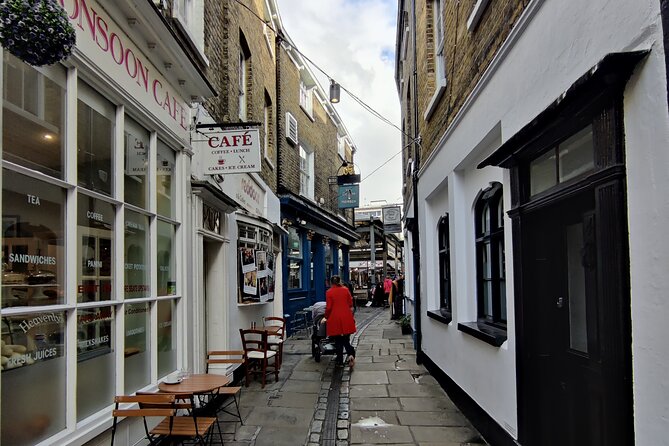
The clues are not all pitched at one level. Some should be approachable for casual players, while others require closer reading or a bit of lateral thinking. That variety is a strength for mixed-age groups because the youngest participant does not have to solve every puzzle alone.
You may find that the real challenge is navigation rather than trivia. A clue can make perfect sense, yet you still need to identify the correct direction or location. Keep the group together, compare interpretations aloud, and use the available hint if you have been circling the same spot.
The mobile delivery is convenient because the clues arrive instantly and the facts stay with you as you move. It also means your phone becomes part of the outing. A low battery, poor attention, or a rushed reading of the instructions could make the activity harder than it needs to be.
I would allow the full three hours rather than planning another fixed activity immediately afterward. Some groups will finish closer to two hours, while others will pause for views, photos, snacks, or extra exploration. The flexible timing is part of the appeal, but it makes precise scheduling difficult.
Who will enjoy this Greenwich experience?
This is a strong choice for families, couples, and friend groups who like a little competition without needing a formal team-building event. Trivia fans should enjoy the constant questions, while people who know London well may appreciate being nudged toward architectural details and less obvious corners.
It also works for repeat visitors. You may already know the Cutty Sark or the observatory, yet a clue-based route can change how you move through the district. The activity gives you a reason to connect places that you might otherwise visit separately.
The experience is less suitable for anyone seeking a fully narrated tour. There is no guide named in the supplied information, and the format is self-guided in English. You will need to manage your own pace, reading, navigation, and group decisions.
Service animals are allowed, and most participants can take part. The activity is offered near public transportation, which helps with access to Greenwich. It is listed as requiring good weather, so an outdoor route may not be comfortable in rain or poor conditions.
Price, timing, and cancellation

At $20.80 per person, the activity offers a reasonable mid-range option for two to three hours in one of London’s most interesting districts. I would judge the value by your group rather than by the price alone. Four people who enjoy puzzles can get a lot from the shared format, while one person who dislikes clues may feel the cost is less worthwhile.
The experience is a private activity, so only your group participates. That avoids the stop-start rhythm of a large public group and lets you discuss answers without strangers listening in. It also means your group is responsible for keeping the outing moving.
You can cancel for a full refund if you do so at least 24 hours before the start time. Cancellations made less than 24 hours ahead are not refunded, and changes within that period are not accepted. If poor weather causes the activity to be canceled, you will be offered another date or a full refund.
Should you book the Greenwich treasure hunt?
Book it if you want a playful way to see Greenwich, enjoy cryptic questions, and prefer setting your own pace. The mix of the Cutty Sark, maritime stories, the observatory, city views, Queen’s House, and outdoor art gives the route more variety than a simple pub-style treasure hunt.
I would especially recommend it for families with different ages and attention spans. The clues vary in difficulty, the private format keeps the group together, and the activity can reveal architectural details you might otherwise pass without noticing.
Skip it if you want a guide-led history lesson, a tightly timed itinerary, or a tour focused on the interiors of Greenwich’s attractions. For everyone else, $20.80 buys a flexible two to three hours of exploration, with enough puzzles to keep your eyes on the surroundings rather than on the clock.
FAQ
Where does the Greenwich treasure hunt start?
The activity starts at the Greenwich Foot Tunnel in London, postcode SE10 9HT.
Where does the activity finish?
The route ends back at the meeting point at the Greenwich Foot Tunnel.
How long does the experience take?
It takes approximately two to three hours.
Is the tour guided?
No. It is a self-guided walking tour delivered through your mobile device.
What language is the activity offered in?
The activity is offered in English.
How much does it cost?
The listed price is $20.80 per person.
Is this a private activity?
Yes. Only your group participates.
Does the route include the Cutty Sark?
The experience includes learning about Greenwich’s maritime history and visiting the Cutty Sark as part of the exploration.
Can service animals take part?
Yes. Service animals are allowed.
What happens if the weather is poor?
The experience requires good weather. If it is canceled because of poor weather, you will be offered a different date or a full refund.
Just added around London
- Zombie Scavengers Game – Southend-on-Sea, UK★ 4.5 · 2 reviews
- Undercover Agent Escape Game – High-Tech Spy Thriller★ 5.0 · 2 reviews
- Secrets of Bermondsey: Self-Guided Urban Puzzle Walk★ 5.0 · 2 reviews
- Unique Survival Scavenger Hunt in Luton by Zombie Scavengers★ 3.0 · 2 reviews
- Private Prison Van Escape Game – London Immersive Experience★ 4.0 · 15 reviews
- London Self-Guided Sherlock Holmes Murder Mystery Game★ 4.0 · 2 reviews
- e-Scavenger Hunt London: Explore the City at Your Own Pace★ 4.5 · 3 reviews
- London’s West End at War: Self-Guided WWII Puzzle Adventure★ 4.0 · 2 reviews
Treasure Hunts, compared.


St. Augustine: Treasure Hunt Cruise with Onboard Show
Read our review →

Fun, Flexible Treasure Hunt Around Manchester with Cryptic Clues & Hidden Gems
Read our review →
Fun, Flexible Treasure Hunt Around York with Cryptic Clues & Hidden Gems
Read our review →
Fun, Flexible Treasure Hunt Around Bath with Cryptic Clues & Hidden Gems
Read our review →York Treasure Hunt Adventure: The Mystery of The Gunpowder Snitch
Read our review →Browse the lists this tour appears in