
Reviewed · BOSTON
Boston Record Breakers: Self-Guided Scavenger Hunt
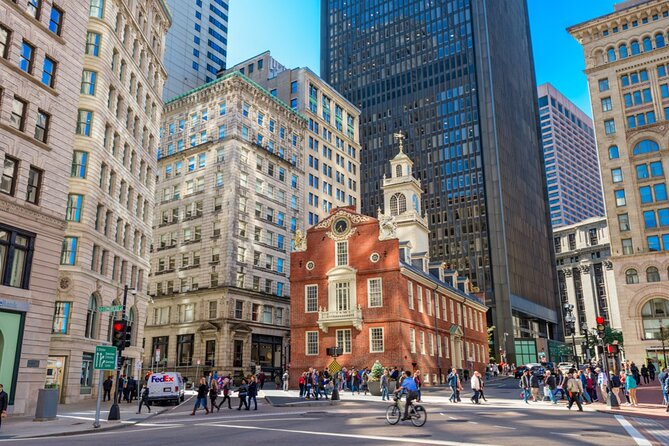
Boston’s past becomes your game board on this self-guided scavenger hunt, which links the Boston Public Library, Copley Square, the Public Garden, Beacon Hill, and old downtown. You solve clues at each stop, then follow the app to the next place.
I like the $5.99 price and the freedom to start any time, pause for lunch, or play without an internet connection. The route also mixes famous sights with smaller details, from the Ether Monument to the story of Alexander Graham Bell. The main caution is that some clues may feel too plain or require a guess, so puzzle fans seeking clever challenges may find the game uneven.
Key points to know before you play
- Eleven Boston stops: The route runs from the Boston Public Library to Union Oyster House, with major sights in Back Bay, Beacon Hill, Boston Common, and downtown.
- Works offline: Download or access the game through the Questo app, then play without relying on a live internet connection.
- About 80 minutes: That is the expected playing time, though your group can pause and resume whenever you like.
- A history lesson with movement: Clues lead you to monuments, churches, public buildings, restaurants, and places tied to American invention.
- Private and contact-free: Only your group participates, with no physical guide and no shared tour group.
- A very low-cost outing: At $5.99 per person, this is an inexpensive way to add structure to a Boston walk, though the puzzle quality matters more than the price for serious game players.
Why this Boston game works best as a walk with a purpose
This is not a traditional guided tour. No guide meets you at the Boston Public Library, and no one explains the sights in person. Instead, the Questo app gives you directions and challenges, while the city supplies the evidence.
That format has a clear advantage. You can stop for coffee, take photographs, enter a building when practical, or pause the game when the group needs a break. You are not racing to keep up with a guide or waiting for a large group to gather.
The route also gives you a reason to look closely. At each location, you search for an answer before moving on. That might mean reading a sign, examining a monument, or spotting a detail in the surroundings. The goal is not simply to check off Boston’s famous places. It is to make you notice them.
The expected duration is about one hour and 20 minutes, but treat that as a guide rather than a hard limit. The game can be started at any hour and resumed later. The stated playing window runs from 5:00 AM to 9:00 PM every day, which gives you plenty of flexibility, although some locations may be more enjoyable during normal daylight hours.
More Scavenger Hunts in the USA
- An Epic Scavenger Hunt: New York City Central Park Adventure
★ 4.5 · 244 reviews - Creative Soul Scavenger Hunt of Santa Fe
★ 5.0 · 62 reviews - Keep Austin Weird Scavenger Hunt
★ 4.0 · 51 reviews
Starting at the Boston Public Library
Begin at the Central Library of the Boston Public Library, at 700 Boylston Street. This is a fitting first stop because the building’s story matches the spirit of the game: public access, learning, and discovery.
The library was established in 1848 and became the first large free municipal library in the United States. It was also the first public library to lend books, the first to create a branch library, and the first to include a children’s room.
The challenge here asks you to look around for the answer that advances the game. That makes the library more than a meeting point. You begin by using your surroundings as your source material.
I like this opening because it starts in Boston’s Back Bay rather than dropping you straight into the most familiar colonial sights. It gives you a sense of how broad the city’s public institutions are. The Boston Public Library now includes a central library and 25 neighborhood branches, serving millions of people in person and online.
Plan to arrive with the app ready and your group together. Since this is self-guided, the first few minutes are yours to manage.
Copley Square and the city’s cultural side
From the library, the game takes you into Copley Square. The square was named for painter John Singleton Copley and was once called Art Square because of the cultural institutions gathered around it.
This stop changes the mood. Instead of focusing on one building, you are reading a public space and its surroundings. The challenge encourages you to look closely, which is useful in a place where the architecture and civic setting matter as much as any single object.
Copley Square was proposed as a Boston Landmark, and its location makes it an efficient early stop. You are still in Back Bay, so the route feels connected rather than scattered.
The limitation is that a clue-based game may not provide much explanation if you simply solve the answer and move on. If you want architectural detail, names, dates, and a full account of the square, you may need to spend extra time looking around or read more afterward. The game gives you a prompt, not a full lecture.
Arlington Street Church beside the Public Garden
The next stop is Arlington Street Church, across from the Public Garden. Completed in 1861, the church was designed by Arthur Gilman and Gridley James Fox Bryant to resemble St. Martin-in-the-Fields in London.
The church is important in the story of American Unitarianism and Unitarian Universalism. Its location also gives you one of Boston’s most recognizable public settings, with the Public Garden nearby and the city’s formal Back Bay streets around it.
Here, the challenge is based on observation. You look around, find the required answer, and use it to continue. That can be a good way to get your group discussing what it sees instead of treating the church as a quick photograph stop.
You should not expect a formal interior visit or a personal explanation from a guide. The experience is built around the exterior route and the app. If your group enjoys moving at its own pace, that is a strength. If you want access to the church or a detailed account of its congregation, this game may feel light.
More Self-Guided Games in the USA
- Dallas Scavenger Hunt & Self-Guided Tour
★ 4.5 · 14 reviews - Portland (Downtown) Scavenger Hunt & Self-Guided Tour
★ 5.0 · 11 reviews - Self-Guided Scavenger Hunt: Milwaukee A Splash of Color
★ 4.0 · 11 reviews - Self-Guided Denver’s Golden Treasure Scavenger Hunt
★ 4.0 · 11 reviews
The Ether Monument and a useful piece of medical history
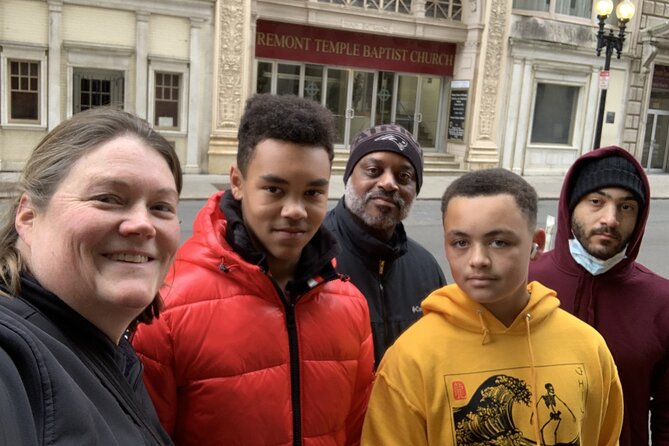
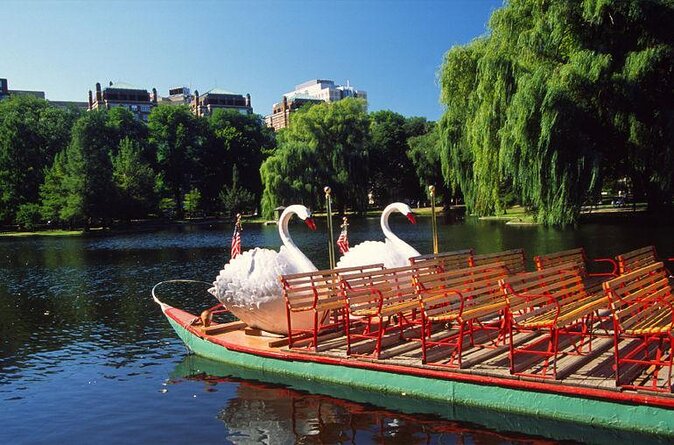
Near the northwest corner of the Public Garden is the Ether Monument, also called The Good Samaritan. It commemorates the use of ether in anesthesia and is the oldest monument in the Public Garden.
At 40 feet tall, it is hard to miss once you reach the area. The design has been attributed to Boston architect William Robert Ware and sculptor John Quincy Adams Ward.
This is one of the route’s best examples of a stop that many people might pass without understanding. The monument connects Boston to a major change in medicine, and the game uses a physical object to prompt that story.
I like the variety here. The route is not only about presidents, churches, and colonial buildings. It also brings in science and medical progress. The drawback is the same one found at several stops: the app’s clue is the main teaching tool, so you may want to pause and read the monument’s details rather than relying only on the next instruction.
Beacon Hill and the Massachusetts State House
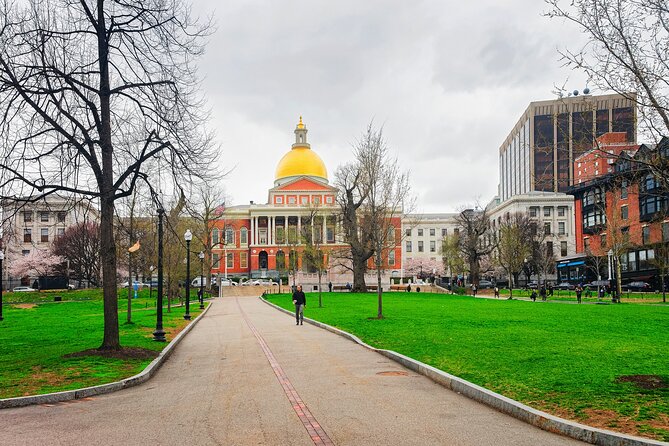
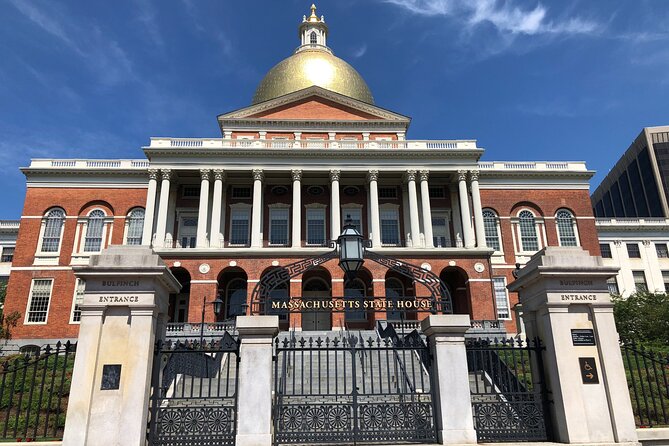
The route then reaches the Massachusetts State House on Beacon Hill. Charles Bulfinch designed the building, which was completed in January 1798. It is the seat of Massachusetts government and houses the state legislature and the governor’s offices.
The building cost $133,333, more than five times its original budget, and it has been enlarged several times. That small budget detail gives the stop a human touch. Even major civic projects can go badly over budget.
The State House is a strong location for a scavenger hunt because it offers clear visual features and a direct connection to Massachusetts government. You are asked to find the answer by observing the site, then continue toward the next challenge.
Do not confuse this with a guided interior visit. The activity does not include a physical guide, and the information provided centers on playing the game outdoors and following the app. You can still appreciate the building from the route, but the game does not promise a full tour of the State House.
Robert Gould Shaw and the Fifty-Fourth Regiment
At the edge of Boston Common, opposite 24 Beacon Street, you reach the memorial to Robert Gould Shaw and the Massachusetts Fifty-Fourth Regiment. Augustus Saint-Gaudens created the bronze relief, which shows Colonel Shaw leading members of the regiment down Beacon Street on May 28, 1863.
The regiment left Boston to fight in the South during the American Civil War. The sculpture was unveiled in 1897 and is described as the first civic monument honoring the heroism of African American soldiers.
This is one of the most meaningful stops on the route. The monument links Boston to the history of Black military service and the Civil War, while the scene of soldiers leaving the city gives the story a strong sense of place.
A clue game cannot replace the time needed to study the sculpture. Give yourself a few extra minutes here. Look at the figures, the direction of the march, and the setting along Beacon Street before you answer the challenge.
Park Street and the shift toward old Boston
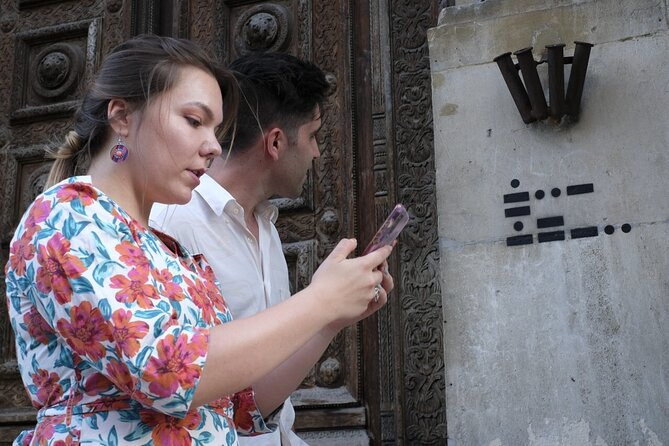
Park Street was laid out in 1804 as Park Place, replacing Sentry Street. In the 1880s, the feminist Woman’s Journal was published on Park Street, and Houghton Mifflin later had its headquarters here.
This stop brings in a different kind of history. You are not only looking at a monument or a landmark building. You are tracing the work of publishers and the public role of women’s journalism.
The route also moves you toward the older central part of Boston. That change matters because the experience begins among Back Bay institutions and gradually reaches the streets associated with Boston’s colonial and civic past.
Pay close attention to the navigation at this point. One published playing experience found the Park Street challenge difficult enough to require hints and guessing. That does not make the stop impossible, but it does mean you should not assume every answer will be obvious.
Tremont Temple and Boston’s changing churches
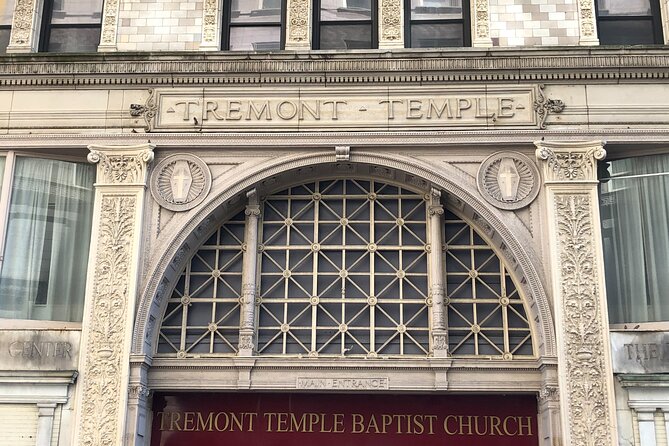
At 88 Tremont Street, the game brings you to Tremont Temple, a Baptist church affiliated with the American Baptist Churches, USA. The current multi-storey building was designed by Clarence Blackall and opened in May 1896.
It replaced a smaller 1827 structure that had suffered repeated fire damage. That detail adds a useful reminder that Boston’s old-looking buildings are not always the original buildings. Fire, rebuilding, and changing city needs have shaped the center for generations.
This is another stop where the app’s challenge asks you to inspect the site. The church’s location on Tremont Street makes it an easy part of the walk between Park Street and the downtown area.
The experience gives you a quick fact and a reason to look. It does not offer a long religious or architectural presentation. That is fine for a compact outing, but readers who prefer guided interpretation should plan a separate visit or reading time.
Alexander Graham Bell and Boston University
One of the route’s more unusual stops focuses on Alexander Graham Bell. Bell was a Boston University professor from 1874 to 1879, and the university funded his research into a device for transmitting speech.
He invented the telephone in 1876. The stop includes an image of Bell at a 1916 Boston University reception marking the 40th anniversary of the invention.
This is a clever change of subject. The game has already taken you past churches, monuments, and government buildings. Now it connects Boston to invention and higher education.
Because the stop centers on a historical image and a story, it may feel less immediately obvious than a large monument. Read the app instructions carefully and look for the detail the challenge asks you to find. This is a place where the story may be more important than the physical setting.
A historic tavern and a route with room for food
The next stop is a tavern that has been in place since 1795. It became a gathering place for printers and politicians, sailors and students, and grew into one of the city’s best-known alehouses.
The supplied details do not identify the tavern by name, so you should rely on the location instructions inside the app rather than trying to plan this part from the summary alone. The stop adds social history to the route. You are considering who used the city’s public drinking places and how different groups crossed paths there.
This is also a good point to remember that you control the pace. You can pause the game for a drink or meal, then resume when ready. The experience is designed for breaks, which makes it easier to fit into a larger day in Boston.
Ending at Union Oyster House
The game ends at Union Oyster House on Union Street, near Faneuil Hall and the Freedom Trail. The restaurant occupies a pre-Revolutionary building and began serving food in 1826.
It is recognized as America’s oldest restaurant. The original stalls and oyster bar remain in their original positions, and Daniel Webster was a regular customer.
Ending here gives the walk a practical finish. You can stop for food after completing the final challenge instead of searching for a restaurant from scratch. The restaurant is part of the experience’s historical setting, but dining is not included in the $5.99 game price.
The end point also helps make the route feel complete. You begin with free public learning at the Boston Public Library and finish in one of Boston’s oldest food establishments. Between those points, the game moves through public squares, churches, monuments, government, invention, and city life.
What $5.99 gets you
At $5.99 per person, this is one of the least expensive structured ways to explore central Boston. You are paying for access to the mobile game, directions, clues, and the freedom to play privately with your own group.
That price makes the activity especially useful for families, friends, couples, and visitors who want something more organized than wandering but less formal than a guided tour. Group discounts may improve the value for larger parties.
The tradeoff is simple. You do not receive a human guide, transport, admission to attractions, or a meal at Union Oyster House. The quality of the outing depends on how much your group enjoys solving clues and how willing you are to supply some of the historical curiosity yourself.
One rating for the experience was 4.3 out of 5 from four reviews, but the small number means you should not treat that figure as a final verdict. A specific criticism was that some clues were not clever enough and that Park Street and Union Oyster House could require hints or guesses. Keep that in mind if your main goal is difficult puzzle solving.
Who should book this self-guided route?
I would recommend it to you if you want:
- A low-cost way to see several central Boston sights
- A private activity for your own group
- The option to play offline and pause at any time
- A light history lesson built into a city walk
- A flexible alternative to a fixed-time guided tour
- An outing that can end with a meal at Union Oyster House
I would be more cautious if you want a polished lecture, a named guide, detailed architectural interpretation, or demanding escape-room-style puzzles. The challenges may require hints, and the app cannot answer follow-up questions the way a human guide can.
Most travelers can participate, service animals are allowed, and the route is near public transportation. The experience is offered in English. Confirmation arrives at booking, and cancellation is free if you cancel at least 24 hours before the start time. Changes or cancellations inside that window are not refunded.
Should you book Boston Record Breakers?
Book this game if you value freedom, low cost, and a reason to notice Boston’s details. The route covers an appealing stretch of the city, and the mix of public institutions, monuments, churches, invention, and old restaurants gives the walk more variety than a simple landmark checklist.
Go in with realistic expectations. This is a self-guided app game, not a personal tour and not a high-level puzzle competition. If you can accept a few uneven clues, the $5.99 price makes it an easy add-on to a Boston day. Start at the library, keep the app ready, allow extra time at the Shaw memorial and Union Oyster House, and treat the clues as prompts to look closer rather than as the whole history lesson.
FAQ
How long does Boston Record Breakers take?
The game takes approximately one hour and 20 minutes.
Where does the activity start?
It starts at the Boston Public Library Central Library, located at 700 Boylston Street in Boston.
Where does the game end?
The final stop is Union Oyster House at 41 Union Street, near Faneuil Hall and the Freedom Trail.
Do I need an internet connection?
No. The game can be played offline, so you do not need an internet connection during the activity.
Is there a physical tour guide?
No. This is a self-guided mobile game played through the Questo app, with no physical guide included.
Can I pause and resume the game?
Yes. You can start at any hour, take a break, and resume later.
What is the cancellation policy?
You can receive a full refund if you cancel at least 24 hours before the experience starts. Cancellations or changes made less than 24 hours before the start time are not refunded or accepted.
Just added around the USA
- Vail Venture Scavenger Hunt★ 3.5 · 8 reviews
- Save the Mountain Escape Room Adventure★ 5.0 · 4 reviews
- Tybee Island, Georgia Scavenger Hunt★ 4.0 · 7 reviews
- Tucson Scavenger Hunt by Wacky Walks★ 4.5 · 2 reviews
- A Spectacular Scavenger Hunt: Center of the Universe★ 4.0 · 4 reviews
- Amazing Scavenger Hunt: Desert Oasis★ 3.5 · 3 reviews
- Thrilling Traverse City Scavenger Hunt★ 4.0 · 7 reviews
- Murder Mystery Detective Experience in Sierra Vista AZ★ 4.5 · 4 reviews
Scavenger Hunts, compared.

Amazing Cozumel Race: Small-Group Tour and Scavenger Hunt
Read our review →
An Epic Scavenger Hunt: New York City Central Park Adventure
Read our review →

Escaping and spying on the Berlin Wall Scavenger hunt
Read our review →
Browse the lists this tour appears in